Breakfast at 30, Dinner at 50: Why Your Gut Feels Different
At 30, you might enjoy a silog meal with no problem. At 40, the same meal leaves you bloated. By 50, it could trigger constipation or reflux. Why? Because gut health isn’t static, it shifts with age.
Your digestive system is powered by muscles, enzymes, and trillions of gut bacteria. Over time, these change in how fast they work, how balanced they are, and how resilient they remain against stress. Understanding these shifts helps you know what’s normal and what needs medical attention.
What Is Gut Health, Really?
Gut health means more than just “no stomach aches.” It refers to the balance and efficiency of your gastrointestinal tract — from your stomach to your intestines — in digesting food, absorbing nutrients, and keeping harmful bacteria in check.
A healthy gut:
- Breaks down food efficiently.
- Absorbs nutrients your body needs.
- Protects against infections by maintaining strong gut bacteria.
- Communicates with your brain and immune system through the gut-brain axis.
When this balance falters, common digestive disorders like constipation, acid reflux, or irritable bowel syndrome (IBS) often appear.
Your 30s: Subtle Slowdowns Begin
In your 30s, gut health still feels strong, but early signs of change appear.
- Metabolism dips: The digestive system starts to slow, making heavy meals feel harder to process.
- Stress effect: Careers, family responsibilities, and poor sleep can disrupt gut motility, leading to bloating or diarrhea.
- Microbiome balance: Gut bacteria may shift, influenced by diet, antibiotics, and lifestyle. A less diverse microbiome means higher risks of inflammation.
How to improve gut health in your 30s:
- Add more fiber-rich foods (vegetables, legumes, brown rice).
- Hydrate well — aim for at least 8–10 glasses daily.
- Balance stress with exercise or mindfulness practices.
- Limit processed foods that disturb the microbiome.
Doctor’s Note: Many people in their 30s dismiss mild bloating or constipation. But early care prevents future gut issues.
Your 40s: Constipation and Reflux on the Rise
By your 40s, noticeable changes appear:
- Slower gut motility: Food moves more slowly, increasing constipation risk.
- Weaker muscle tone: The esophageal sphincter may loosen, raising chances of acid reflux.
- Hormonal shifts: In women, perimenopause affects digestion. In men, metabolism slows further, contributing to weight gain and bloating.
- Gut bacteria changes: Studies show diversity of gut microbiome declines with age, reducing resilience against infections and inflammation.
Practical tips for your 40s:
- Increase dietary fiber (aim for 25–30 grams daily).
- Use a stomach pain chart or food diary to track triggers.
- Schedule routine check-ups (including stool exams or liver profiles if needed).
- Move more — daily walking improves gut motility.
Your 50s: Higher Risk for Digestive Disorders
The 50s bring more noticeable gut changes that require active management.
- Constipation becomes common: Due to reduced gut muscle tone and slower bowel movements.
- Digestive enzymes decrease: Carbohydrate digestion slows, leading to gas and bloating.
- Higher risk of large intestine diseases: Colon polyps, diverticulosis, and even colorectal cancer risk increase.
- Medication impact: Long-term use of antihypertensives, pain relievers, or diabetes meds may affect gut lining and bacteria.
Key steps in your 50s:
- Eat more liver-friendly and gut-friendly meals — leafy greens, fish, high-fiber grains.
- Don’t ignore stomach ache and watery stool — persistent symptoms may signal gastrointestinal disease.
- Ask your doctor about screening colonoscopy or stool tests for hidden blood.
- Stay consistent with hydration, exercise, and probiotics.
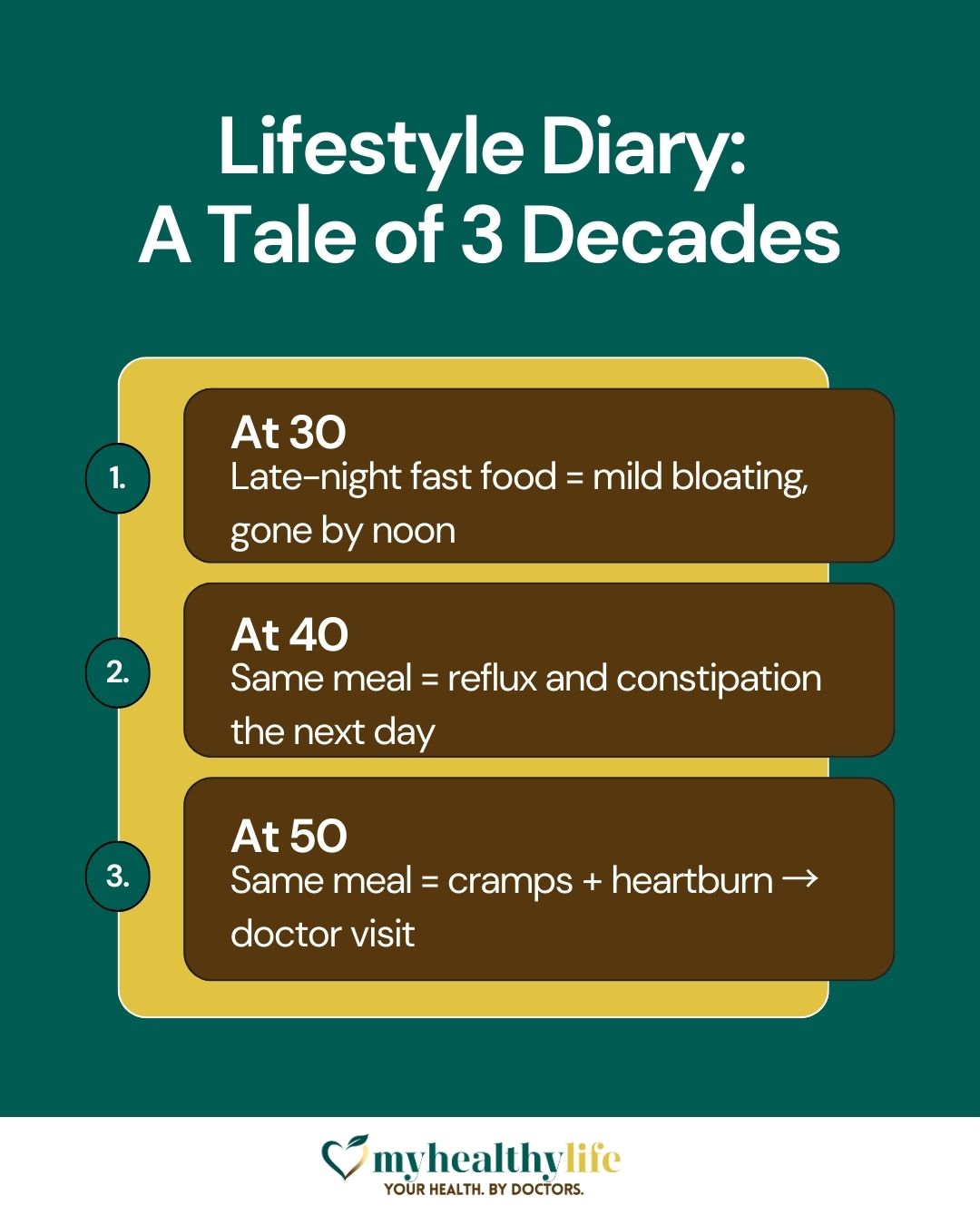
Lifestyle Diary: A Tale of 3 Decades
Here’s how gut health shifts through daily life:
- At 30: John eats fast food late at night. He wakes with mild bloating but recovers by noon.
- At 40: The same meal causes reflux and constipation the next day.
- At 50: He feels stomach cramps and frequent heartburn, prompting a visit to a stomach specialist.
This diary shows why gut health meaning changes with time — the same habits hit differently at every age.
Don’t delay consultation if you experience:
- Persistent diarrhea or constipation (lasting more than 2 weeks).
- Unexplained weight loss.
- Blood in stool (black, tarry, or bright red).
- Severe abdominal pain not relieved by rest.
These could be signs of gastrointestinal disease requiring further tests like endoscopy, stool analysis, or liver ultrasound.
Your Gut Health Check-In
Take a moment to reflect:
- Do I notice more bloating or constipation compared to 10 years ago?
- Am I hydrating and eating enough fiber daily?
- Have I had a check-up for gut health after 40?
- Am I paying attention to subtle changes in stool, digestion, or appetite?
Gut health evolves with every decade but so can your habits. By tuning in early, supporting your microbiome, and staying proactive with screenings, you can enjoy stronger digestion well into your 50s and beyond.
Your gut doesn’t just digest food, it reflects your overall health. Care for it, and it will fuel your energy, focus, and resilience for decades.
https://www.health.harvard.edu/staying-healthy/the-importance-of-gut-health
Share:
Related Posts
Do You Get More Prone to Gallstones as You Age?
Can a Bad Liver Lower Your Testosterone?