A Story Many Women Know Too Well
Maria, 32, thought her stomach issues were just “bad digestion.” But after months of bloating, alternating constipation and diarrhea, and abdominal cramps that flared right before her period, she realized something bigger was going on. Her doctor confirmed it: Irritable Bowel Syndrome (IBS).
She isn’t alone. Millions of women notice that IBS symptoms often intensify during certain phases of their menstrual cycle. And yes, it’s not just in your head. Hormones really do affect your gut.
What Is IBS, Really?
Before diving into hormones, let’s answer the basics.
- IBS meaning: Irritable Bowel Syndrome is a functional gastrointestinal disorder. That means the gut looks normal on tests but doesn’t function normally.
- IBS symptoms: Abdominal pain, bloating, gas, constipation, diarrhea, or a mix of both.
- IBS symptoms in females: Often cycle with hormones, stress, and emotional states. Many women also report IBS flares worsening during menstruation.
IBS doesn’t cause permanent damage, but it can deeply affect daily life from food choices to work to emotional wellbeing.
How Hormones Make IBS Worse
Estrogen and Progesterone in Action
Women’s reproductive hormones don’t just influence fertility, they interact with gut function.
- Estrogen: Generally promotes faster gut motility. When it fluctuates or dips (like right before menstruation), gut sensitivity increases. This can make cramps and bloating more intense.
- Progesterone: Has a relaxing effect on smooth muscle, slowing digestion. High progesterone (during the luteal phase) can lead to constipation, while its drop before periods can trigger diarrhea.
Together, these hormonal shifts can create the classic IBS cycle: constipation in one part of the month, loose stools in another, with bloating and cramps throughout.
Myth vs Fact: IBS in Women
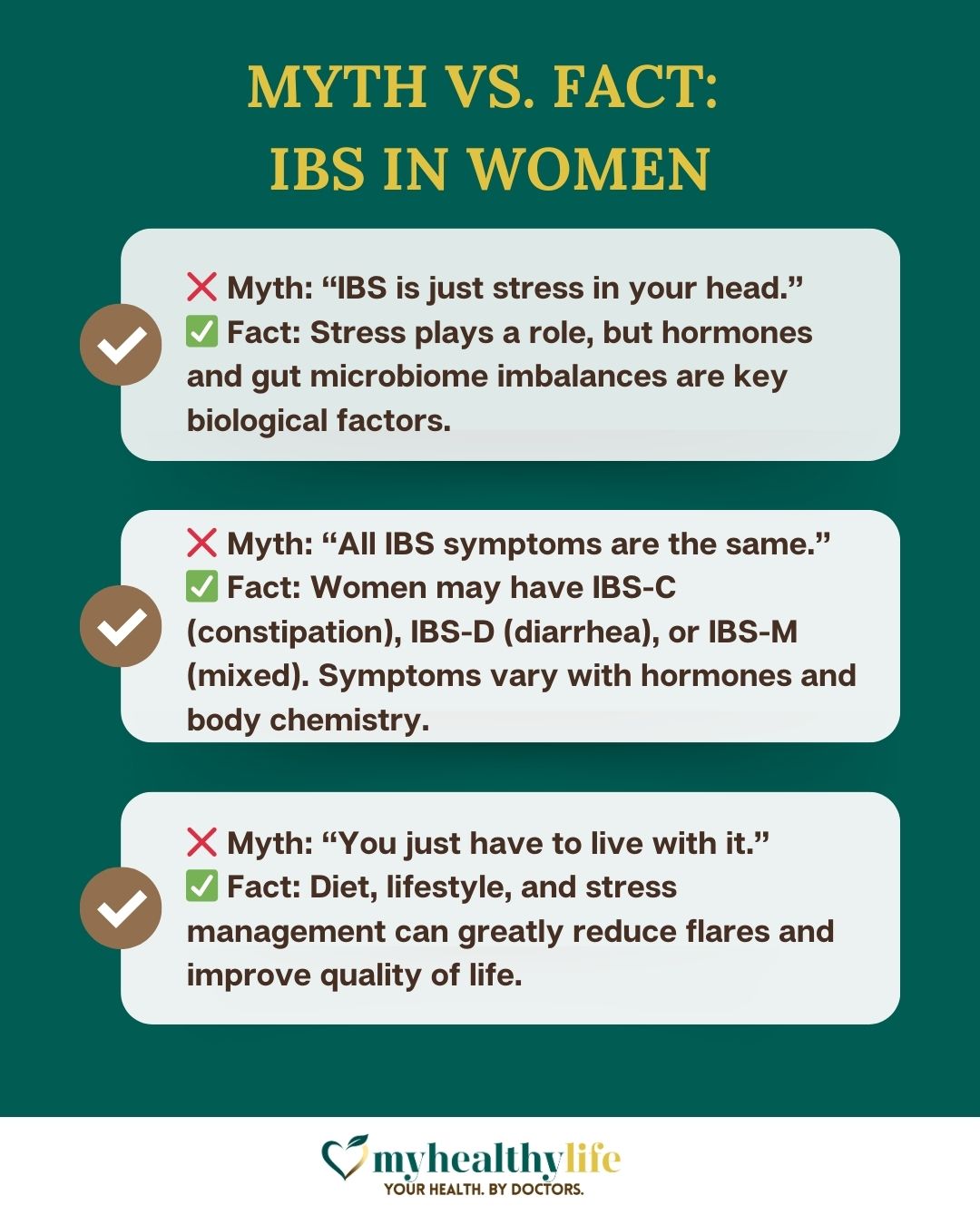
- Myth: “IBS is just stress in your head.”
Fact: Stress does worsen IBS, but hormonal changes and gut microbiome shifts are also biological contributors. - Myth: “All women with IBS have the same symptoms.”
Fact: Some lean toward constipation-predominant IBS (IBS-C), others diarrhea-predominant (IBS-D), and some a mix (IBS-M). Symptoms vary by body chemistry and hormones. - Myth: “You just have to live with it.”
Fact: Lifestyle changes, diet adjustments, and stress reduction can dramatically reduce flares.
Common Triggers That Women Face
- Menstrual Cycle: Fluctuations in estrogen and progesterone.
- Stress: Emotional stress affects the brain-gut axis, worsening IBS.
- Diet: Dairy, fried foods, caffeine, and certain carbs (FODMAPs) are notorious triggers.
- Gut Sensitivity: Women often report heightened abdominal pain compared to men with IBS, possibly due to hormonal influence on pain perception.
Coping Strategies for Relief
Diet Tweaks
- Try a low-FODMAP diet under professional guidance—reducing certain fermentable carbs that feed gut bacteria and trigger gas.
- Eat smaller, more frequent meals to prevent overloading digestion.
- Stay hydrated—water helps prevent constipation.
Stress Management
Stress doesn’t cause IBS, but it intensifies it. Techniques that work include:
- Mindfulness meditation or breathing exercises.
- Light physical activity like yoga or walking.
- Keeping a symptom diary to spot emotional or situational triggers.
Hormone Awareness
Track your cycle and note when IBS flares occur. You may see a pattern around your period. Sharing this timeline with your doctor can help tailor treatment.
Medical Support
- A stomach specialist (gastroenterologist) may suggest antispasmodics for cramps, fiber supplements, or medications that target gut motility.
- If anxiety or depression accompanies IBS, therapy or medications may improve both mood and gut symptoms.
When to See a Doctor
While IBS itself doesn’t damage the gut, symptoms can overlap with more serious conditions. See a doctor if you notice:
- Blood in stool
- Unexplained weight loss
- Severe, persistent abdominal pain
- Diarrhea lasting more than a few weeks
- Symptoms waking you from sleep
These red flags may point to gastrointestinal disease beyond IBS.
Your Gut Health Check-In
Living with IBS, especially as a woman, can feel unpredictable but knowledge is power. Ask yourself:
- Do my gut symptoms worsen during certain phases of my cycle?
- Have I identified food or stress triggers that fuel flares?
- Am I balancing coping strategies with professional medical support?
- Do I know when symptoms cross into red-flag territory?
If you answered yes to the first two and no to the last two, it’s time to take your gut health more seriously. IBS doesn’t have to control your life. Tracking your cycle, adjusting your diet, and managing stress can give you back control.
https://www.mayoclinic.org/diseases-conditions/irritable-bowel-syndrome/symptoms-causes/syc-20360016
https://www.niddk.nih.gov/health-information/digestive-diseases/irritable-bowel-syndrome
Share:
Related Posts
Do You Get More Prone to Gallstones as You Age?
Can a Bad Liver Lower Your Testosterone?