Why This Question Matters
For many men in their 20s and 30s, alcohol is part of social life. Friday night beers, birthdays, reunions, or simply “pulutan with the barkada.” But behind the laughs and bottles, there’s a rising problem: fatty liver disease, and in particular, alcoholic liver disease.
In the Philippines and across Asia, men are developing liver fat and early damage decades earlier than previous generations. The tricky part? The liver is silent. You may not feel pain until serious damage has occurred.
So, how much is too much and what should you really be watching out for?
Myth vs Fact: Alcohol and Your Liver
Myth 1: “I only drink on weekends, so my liver is safe.”
Fact: Binge drinking (5+ drinks in a short period) can harm your liver more than steady low-level drinking. Even “social” weekend binges increase the risk of fatty deposits and inflammation.
Myth 2: “Beer is safer than hard liquor.”
Fact: It’s not the type, it’s the amount of alcohol (ethanol) consumed. A bottle of beer, a glass of wine, and a shot of liquor all contain roughly the same alcohol content.
Myth 3: “Only alcoholics get liver disease.”
Fact: Even moderate drinkers can develop fatty liver, especially if combined with obesity, diabetes, or high cholesterol. Genetics also play a role.
How Much Alcohol Is Considered “Safe”?
Health guidelines define “standard drinks” to help measure intake:
- 1 bottle of beer (330ml, 5%) = ~1 standard drink
- 1 glass of wine (150ml, 12%) = ~1.5 standard drinks
- 1 shot of spirits (45ml, 40%) = ~1 standard drink
According to the World Health Organization and US guidelines:
- Men: up to 2 standard drinks per day
- Women: up to 1 standard drink per day
But “safe” is relative. For many Asians, including Filipinos, genetic differences (like alcohol dehydrogenase enzyme activity) make the liver more sensitive to alcohol damage. That means even less may be risky.
How Alcohol Builds Fat in the Liver
Your liver’s job is to filter toxins, process nutrients, and regulate fat. Alcohol disrupts these processes:
- Fat buildup: Alcohol changes the way the liver metabolizes fat, leading to triglyceride accumulation.
- Inflammation: Over time, liver cells swell and scar (fibrosis).
- Progression: Fatty liver → alcoholic hepatitis → cirrhosis (irreversible scarring).
Even without symptoms, damage can silently build.
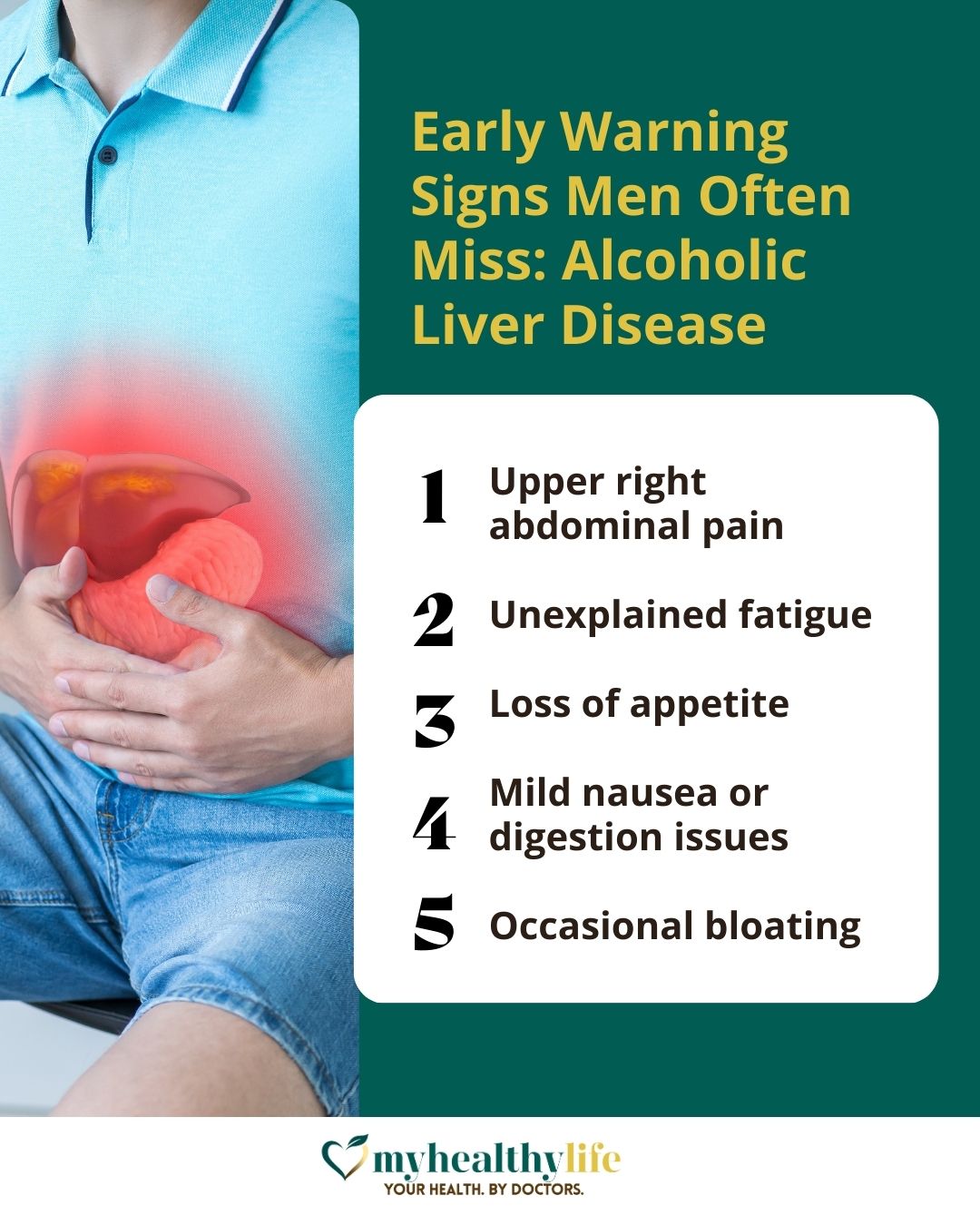
Early Warning Signs Men Often Miss
Alcoholic liver disease doesn’t announce itself loudly at first. Subtle signs may include:
- Upper abdominal pain (especially on the right side)
- Unexplained fatigue
- Loss of appetite
- Mild nausea or digestive discomfort
- Occasional bloating
By the time jaundice (yellowing of the eyes/skin) appears, liver damage is already advanced.
The Role of Screening
Liver Function Test (LFT)
- Measures enzymes like ALT, AST, and GGT.
- High levels suggest stress or injury in the liver.
- Often part of annual executive checkups, especially after age 30.
Liver Ultrasound
- Detects fatty deposits or enlarged liver size.
- Simple, painless, widely available in the Philippines.
- Usually recommended if LFT results are abnormal or if you have risk factors (overweight, diabetic, or heavy alcohol use).
Filipino Men and Higher Risk
Why is fatty liver rising so fast among Filipino men under 40?
- Cultural drinking norms: Heavy drinking is often normalized in social gatherings.
- High-sugar diets: Sweetened drinks and processed carbs add to fat storage.
- Double burden: Many men drink while also struggling with weight or metabolic conditions.
- Low screening rates: Few men undergo preventive liver ultrasound or blood tests unless symptoms are severe.
How to Lower Your Risk
1. Set a Realistic Drinking Limit
If you drink, keep it below 2 drinks per day ideally less. Remember: more days without alcohol are better for recovery.
2. Add Liver-Friendly Foods
- Leafy greens, cruciferous vegetables (broccoli, cabbage)
- Omega-3-rich fish (sardines, salmon)
- Garlic, ginger, turmeric (anti-inflammatory properties)
3. Watch Your Waistline
Alcohol calories add up. Weight management is key in reducing fatty liver risk.
4. Hydrate and Balance
Drink plenty of water when drinking alcohol. Don’t combine drinking with high-fat, salty foods.
5. Don’t Skip Screening
If you’ve been drinking regularly for more than 5 years, consider a liver profile test or ultrasound even if you feel fine.
When to Seek Medical Help Immediately
- Severe upper abdominal pain
- Persistent nausea and vomiting
- Yellowing of the eyes or skin
- Swelling in the legs or abdomen
- Dark urine or pale stools
These are signs of significant liver injury. Don’t wait to see a doctor.
Your Liver Health Check-In
Ask yourself today:
- How many drinks do I really consume in a week?
- Have I ever done a liver function test or ultrasound?
- Do I have subtle symptoms like fatigue or mild abdominal discomfort?
- Am I balancing alcohol with liver-friendly foods—or just relying on “tiis”?
- Could I cut back by 25% this month to give my liver a break?
The earlier you take stock, the greater your chance of reversing fatty liver before it becomes irreversible. Your liver is resilient but only if you give it the care it deserves.
https://www.who.int/news-room/fact-sheets/detail/alcohol
https://liverfoundation.org/liver-diseases/alcohol-related-liver-disease/
https://my.clevelandclinic.org/health/diseases/15831-alcoholic-hepatitis
Share:
Related Posts
Do You Get More Prone to Gallstones as You Age?
Can a Bad Liver Lower Your Testosterone?