Why Does Pregnancy Cause Bloating?
Q: Why does my stomach feel bloated even early in pregnancy?
Pregnancy hormones are the main culprit. Progesterone relaxes the smooth muscles in your digestive tract, which slows digestion. Food moves more slowly through the stomach and intestines, leading to gas, constipation, and that familiar feeling of fullness or tightness in the belly.
Another factor: your growing uterus. Even in the first trimester, subtle changes in abdominal pressure can affect how your stomach and intestines function. By the second and third trimesters, as the uterus expands, it compresses the intestines, further slowing digestion and making bloating more likely.
What’s Considered “Normal” Pregnancy Bloating?
Q: How do I know if bloating is just a routine part of pregnancy?
Typical pregnancy bloating is mild, comes and goes, and often improves with simple adjustments like:
- Eating smaller, frequent meals.
- Avoiding gas-triggering foods (beans, broccoli, fried food).
- Drinking plenty of water to ease constipation during pregnancy.
- Light exercise, such as walking or prenatal yoga, which helps move gas through the intestines.
It’s uncomfortable but not dangerous. Many women describe it as a “tight waistband feeling” or “gassy pressure” that eases with movement or a bowel movement.
What Symptoms Should Raise Concern?
Q: When does bloating cross the line into something more serious?
While bloating itself is almost always harmless, there are red flags to watch for:
- Severe, persistent stomach ache and bloating that does not improve with rest or passing gas.
- Vomiting that accompanies bloating and prevents you from keeping food or fluids down.
- Bleeding or spotting along with abdominal pain.
- Sudden, sharp upper abdominal pain (particularly on the right side), which could indicate gallbladder or liver issues.
- Signs of preterm labor like cramping, back pain, or fluid leakage.
If you notice these symptoms, it’s important to call your doctor immediately.
Is Constipation During Pregnancy Linked to Bloating?
Q: Why do pregnancy and constipation often go hand in hand?
Yes, constipation is one of the most common digestive complaints during pregnancy. Progesterone relaxes not only the uterus but also the intestinal muscles, slowing bowel movement. Add in iron supplements (often prescribed for anemia prevention), and constipation becomes even more likely.
When stool stays longer in the large intestine, gas builds up, leading to increased bloating and discomfort. That’s why constipation during pregnancy is one of the main drivers of abdominal pressure.
Tips to ease constipation and bloating include:
- Drinking at least 8–10 glasses of water daily.
- Eating fiber-rich foods (fruits, vegetables, oats, whole grains).
- Gentle daily movement like walking or stretching.
- Talking to your doctor about stool softeners if constipation is severe.
Could Bloating Signal a Pregnancy Complication?
Q: Are there conditions where bloating is actually a warning sign?
Yes. While rare, certain pregnancy complications can first appear as bloating or abdominal discomfort:
- Preeclampsia: Swelling, upper abdominal pain, headaches, and high blood pressure can be warning signs.
- Gallstones: Pregnancy increases risk due to hormonal effects on bile. Pain after fatty meals and bloating may suggest gallbladder problems.
- Gastrointestinal infection: Severe diarrhea, vomiting, fever, and bloating could point to an infection requiring urgent care.
- Ovarian torsion (rare): Sudden severe pain with bloating may need emergency surgery.
This is why it’s important to distinguish ordinary discomfort from patterns that worsen or come with other concerning symptoms.
Practical Ways to Reduce Bloating During Pregnancy
Q: What simple changes actually help?
- Eat slowly: Rushed eating increases swallowed air, worsening bloating.
- Break up meals: 5–6 small meals are easier to digest than 3 heavy ones.
- Avoid carbonated drinks: Soda, sparkling water, and beer all add excess gas.
- Watch food triggers: Beans, onions, cruciferous veggies, and fried foods are common culprits.
- Prioritize posture: Sitting upright or taking a walk after meals encourages digestion.
- Use a pillow for sleep support: Lying slightly elevated can ease nighttime bloating and reflux.
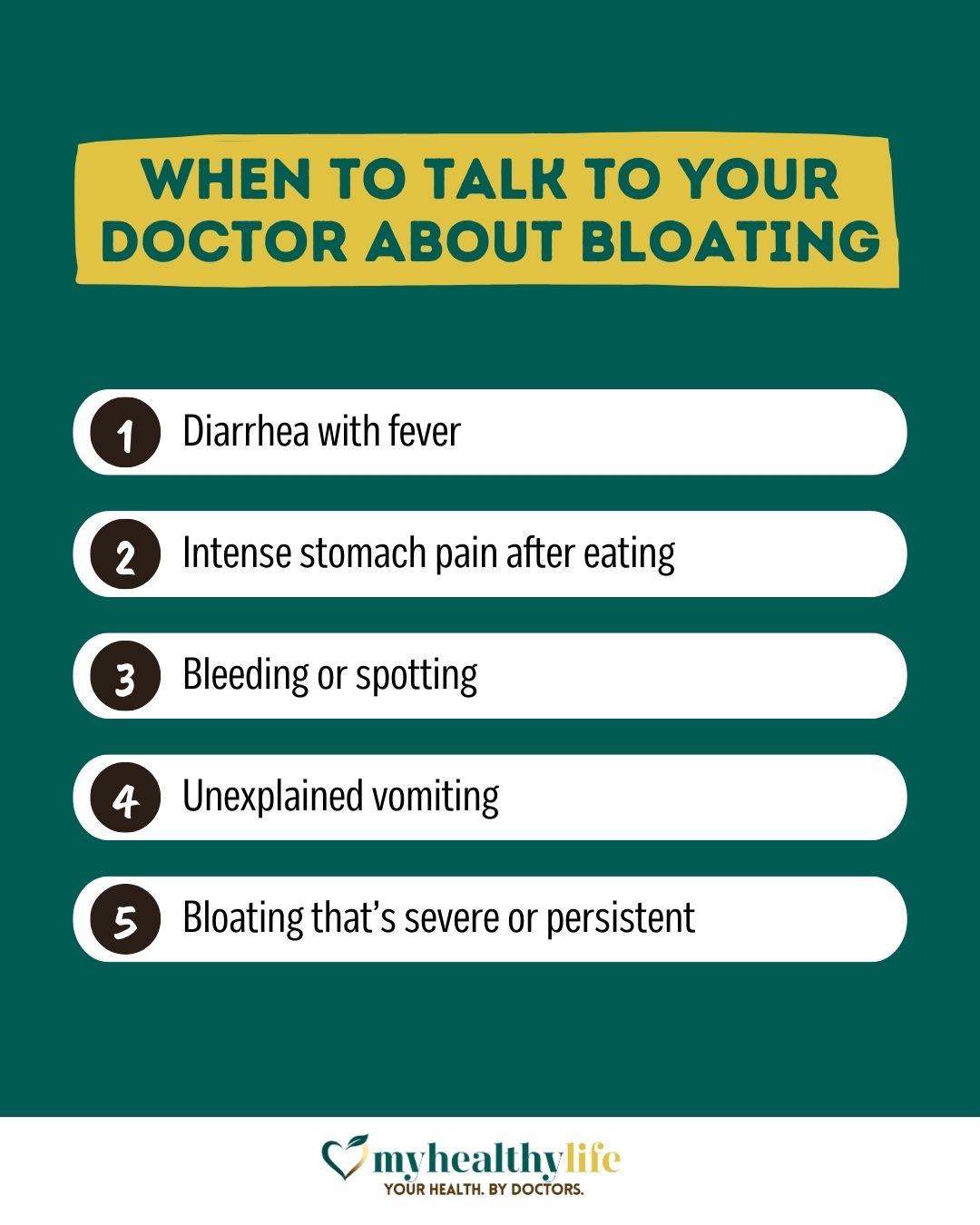
Q: At what point should I reach out to a stomach doctor or OB-GYN?
If bloating is severe, persistent, or paired with other gastrointestinal symptoms like:
- Diarrhea with fever
- Stomach pain after eating that is intense
- Bleeding or spotting
- Unexplained vomiting
Then it’s time for professional evaluation. In some cases, your doctor may order a liver ultrasound, stool test, or even refer you to a gastroenterologist if digestive issues persist.
Your Pregnancy Health Check-In
Pregnancy bloating is usually normal, caused by slowed digestion and hormonal changes. But your body also sends signals when something isn’t right. Ask yourself:
- Is my bloating mild and manageable, or sharp and painful?
- Do I also have vomiting, fever, or bleeding?
- Am I staying hydrated, active, and mindful of food triggers?
- Do I know when to call my doctor for extra reassurance?
If your answers point toward persistent or worsening discomfort, don’t dismiss it as “just pregnancy.” Getting checked early protects not only your gut health but also your pregnancy’s safety.
Share:
Related Posts
Do You Get More Prone to Gallstones as You Age?
Can a Bad Liver Lower Your Testosterone?