We’ve all had a rash at some point—maybe from a new soap, mosquito bites, or too much sun. Usually, they fade with a little care. But what happens when those patches, bumps, or itchy red dots stick around for weeks—or even months?
Persistent rashes can be more than a cosmetic nuisance. They may be your skin’s way of waving a red flag about deeper health concerns.
This article will help you understand:
- What kinds of skin diseases can cause long-lasting rashes
- How to tell if a rash is worth worrying about
- What a dermatologist can do to help
Why Do Rashes Linger?
Your skin is your largest organ—and it’s your first defense against irritants, allergens, and infections. When it’s inflamed, your immune system sends signals to fight off what it sees as a threat.
A short-lived rash could be from an allergy or mild irritation. But a persistent one might signal:
- Chronic inflammation (eczema, psoriasis)
- Ongoing infection (fungal, bacterial, or viral)
- Autoimmune activity (lupus, dermatomyositis)
- Underlying systemic illness
If it doesn’t clear up after two weeks of home care, it’s time to investigate.
Common Skin Diseases That Cause Persistent Rashes
1. Eczema (Atopic Dermatitis)
- What it looks like: Red, itchy patches—sometimes thickened from scratching
- Why it sticks around: It’s a chronic inflammatory skin condition with flare-ups triggered by allergens, weather changes, or stress.
- Other clues: Often appears in creases of elbows, knees, or neck.
2. Psoriasis
- What it looks like: Raised plaques with silvery-white scales
- Why it sticks around: It’s an autoimmune disease that accelerates skin cell turnover.
- Other clues: May also affect scalp, nails, and joints (psoriatic arthritis).
3. Fungal Infections (Tinea / Ringworm)
- What it looks like: Circular, itchy red patches with a raised border
- Why it sticks around: Fungus thrives in warm, moist areas and can persist without antifungal treatment.
- Other clues: Common in feet (athlete’s foot), groin (jock itch), and body folds.
4. Chronic Allergic Reactions (Contact Dermatitis)
- What it looks like: Rash limited to areas exposed to an allergen (e.g., jewelry, cosmetics)
- Why it sticks around: Ongoing contact with the irritant—even in small doses—keeps the rash active.
5. Lupus-Related Skin Lesions
- What it looks like: Butterfly-shaped rash on cheeks/nose, or scaly patches on sun-exposed areas
- Why it sticks around: Lupus is an autoimmune disease that needs medical management.
6. Keratosis Pilaris (less harmful but persistent)
- What it looks like: Small, rough bumps—often called “chicken skin”
- Why it sticks around: Genetic tendency; improves with exfoliation and moisturizing, but rarely goes away entirely.
7. Skin Cancer (Melanoma, SCC, BCC)
- What it looks like: Unhealing sores, changing moles, or rough/scaly patches
- Why it sticks around: Cancerous growth needs medical removal—home remedies won’t work.
Skin Lesions That Need Urgent Check
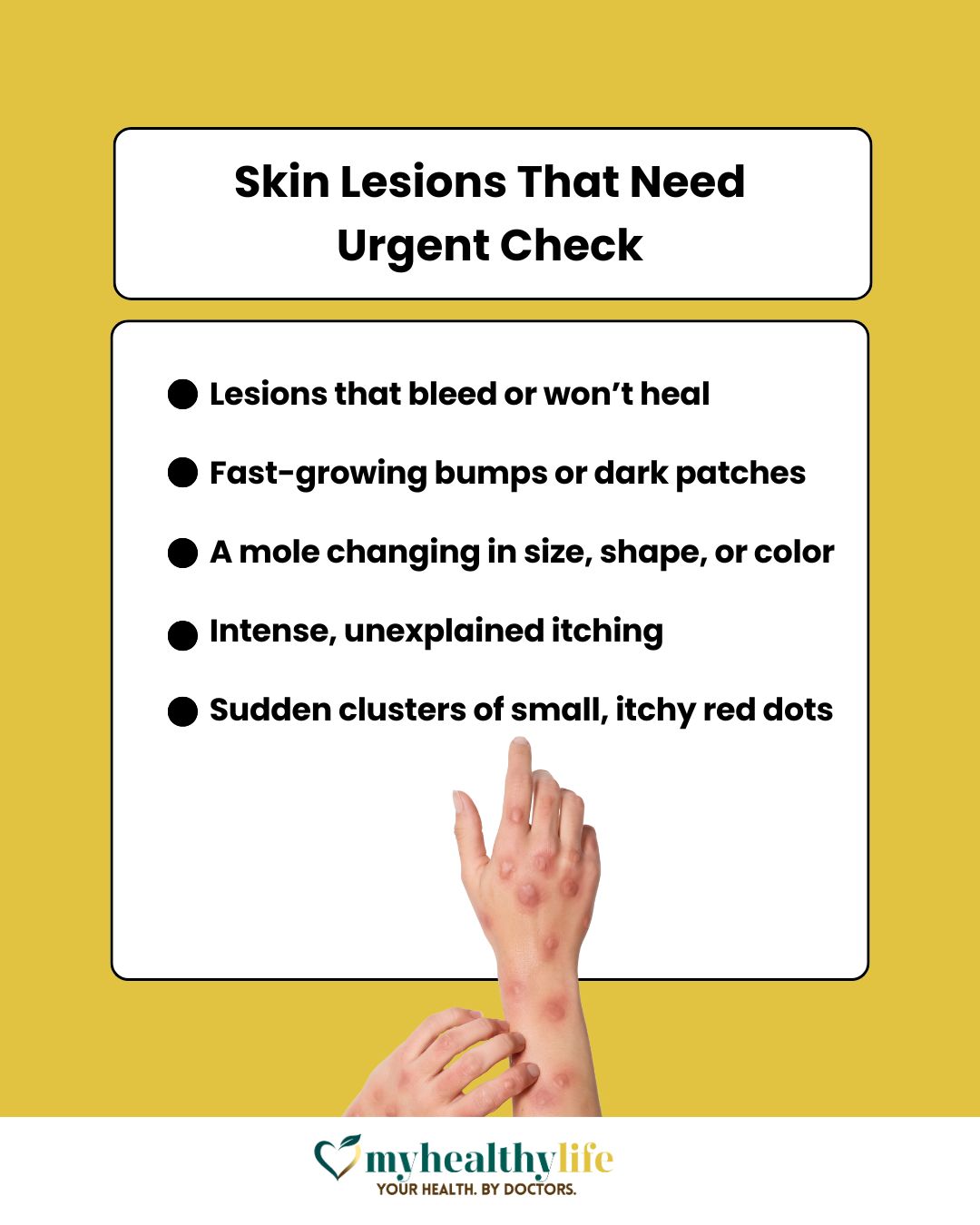
Not all bumps and spots are equal. Dermatologists use the term “skin lesions” to describe any abnormal change in skin color, texture, or appearance.
Call your doctor sooner if you notice:
- Lesions that bleed easily or won’t heal
- Rapidly growing bumps or dark patches
- A mole that changes in size, shape, or color
- Intense itching without a clear cause
- Multiple itchy red dots on skin appearing suddenly
When an Itchy Red Dot Is More Than Just a Bite
We often blame red spots on mosquitoes or heat rash. But in some cases, tiny red dots can be:
- Petechiae (tiny blood vessel bleeding) — linked to infections or clotting issues
- Cherry angiomas — harmless but worth checking if they suddenly multiply
- Allergic hives — may require antihistamines or prescription medication
When to See a Dermatologist
See a dermatologist if:
- The rash lasts more than 2–3 weeks without improvement
- It’s spreading quickly or covering large areas
- You have fever, fatigue, or swollen lymph nodes
- The rash is painful, not just itchy
- You notice open wounds or oozing fluid
A dermatologist can:
- Examine the skin visually and under dermoscopy
- Order a biopsy or skin scraping
- Prescribe targeted treatment (antifungals, steroids, antibiotics, immunosuppressants)
What to Expect at Your Dermatology Visit
- History-taking — onset, triggers, medications, allergies
- Physical exam — location, size, and nature of the rash or lesion
- Diagnostic tests — swabs, blood work, patch tests, or biopsy
- Treatment plan — topical creams, oral medications, lifestyle adjustments
Home Care Tips While Waiting for Your Appointment
- Avoid scratching to prevent infection
- Use gentle, fragrance-free cleansers
- Apply a moisturizer twice daily
- Wear loose, breathable clothing
- Avoid known allergens or irritants
Dermatology Visit Readiness Checklist
Before heading to your dermatologist, tick these off:
- I’ve tracked when the rash started and any changes
- I know what products or detergents I’ve used recently
- I’ve listed all medications and supplements I’m taking
- I’ve noted any family history of skin diseases
- I’ve taken clear photos of the rash over time
Keeping these details handy helps your dermatologist pinpoint the cause faster—saving you from trial-and-error treatments.
MyHealthyLife Note:
Skin is like your body’s status screen—it often reflects what’s happening inside. If your skin is calling for help, don’t just mute the notification. Answer it. The earlier you act, the better the outcome for both your skin and your overall health.
https://www.aad.org/public/diseases/a-z/rash-treatment
https://www.mayoclinic.org/diseases-conditions/psoriasis/symptoms-causes/syc-20355840
https://my.clevelandclinic.org/health/diseases/21751-skin-lesions
Share:
Related Posts

Skin & Immunity in Your 30s, 40s, and 50s: How to Keep Both in Top Shape

Shingles: Why Your Risk Grows After 50