Most people think of osteoporosis as something that happens much later in life—something to worry about when you’re already deep into your 60s or 70s.
But here’s the reality: bone loss doesn’t wait until retirement. In fact, it starts earlier than most of us expect, especially in women post-menopause or men with certain risk factors. The worst part? You won’t feel it happening until it’s already caused irreversible damage.
That’s why knowing when to screen for osteoporosis is critical—so you can stay strong, upright, and unbreakable for the long run.
What Is Osteoporosis, Again?
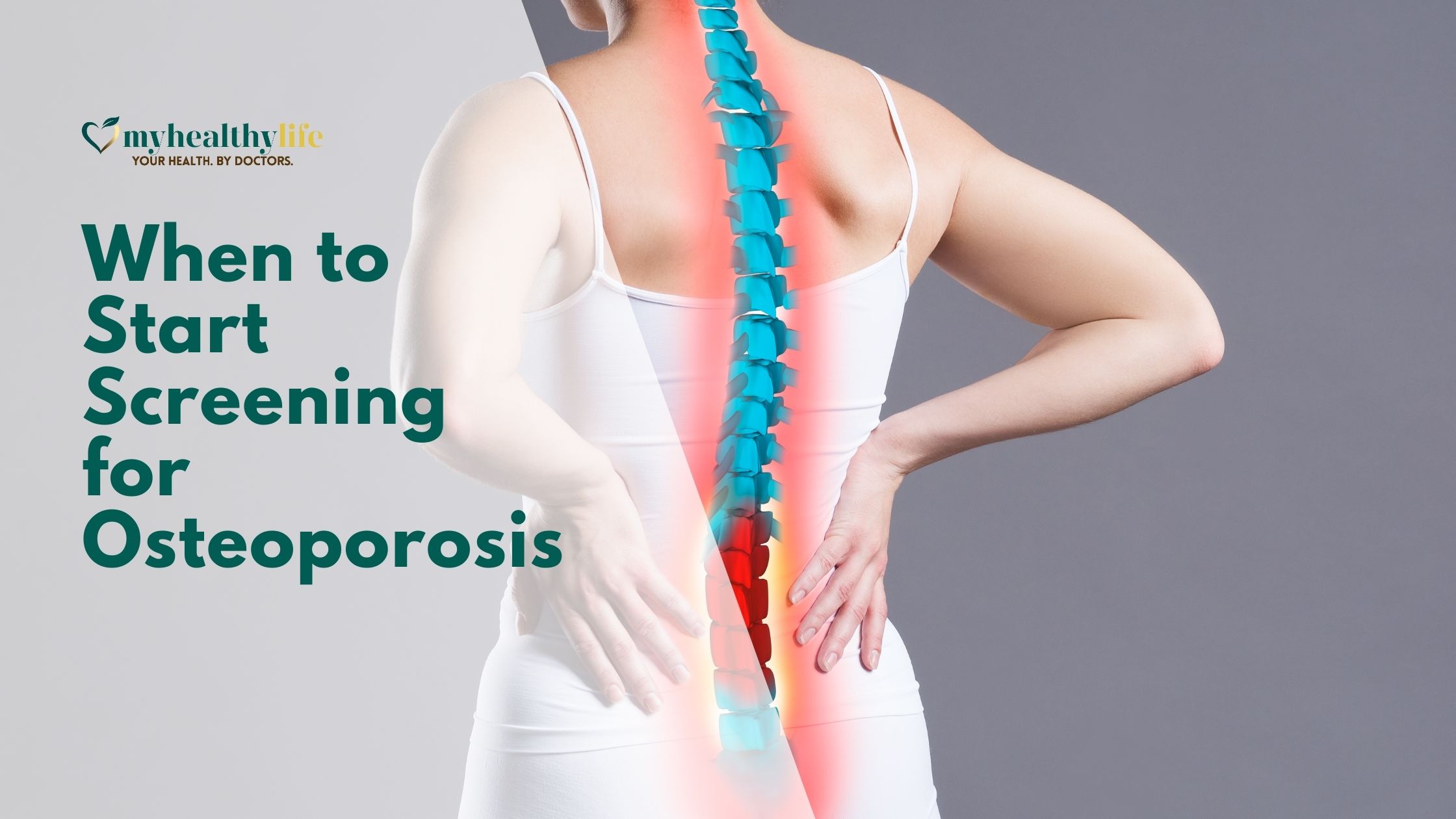
Let’s break it down. Osteoporosis means “porous bones.” It’s a condition where your bones become weak, brittle, and more likely to fracture—even from simple movements or minor falls. While it’s often associated with women over 65, bone thinning can start much earlier if you don’t catch the signs.
The good news? Screening through a bone density scan (DEXA) helps catch bone loss early. Even better, treatment and lifestyle changes can help preserve or even build back bone strength.
What Is a Bone Density Scan?
A bone density scan, also called a DEXA scan, is a fast, painless test that measures how much calcium and other minerals are in your bones. It typically targets the hips, spine, and sometimes wrists—common fracture zones.
The result is called a T-score:
- T-score above -1 = Normal
- T-score between -1 and -2.5 = Osteopenia (early bone loss)
- T-score below -2.5 = Osteoporosis
This simple score can literally predict your future risk of fractures—and whether osteoporosis medications or supplements like calcium and vitamin D might be needed.
So, When Should You Start Screening?
Let’s get specific. Here’s a breakdown based on expert guidelines and lifestyle factors:
🟩 Women Over 65
This is the gold standard. If you’re 65 or older, screening is a must—even without symptoms.
🟨 Women Under 65 With Risk Factors
Got any of the following?
- Early menopause (before age 45)
- History of fractures after minor falls
- Family history of osteoporosis
- Low body weight or eating disorders
- Smoking or heavy alcohol use
- Long-term steroid use (like for asthma or autoimmune conditions)
- Chronic illnesses (like rheumatoid arthritis or thyroid disorders)
If yes, ask your doctor about getting screened in your late 40s or 50s—you might be at risk earlier than expected.
🟦 Men Over 70
Yes, men get osteoporosis too! It’s less common, but it can be just as dangerous. Men aged 70 and up should undergo screening—especially if they’ve experienced height loss, back pain, or other symptoms.
🟧 Men Over 50 With Risk Factors
Guys, listen up. If you’ve experienced low testosterone, chronic steroid use, or have a family history of osteoporosis, talk to your doctor by your early 50s.
The Role of Lifestyle in Bone Loss
Not everything about bone health comes down to age. Certain lifestyle factors can speed up bone thinning, making early screening even more urgent:
- Low calcium intake
- Vitamin D deficiency
- Smoking
- Sedentary lifestyle
- Drinking more than 2–3 alcoholic beverages daily
- Poor nutrition or rapid weight loss
If you’ve got a few of these in the mix, even if you’re under 50, bring it up at your next check-up.
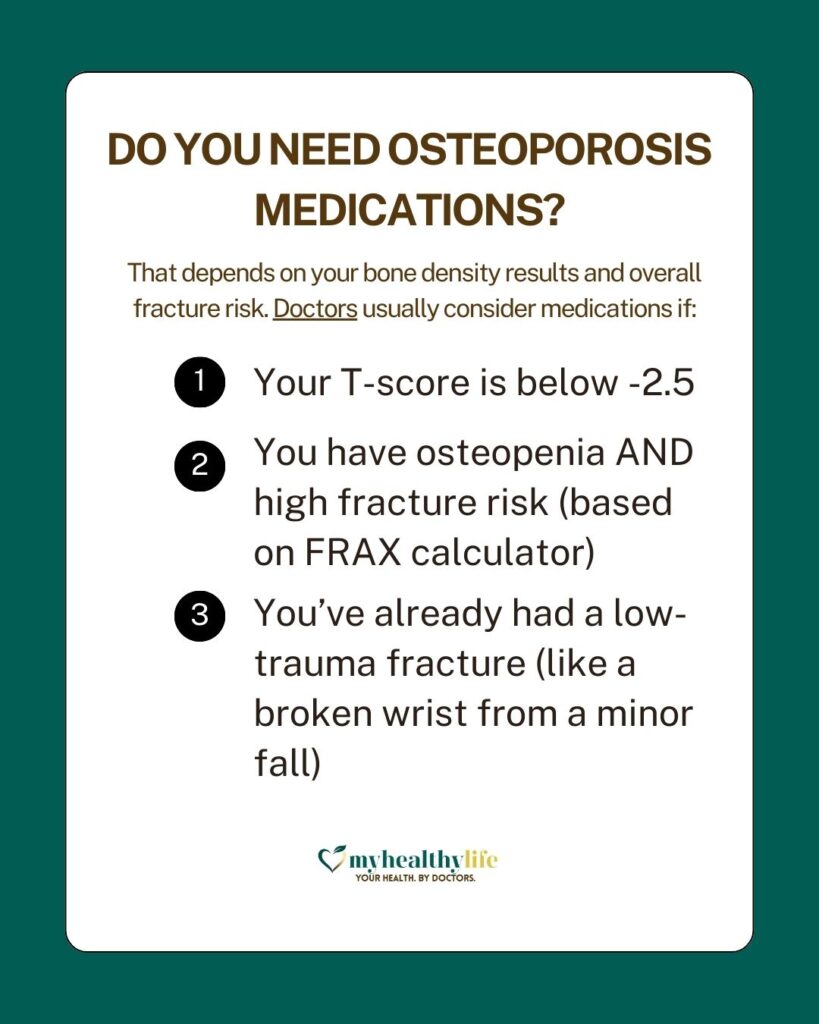
Do You Need Osteoporosis Medications?
That depends on your bone density results and overall fracture risk. Doctors usually consider medications if:
- Your T-score is below -2.5
- You have osteopenia AND high fracture risk (based on FRAX calculator)
- You’ve already had a low-trauma fracture (like a broken wrist from a minor fall)
Common osteoporosis medications include:
- Bisphosphonates (like alendronate or risedronate)
- Denosumab (a shot that helps stop bone loss)
- Selective estrogen receptor modulators (SERMs)
- Parathyroid hormone analogs (to build new bone)
These can reduce fracture risk by up to 70%, especially when combined with calcium and vitamin D.
Calcium + Vitamin D: Still Your Bone MVPs
Even if you’re not on meds, calcium and vitamin D are your best daily defense:
Nutrient | Recommended Daily Intake (adults 50+) | Sources |
Calcium | 1000–1200 mg | Dairy, tofu, leafy greens, sardines |
Vitamin D | 600–800 IU | Sunlight, salmon, egg yolks, supplements |
Supplements may be needed if your diet doesn’t cover it or you avoid sun exposure.
Your Screening Snapshot
Not sure where you stand? Use this quick checklist to know if it’s time to ask your doctor for a DEXA scan:
✅ Age 65+ (women) or 70+ (men)?
✅ Experienced menopause before age 45?
✅ Have a history of fractures or bone breaks?
✅ Family history of osteoporosis?
✅ On steroids or hormone-altering meds long-term?
✅ Low body weight or rapid weight loss?
✅ Chronic illnesses like thyroid, RA, or diabetes?
If you checked two or more, screening sooner rather than later is smart.
The Bottom Line
Bone thinning doesn’t come with warning alarms—but you can outsmart it. Screening for osteoporosis is a simple, safe, and powerful way to protect your mobility, independence, and overall health.
Don’t wait until your bones give you a painful reminder. Ask your doctor when you should be screened—and what you can do now to stay strong.
Share:
Related Posts
Why Your Back Pain Keeps Coming Back—Despite Rest
When Your Doctor Orders a Bone Scan: What to Expect