When Bloating Happens Without Eating
We often blame a heavy meal or too much soda for stomach discomfort. But what about those times when your belly feels swollen, tight, or gassy even if you haven’t eaten in hours? Bloating without food is surprisingly common and can leave you wondering if something is wrong with your digestion.
The truth is, your digestive system is active all day, not just when you’re eating. Hormones, gut bacteria, and even stress can trigger symptoms like stomach cramps, pressure, or visible swelling in your belly. While occasional bloating is usually harmless, persistent or painful bloating may point to an underlying issue that needs medical attention.
In this article, we’ll explore the most common causes of bloating on an empty stomach, what symptoms to track, and practical ways to feel better.
Common Causes of Bloating Without Eating
1. Constipation and Trapped Gas
Even if you haven’t eaten, food residue and stool continue to move slowly through your intestines. When digestion slows down, gas produced by gut bacteria can get trapped behind stool. This causes your abdomen to feel full or distended, a classic case of constipation bloating.
Constipation-related bloating often comes with:
- Infrequent bowel movements (fewer than three per week)
- Hard or lumpy stools
- Stomach cramps that ease after a bowel movement
Tip: Staying hydrated, eating more fiber-rich foods, and walking daily can improve bowel regularity and reduce trapped gas.
2. Gut Bacteria Imbalance
Your gut is home to trillions of bacteria—collectively called the gut microbiome. These microbes play a major role in digestion, metabolism, and immune health. But when the balance shifts (due to antibiotics, poor diet, or stress), excessive gas and bloating can occur—even when you’re not actively digesting food.
Signs that bloating may be linked to gut bacteria include:
- A bloated stomach with diarrhea or alternating constipation
- Excessive gas, even after light meals
- Symptoms that flare after eating certain carbohydrates (a condition called SIBO, or small intestinal bacterial overgrowth)
Keeping your microbiome healthy with fiber, probiotics, and less processed food can reduce bloating and improve overall gut health.
3. Slow Digestion (Gastroparesis)
Sometimes, the stomach empties too slowly into the intestines. This condition, called gastroparesis, can cause you to feel bloated or full hours after eating—even if you haven’t eaten again.
Common signs of gastroparesis:
- Persistent fullness
- Nausea or vomiting undigested food
- Upper stomach pain
Gastroparesis is more common in people with diabetes or certain nerve conditions. If you suspect this, seek medical evaluation.
4. Irritable Bowel Syndrome (IBS)
IBS is a functional gut disorder where the nerves in your digestive tract are extra sensitive. That means bloating, cramps, and irregular bowel habits can occur—even when your stomach is empty.
With IBS, bloating often feels worse as the day goes on and may come with:
- Diarrhea, constipation, or both
- Urgency after meals
- Stomach pain relieved by bowel movements
IBS is not life-threatening but can impact quality of life. Keeping a food and symptom journal helps identify patterns.
5. Hormonal Fluctuations
Hormones strongly influence digestion and fluid retention. Many women notice bloating during their menstrual cycle—even on an empty stomach—because shifts in estrogen and progesterone slow digestion and trigger water retention.
This type of bloating usually comes and goes but may feel especially intense in the days before a period.
6. Nutritional Deficiencies
Low levels of certain nutrients, especially vitamin B12, folate, and vitamin D, can lead to sluggish digestion and fatigue. Deficiencies affect both gut muscle function and the nervous system, sometimes mimicking IBS-like bloating or abdominal discomfort.
7. Sleep Problems and Stress
Poor sleep disrupts gut hormone regulation and increases cortisol, the stress hormone. High cortisol can alter digestion, slow bowel movement, and even change the gut microbiome—leading to bloating and discomfort.
Chronic stress also makes people more aware of gut sensations, amplifying discomfort from even mild bloating.
8. Medication Side Effects
Several common medications list bloating or abdominal swelling as side effects. These include:
- Antidepressants
- Antihistamines
- Sleep aids
- Certain painkillers
If your bloating worsens after starting a new prescription, talk to your doctor before making changes.
9. More Serious Medical Causes
In rare cases, persistent bloating may be a sign of underlying conditions such as:
- Thyroid disease
- Ovarian cysts or tumors
- Abdominal fluid buildup (ascites)
- Celiac disease or gluten intolerance
This is why bloating should not be ignored if it’s new, persistent, or accompanied by other symptoms.
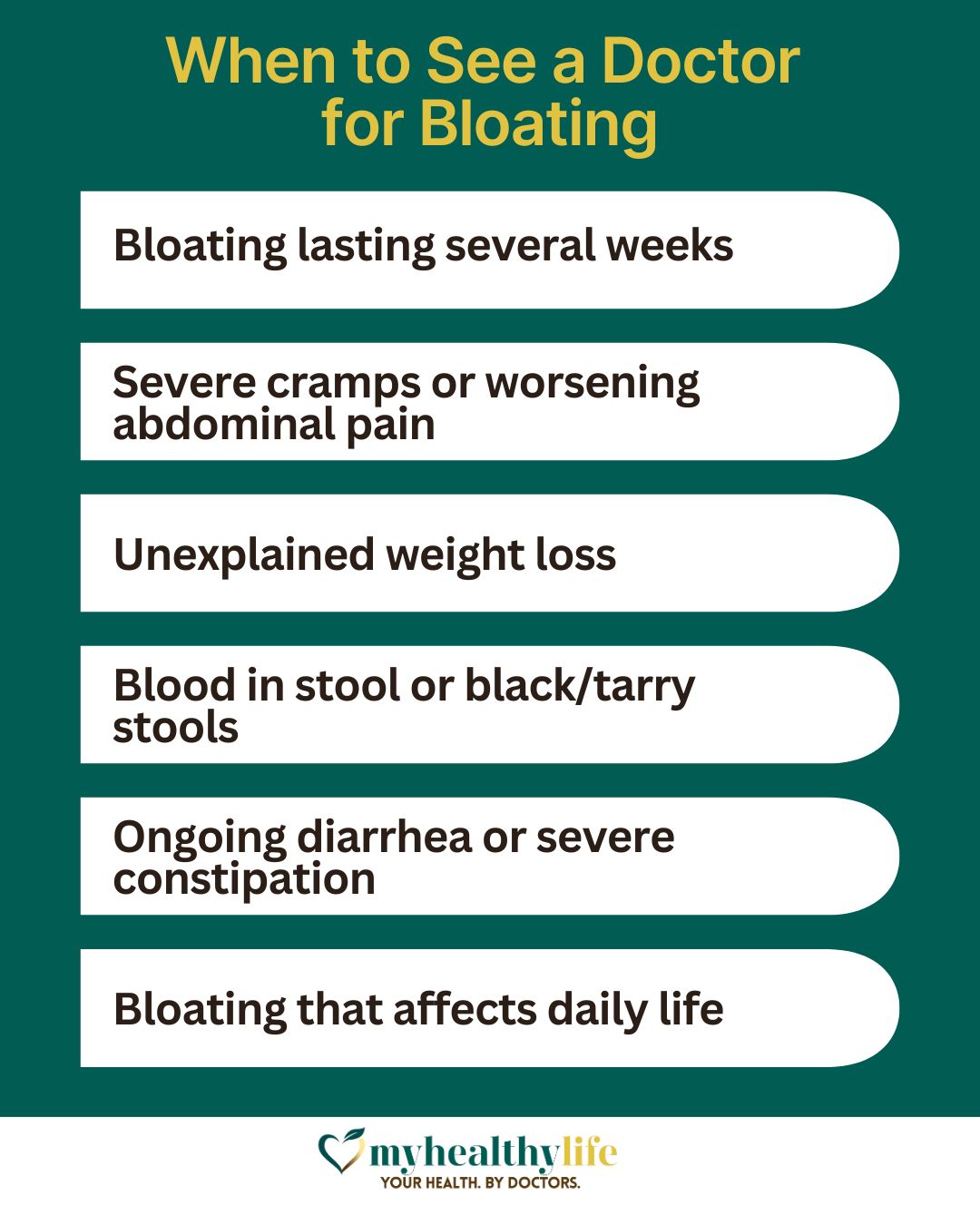
It’s normal to feel bloated occasionally, but seek medical advice if you experience:
- Bloating that lasts several weeks
- Severe stomach cramps or worsening abdominal pain
- Unexplained weight loss
- Blood in stool or black/tarry stools
- Persistent diarrhea or severe constipation
- A bloated stomach that interferes with daily activities
Your doctor may recommend:
- A stomach pain chart review to track timing and triggers
- Stool tests to check for infection or gut bacteria imbalances
- Blood tests for thyroid or nutritional deficiencies
- Imaging tests (ultrasound, CT, or endoscopy) if structural causes are suspected
Practical Ways to Reduce Bloating
While treatment depends on the underlying cause, these strategies support better gut health and reduce everyday bloating:
Diet Adjustments
- Eat smaller, more frequent meals
- Avoid carbonated drinks and artificial sweeteners that increase gas
- Add fiber gradually to prevent constipation
- Try low-FODMAP foods if IBS is suspected
Lifestyle Support
- Hydration – Drink enough water to keep stool soft
- Movement – Light exercise, especially walking, helps gas pass
- Stress management – Mindfulness, yoga, or deep breathing calms the gut-brain connection
Gut Health Support
- Probiotic foods like yogurt, kefir, kimchi, and sauerkraut can restore bacterial balance
- Prebiotic fibers from garlic, onions, bananas, and oats feed good bacteria
Self-Check: Is My Bloating Normal?
Use this checklist to reflect on your symptoms:
- Do I often have constipation or diarrhea alongside bloating?
- Does my bloating feel worse at certain times (after meals, before my period)?
- Have I tried hydration, fiber, or exercise without relief?
- Do I have other symptoms like weight loss, severe pain, or fatigue?
If your answers lean toward “yes” on the last two, it’s a sign to book a check-up.
Key Takeaway
Bloating on an empty stomach can feel unsettling, but it’s not always a sign of something serious. Constipation, gut bacteria imbalance, hormonal changes, and stress are among the most common triggers. Still, persistent or painful bloating should be checked by a doctor to rule out more serious issues.
Taking small steps—like moving more, staying hydrated, adjusting your diet, and supporting gut health—can often make a big difference in comfort and overall wellbeing.
https://www.niddk.nih.gov/health-information/digestive-diseases/gas-bloating-burping
https://gi.org/topics/irritable-bowel-syndrome/
https://my.clevelandclinic.org/health/diseases/15522-gastroparesis
https://www.hopkinsmedicine.org/health/conditions-and-diseases/the-gut-microbiome
Share:
Related Posts
Do You Get More Prone to Gallstones as You Age?
Can a Bad Liver Lower Your Testosterone?