You don’t have to be an athlete to start stretching like one. The truth? Once you hit your mid-30s, your body slowly begins to tighten up. Your posture shifts, your muscles lose elasticity, and that old habit of “not warming up” starts to catch up with you. Suddenly, that stiff lower back in the morning or random hip ache after sitting all day becomes more than just a nuisance.
But here’s the good news: you don’t need a 30-minute yoga class to turn things around. Just three daily stretches can make a world of difference—especially when it comes to preventing back pain, improving mobility, and preserving that effortless flexibility you once took for granted.
Why Stretching After 35 Matters More Than Ever
As we age, our muscles naturally lose flexibility and length. Collagen production slows, posture changes due to desk jobs or tech habits, and the wear-and-tear from daily life starts showing in the form of muscle tightness, joint stiffness, or even chronic back pain.
Without stretching:
- Hip flexors shorten, tilting your pelvis and causing lower back strain
- Hamstrings tighten, pulling on the lumbar spine
- Upper back muscles weaken, leading to slouching and shoulder pain
Stretching corrects all of this. It’s not just about touching your toes—it’s about realigning your body, rehydrating your tissues, and keeping your joints happy as you age.
The 3 Stretches That Change Everything
These aren’t gimmicks or trendy moves. These are functional, body-friendly stretches that counteract the most common muscle imbalances seen in people over 35. You’ll recognize how good they feel instantly—and why your body craves them.
1. Hip Flexor Stretch (a.k.a. The Desk Detox)
If you sit a lot, your hip flexors are likely chronically tight. This tightness pulls your pelvis forward, putting strain on your lower back and disrupting posture.
How to do it:
- Kneel on one knee, with the other foot forward (like a lunge).
- Tuck your pelvis under slightly and shift forward.
- You should feel a deep stretch in the front of the kneeling leg’s hip.
- Hold for 30 seconds. Switch sides.
Why it works:
This stretch opens up the hips, relieves tension from long periods of sitting, and eases pressure on the lumbar spine. It’s one of the best stretches for back pain caused by sedentary lifestyles.
2. Standing Hamstring Stretch (a.k.a. The Posture Reset)
Tight hamstrings don’t just make you inflexible—they can pull on your lower back, reduce stride length, and mess with your spinal alignment.
How to do it:
- Stand and place one heel on a low chair or bench.
- Keep both legs straight and gently lean forward with a flat back.
- You should feel the stretch behind the thigh.
- Hold for 30–45 seconds each side.
Why it works:
Releasing the hamstrings reduces tension on the lower spine and helps with posture by improving pelvic positioning. If you feel stiffness in your hamstrings when you wake up, this one’s a must.
3. Cat-Cow Stretch (a.k.a. The Spine Wake-Up)
This dynamic stretch is the perfect way to mobilize your spine—especially after a long day or right before bed.
How to do it:
- Start on all fours with hands under shoulders, knees under hips.
- Inhale as you arch your back (cow), lifting your head and tailbone.
- Exhale as you round your spine (cat), tucking your chin and tailbone.
- Repeat slowly for 5–10 full breaths.
Why it works:
Cat-Cow boosts spinal flexibility, improves postural awareness, and relieves upper back tightness from slouching or hunching over screens. It’s gentle, effective, and addictive once you try it.
How These Stretches Support Long-Term Health
You’re not just preventing stiffness—you’re making real, measurable improvements to:
- Flexibility in hips and spine
- Alignment of pelvis and shoulders
- Circulation and hydration of soft tissues
- Posture correction over time
- Reduced risk of lower back injuries
And best of all? These stretches help you move better, sleep better, and feel younger—all in under 10 minutes a day.
When to Stretch (and What to Avoid)
Stretching first thing in the morning can help loosen tight overnight muscles. Or, right after a workout or long sitting session can bring immediate relief.
🚫 Avoid cold static stretching before intense workouts (do dynamic warmups instead)
✅ Breathe deeply as you stretch to increase circulation and promote relaxation
✅ Never push to pain—mild tension is good, sharp discomfort means stop
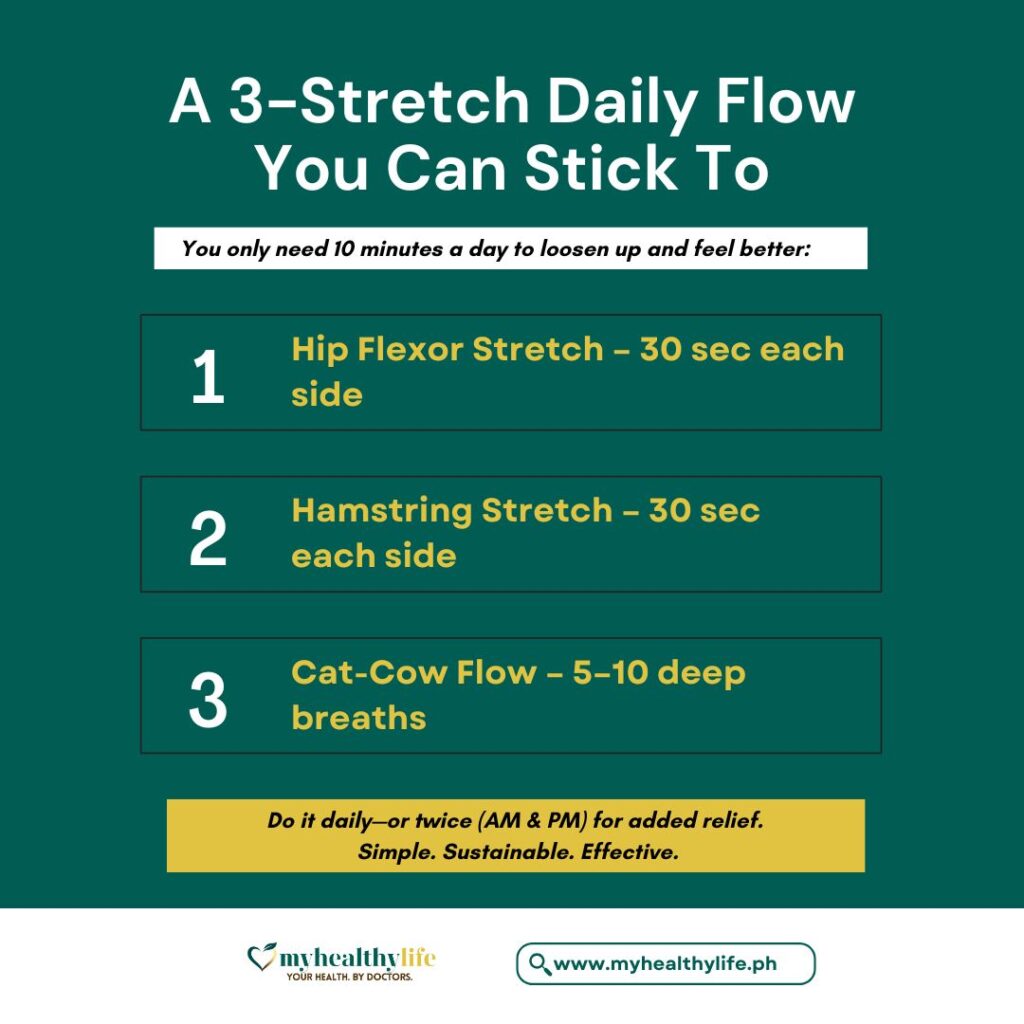
A 3-Stretch Daily Flow You Can Stick To
You don’t need to complicate it. Just carve out 10 minutes and run through this simple sequence:
- Hip Flexor Stretch – 30 seconds each side
- Hamstring Stretch – 30 seconds each side
- Cat-Cow Flow – 5–10 deep breaths
Do this once a day. Or sneak in two rounds—morning and evening—for extra benefit.
Stretch Check: Are You Doing Enough?
🧠 Self-reflection time — answer these:
- Do you wake up with a tight or sore back?
- Is your posture worse now than in your 20s?
- Do your hips or hamstrings feel stiff when standing after sitting?
- Do you find it harder to reach down or twist comfortably?
- Are you often skipping cooldowns or stretching?
If you said yes to 2 or more, your body is asking for a reset. These three moves are the most bang-for-buck stretches for back pain, posture, and joint longevity—especially over 35.
Keep it simple. Stay consistent. Your spine, hips, and future self will thank you.
Share:
Related Posts

Why Your Back Pain Keeps Coming Back—Despite Rest

When Your Doctor Orders a Bone Scan: What to Expect