A few years ago, skipping a workout just meant sore legs the next day. Now? It’s like your knees are holding a grudge. If your joints are starting to feel stiffer or slower, you’re not imagining it—and no, it’s not just aging. The truth is, our joints go through real changes in our 30s, 40s, and 50s that affect how we move, recover, and feel. The good news? You have more control than you think.
Let’s break down what’s normal, what’s not, and what you can actually do about it.
In Your 30s: Subtle Shifts Begin
You may still feel agile and strong, but under the surface, your joints are starting to experience microscopic wear and tear. Cartilage—the smooth tissue cushioning your bones—starts to lose water content, making it slightly less spongy.
Common changes:
- Delayed recovery from intense workouts 🏋️
- Occasional joint stiffness after long periods of sitting
- Clicks or pops in your knees or shoulders (usually harmless)
What to watch out for:
- Persistent joint pain that lasts more than a few days
- Early signs of rheumatoid arthritis symptoms like morning stiffness that lasts over 30 minutes
- Swelling in small joints (fingers, wrists) that doesn’t go away
🎯 Pro Tip: Don’t skip strength training. Building muscle around your joints supports them long-term and keeps you moving with ease.
In Your 40s: The Warning Bells Ring Louder
This is when those “occasional” issues may become more frequent. It’s also the decade when osteoarthritis often begins—especially if you’ve had injuries in the past or a family history of arthritis.
Common changes:
- Cartilage wear starts to speed up
- Reduced bone density, especially in women
- Joint aches after everyday activities, like climbing stairs or standing too long
You might feel more “creaky” when you wake up. That could just be age—or it might be early osteoarthritis.
What to watch out for:
- Pain in weight-bearing joints (hips, knees, lower back) that’s getting worse
- Early bone density changes that increase your fracture risk
- Inflammation or swelling that comes and goes—an early sign of autoimmune issues like rheumatoid arthritis
🦴 Doctor’s tip: Ask about getting a bone density scan or vitamin D levels checked, especially if you’re over 45 or nearing menopause.
In Your 50s: Protection Mode Is Key
By your 50s, joint wear becomes more noticeable, especially if lifestyle habits weren’t the best in earlier years. Your bone density is likely declining, your ligaments lose elasticity, and you may feel more stiff, even with rest.
Common changes:
- Chronic joint pain in knees, hands, or spine
- Muscle loss (sarcopenia), which puts more strain on your joints
- Longer recovery time from minor injuries
This is also when rheumatoid arthritis tends to peak in women—so joint pain isn’t always “just aging.”
What to watch out for:
- Swollen joints, especially in the morning or after being still
- Visible joint changes, like crooked fingers or knobby knees
- Fatigue, weakness, or low-grade fever—symptoms that may signal an autoimmune flare
🧠 Reminder: Early diagnosis matters. Conditions like rheumatoid arthritis respond better to treatment when caught early.
Normal vs Concerning Joint Changes
Change | Normal Aging | Needs Medical Attention |
Occasional stiffness | After long rest or workouts | Stiffness >30 mins in the morning |
Mild popping/clicking | With no pain or swelling | Clicking + pain or swelling |
Slight joint aches | After intense use | Pain that lingers >2 weeks |
Decreased flexibility | Gradual over time | Sudden loss of motion or swelling |
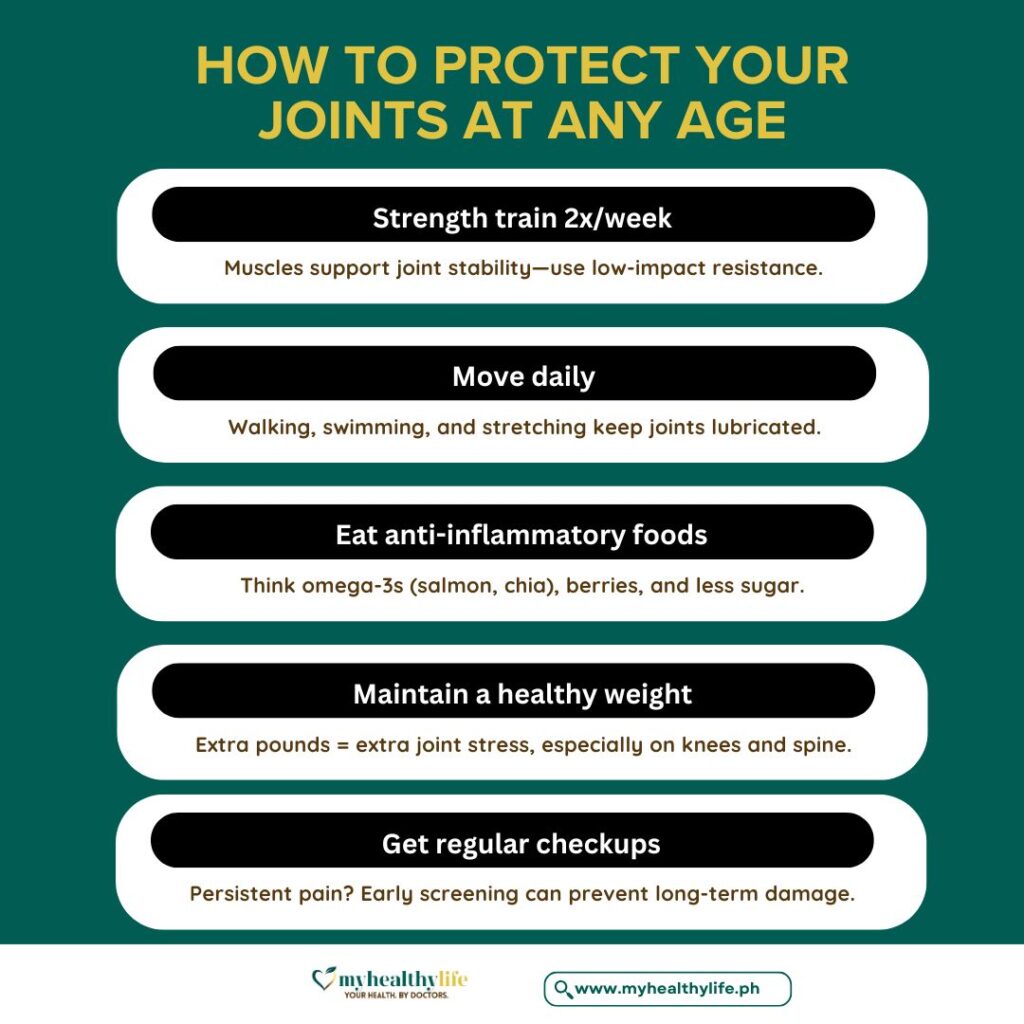
How to Protect Your Joints at Any Age
✅ Strength training at least 2x/week
Muscle supports joint stability. Focus on low-impact resistance exercises.
✅ Daily movement
Joints thrive on motion. Walking, swimming, and gentle stretching keep them lubricated.
✅ Anti-inflammatory foods
Eat more omega-3s (salmon, chia seeds), antioxidants (berries), and limit processed sugar.
✅ Weight management
Every extra pound adds pressure to your joints—especially the knees and spine.
✅ Regular checkups
Don’t ignore persistent pain. Early screening for rheumatoid arthritis, osteoporosis, or autoimmune issues can change your outcome.
Let’s Make It Personal
If you’ve been brushing off that knee pain or thinking morning stiffness is “just getting older,” maybe it’s time for a different approach.
Ask yourself:
- Am I recovering slower than I used to?
- Is joint pain keeping me from activities I enjoy?
- Have I been dismissing signs that deserve attention?
Your 30s, 40s, and 50s aren’t about giving in to discomfort—they’re about listening to your body and responding with smarter care.
💬 Your next move? Talk to a doctor about a joint health check or bone scan if something feels off. Your future mobility starts with the steps you take today.
Share:
Related Posts
Why Your Back Pain Keeps Coming Back—Despite Rest
When Your Doctor Orders a Bone Scan: What to Expect