

You took a break.
You skipped the gym.
You lay low for days—or maybe weeks.
But somehow… the back pain returns. Again.
If you’ve ever felt like your lower back has a personal grudge against you, you’re not alone. Back pain is one of the most common health complaints among adults, and while rest can help, it’s rarely the full solution.
Here’s why your pain keeps bouncing back—and what you can do to stop the cycle for good.
The Backstory Behind Your Back Pain
Back pain isn’t just one thing. It can come from muscles, joints, nerves, or discs—and most of the time, it’s mechanical, meaning it’s caused by how your body moves (or doesn’t move).
Let’s break down the most common culprits:
1. Lumbar Strain (Aka: “I Just Slept Funny”)
This is the most frequent reason for sudden lower back pain. It happens when muscles or ligaments in the lower back get overstretched, often from:
- Lifting something the wrong way
- Sudden twisting motions
- Sitting for long hours without support
Even once the strain heals, if the underlying issue (like posture or weak core strength) isn’t addressed, the pain will keep coming back.
2. Lumbar Spondylosis (Early Spine Aging)
This mouthful simply means wear-and-tear arthritis of the spine—a normal part of aging. It can start as early as your 30s or 40s and may cause:
- Stiffness in the morning
- Aching after sitting too long
- Intermittent pain that comes and goes
When discs shrink or joints stiffen, your spine loses flexibility—and resting alone won’t fix that.
3. Weak Core = Overworked Back
Your core muscles (abs, obliques, deep back muscles) act like scaffolding for your spine. If they’re weak, your lower back takes on extra stress during daily movements—whether you’re walking, lifting groceries, or working at a desk.
That’s why many people with back pain feel “fine” at rest—but pain flares up with basic activities.
4. Posture Problems (Yes, It’s That Simple)
Slouching in front of a laptop. Leaning into your phone for hours. Sitting on a soft couch with zero back support.
These small, repeated postural habits can retrain your body into misalignment, putting pressure on your lower back.
And if you “rest” by sitting or lying in poor posture, it only delays healing—or worsens the problem.
5. You Rest… but Then Do Too Much
Here’s the cycle most people fall into:
- Back hurts → rest for 3–5 days
- Pain fades → return to normal activity too fast
- Pain returns → feel discouraged
Resting without retraining your muscles means you’re not fixing the root issue—just pressing pause on the symptoms.
So, What Actually Helps?
Let’s be clear: bed rest is outdated. Research shows that movement—done smartly—is the best path to long-term back pain relief.
Here’s what can help break the cycle:
Gentle Stretching & Core Work
- Cat-cow stretch (for spine mobility)
- Pelvic tilts (for abdominal activation)
- Dead bugs or bird-dog exercises (to build deep core strength)
Start small, stay consistent. Even 5–10 minutes a day can change everything.
Posture Reboot
- Set up your workstation ergonomically
- Use a lumbar roll or pillow behind your lower back when sitting
- Take a 2-minute standing break every 30–45 minutes
Your back thrives on variety and movement.
Heat, Ice, and Massage (When Needed)
- Heat can soothe tight muscles before stretching
- Ice can reduce inflammation after a flare-up
- Massage may help with chronic tension or soreness—but always combine with exercise
Know When to See a Specialist
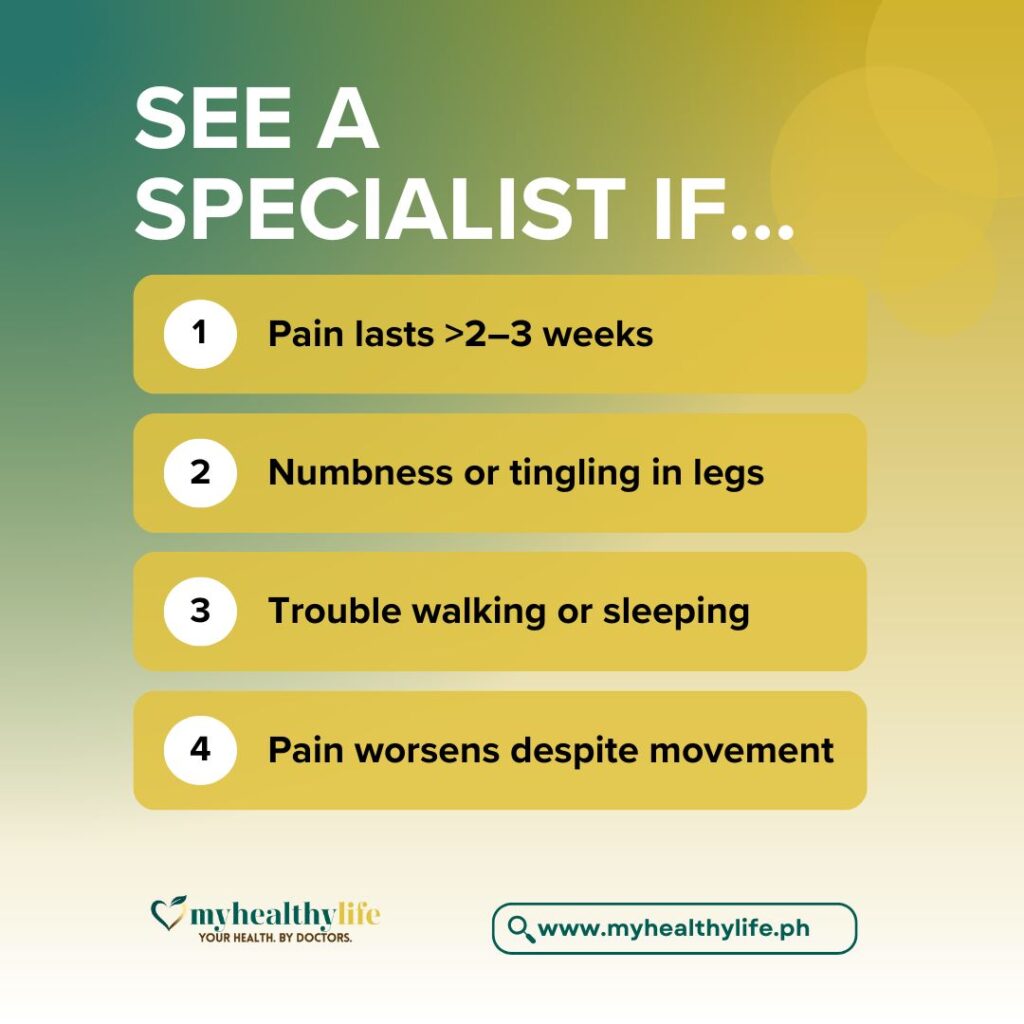
Consider seeing a doctor or physiotherapist if:
- Pain lasts more than 2–3 weeks
- You feel tingling or numbness in your legs
- You have trouble standing, walking, or sleeping
- The pain worsens despite movement
A simple X-ray or MRI can rule out more serious causes like a herniated disc or spinal stenosis.
Quick Checklist: Is Your Back Ready to Move Again?
Use this before jumping back into regular routines:
✅ | Question |
Have I rested just enough—but not too long? | |
Am I consistently doing low-impact stretches or core work? | |
Have I adjusted my desk or seating posture? | |
Am I easing back into activity, not rushing it? | |
Do I know what triggered the pain—and how to prevent it again? |
If you’ve checked off at least 3–4 of these, you’re on your way to breaking the back pain cycle for good.
💡 At MyHealthyLife, we believe movement is medicine—but only when it’s done with intention.
If your back keeps flaring up, maybe it’s not rest you need—but the right support plan.
Your back deserves more than quick fixes. It deserves attention, action, and strength.
Share:
Related Posts

When Your Doctor Orders a Bone Scan: What to Expect

When to Start Screening for Osteoporosis