Pregnancy changes your body in ways you can see and ways you can’t—but one of the most visible signs is in your skin. For many, these changes are a badge of motherhood. For others, they can be surprising, even unwelcome. While some effects fade after childbirth, others may linger long after your baby is born.
Let’s explore the most common pregnancy skin changes, why they happen, and whether they’re temporary or here to stay.
The Science Behind Pregnancy Skin Changes
Pregnancy triggers a dramatic surge in hormones—especially estrogen, progesterone, and human chorionic gonadotropin (hCG). These shifts, combined with increased blood volume, fluid retention, and immunity changes, can alter your skin’s color, texture, and oil production.
Some changes are linked to specific hormones:
- Estrogen: Stimulates blood vessels and increases skin hydration.
- Progesterone: Can boost oil production, sometimes causing acne.
- Melanocyte-stimulating hormone: Darkens pigment in the skin, leading to melasma or linea nigra.
- Immune modulation: Helps prevent rejection of the fetus but may make certain skin conditions flare.
1. Melasma: The “Mask of Pregnancy”
Melasma is one of the most well-known pregnancy skin changes, characterized by patchy brown or gray-brown discoloration, usually on the cheeks, forehead, upper lip, and nose.
Why it happens:
Hormonal surges combined with sun exposure stimulate melanocytes—the cells that produce pigment.
Will it fade?
- Often improves within months after delivery or after breastfeeding ends.
- In some cases, it can persist for years or become a permanent feature.
- Sun protection is key: SPF 30+ daily can reduce recurrence or worsening.
Tip: Use gentle, pregnancy-safe brightening agents like vitamin C or niacinamide to help even out tone.
2. Pregnancy Acne
Hormone-driven oil production makes acne a common pregnancy complaint—especially in the first and second trimesters.
Why it happens:
Increased progesterone boosts sebum (oil) production, which can clog pores.
Appearance:
- May range from small whiteheads and blackheads to inflamed red pimples and cystic acne.
- Can appear on the face, chest, or back.
Will it fade?
- Many cases improve postpartum as hormone levels stabilize.
- Some may experience persistent acne, especially if they had breakouts before pregnancy.
Safe treatments during pregnancy:
- Gentle cleansers
- Azelaic acid
Certain topical antibiotics prescribed by a doctor
(Avoid retinoids, salicylic acid in high concentrations, and oral acne medications unless approved by your physician.)
3. Stretch Marks (Striae Gravidarum)
Stretch marks are pink, red, purple, or brown streaks that develop as the skin stretches rapidly over the abdomen, breasts, hips, thighs, or buttocks.
Why they happen:
Collagen and elastin fibers in the skin tear under tension, allowing blood vessels to show through.
Will they fade?
- Fresh stretch marks fade over time, becoming silvery or skin-colored, but they rarely disappear completely.
- Genetics play a big role—if your mother had them, you’re more likely to develop them.
Prevention and management:
- Keep skin moisturized with cocoa butter, shea butter, or hyaluronic acid creams.
- Maintain steady, healthy weight gain.
- Postpartum treatments like laser therapy or microneedling can reduce visibility.
4. Immunity Changes and Skin Reactions
During pregnancy, your immune system shifts to protect your developing baby. These immunity changes can alter how your skin reacts to allergens, infections, or existing skin conditions.
Possible effects:
- Improvement in some autoimmune-related skin issues like psoriasis.
- Flares of conditions like eczema or atopic dermatitis.
- Increased sensitivity to fragrances, detergents, or skincare products, leading to rashes.
Postpartum:
Most immune-related skin changes resolve as your immune system “resets” after birth, but some conditions may persist or even emerge for the first time due to postpartum hormonal shifts.
5. Other Notable Skin Changes in Pregnancy
Linea Nigra
A dark vertical line that often appears on the abdomen, running from the navel to the pubic bone.
- Caused by increased pigmentation.
- Usually fades within months postpartum.
Spider Veins
Small, visible blood vessels on the skin surface caused by increased blood circulation and hormonal effects on vessel walls.
- Often fade or shrink after birth but may remain in some cases.
Skin Tags
Small, benign growths often found in skin folds.
- Hormonal changes and friction can trigger them.
- Can be easily removed if they don’t disappear postpartum.
What Usually Goes Away Postpartum
- Pregnancy glow (from increased blood flow) fades within weeks.
- Linea nigra and mild melasma often lighten within 6–12 months.
- Mild acne may improve after hormone levels stabilize.
What Might Stay With You
- Stubborn melasma patches without proper sun protection.
- Stretch marks, though less noticeable over time.
- New moles or freckles that appeared during pregnancy.
- Persistent acne if there’s an underlying hormonal imbalance.
Postpartum Skin Care Tips
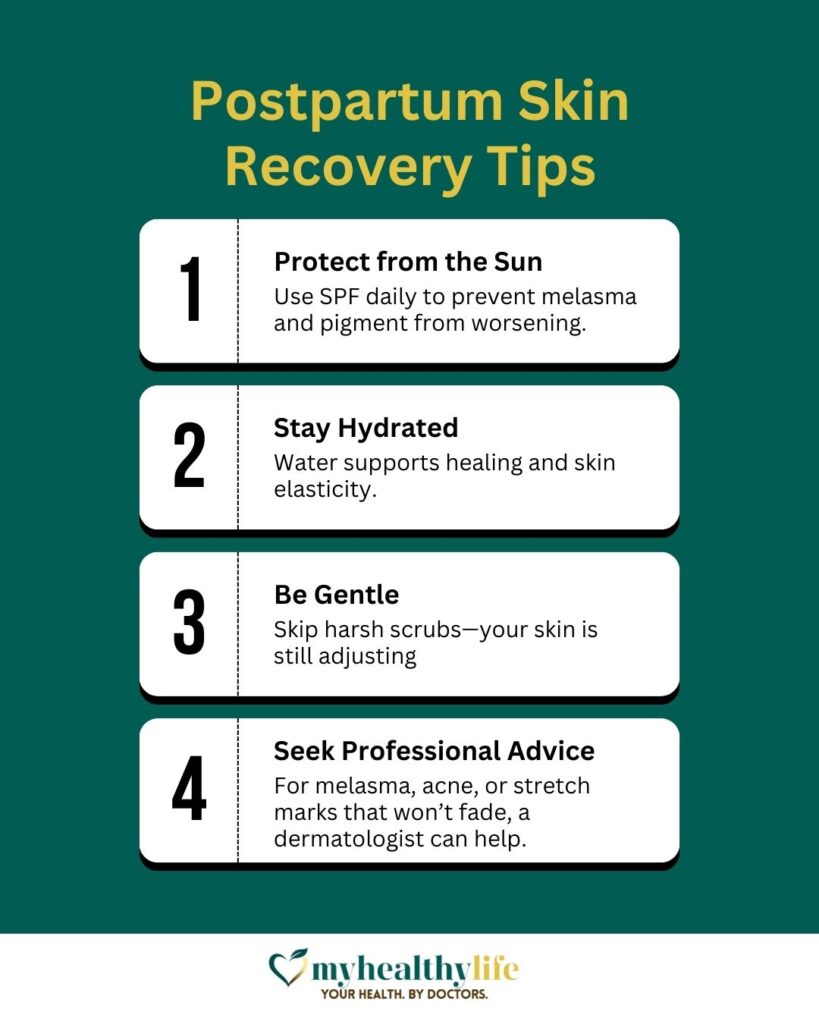
- Protect from the sun: Continue SPF use to prevent pigment from deepening.
- Stay hydrated: Supports skin healing and elasticity.
- Be gentle: Avoid harsh scrubs or aggressive treatments while your skin is still adjusting.
- Seek professional advice: For persistent melasma, acne, or stretch marks, a dermatologist can recommend tailored treatments.
Contact your healthcare provider if you notice:
- Sudden, severe rashes
- Rapid spread of lesions
- Painful skin changes with fever
- Signs of infection (pus, swelling, warmth)
Closing: Your Skin Story After Pregnancy
Pregnancy skin changes tell a unique story—one of transformation, resilience, and adaptation. While some changes will fade into memory, others may remain as gentle reminders of the journey you’ve taken. Instead of viewing them purely as flaws, think of them as part of your evolving skin narrative.
The key is understanding what’s temporary, what’s permanent, and what you can manage with care. Whether it’s fading melasma, softening stretch marks, or calming postpartum acne, each step is part of reclaiming your skin—and embracing the one you now live in.
References:
https://www.acog.org/womens-health/faqs/skin-conditions-during-pregnancy
Share:
Related Posts
Skin & Immunity in Your 30s, 40s, and 50s: How to Keep Both in Top Shape
Shingles: Why Your Risk Grows After 50