You’re over 50. You feel a few skipped beats now and then. Sometimes your chest feels heavy. Maybe you get short of breath going up stairs.
You pause.
Is this normal aging—or a heart attack waiting to happen?
It’s one of the most common fears adults face after hitting their 50s: how to tell if what you’re feeling is normal—or something to worry about.
Here’s the truth: your body does change with age. And yes, some sensations are part of that shift. But others? They could be your heart’s early cry for help.
Let’s break down what’s normal, what’s not, and when to take action—so you can stay informed without spiraling into fear.
What Changes Normally After 50?
Your cardiovascular system evolves over time. Not all changes mean danger. Here’s what might be considered “normal” in your 50s and beyond:
1. Slightly Irregular Heartbeats (Especially at Rest)
It’s common to feel an occasional skip, flutter, or pause—especially when lying down or falling asleep. These are usually benign premature beats and often caused by caffeine, fatigue, or stress.
Still, frequent or intense palpitations should always be checked.
2. Mild Shortness of Breath During Strenuous Activity
As you age, your heart and lungs naturally become less efficient. Feeling winded after climbing several flights of stairs or jogging after a long time off can be normal—as long as it improves with rest and doesn’t come with chest pain or dizziness.
3. Slightly Higher Resting BP or HR
Mild increases in blood pressure or resting heart rate are common as arteries stiffen with age. But there’s a limit—readings over 140/90 mmHg or a resting HR over 90 bpm at rest may need investigation.
4. Longer Recovery After Exertion
You might find that your heart rate takes longer to return to normal after a workout. This is typical of age-related cardiovascular slowdown.
But When Is It Not Normal?
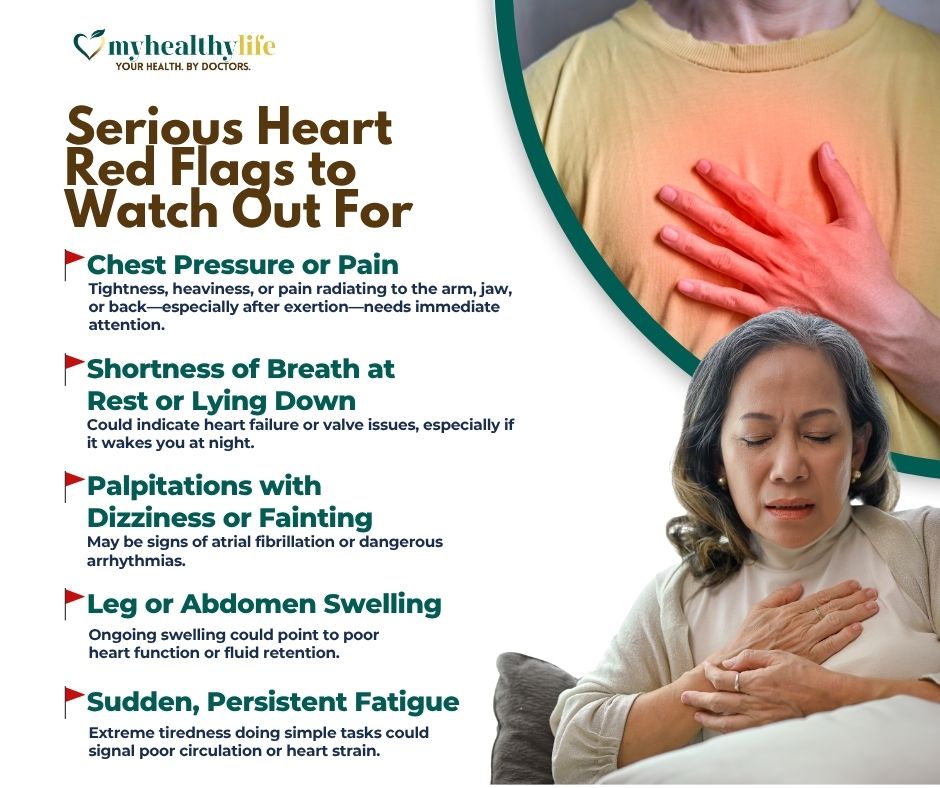
Here are the real red flags that could indicate a brewing heart condition—especially if you’re over 50.
1. Chest Pain or Pressure
Let’s get this out of the way: chest pain is never normal. Especially if it feels like:
- A squeezing, pressure, or tightness
- Pain that radiates to the arm, jaw, back, or neck
- Chest heaviness after exertion or emotional stress
- Discomfort that lasts more than 5 minutes or gets worse when walking
These could signal angina or an impending heart attack.
2. Unexplained Shortness of Breath
It’s not just about being out of shape. If you suddenly feel winded:
- Walking across the room
- Lying flat
- At night (waking up gasping)
- Even while sitting still
… it could be early signs of heart failure or valve problems.
3. Palpitations With Dizziness or Fainting
Some skipped beats are okay. But if you feel like your heart is racing out of nowhere—or skipping wildly—and you’re also lightheaded or close to fainting, this could be:
- Atrial fibrillation (Afib)
- Ventricular arrhythmias
- Early signs of electrical instability
4. Swelling in the Legs, Ankles, or Abdomen
Persistent swelling could point to fluid retention, which may be caused by congestive heart failure or circulation issues.
5. Sudden Fatigue or Weakness
Not your average “I’m tired” feeling. We’re talking about:
- Feeling drained doing simple tasks
- Needing to sit or lie down frequently
- Feeling like “something’s just not right”
This is often a red flag for poor blood circulation or early cardiac ischemia.
When to Ask for a Stress Test or Echo
Doctors don’t just order these tests randomly. They do it when:
A Stress Test may be recommended if:
- You have chest discomfort or breathlessness during activity
- Your BP or cholesterol is high, and you’re starting a new fitness program
- You’re at high risk (e.g., smoker, diabetic, strong family history)
- You’ve had borderline ECG findings and need further assessment
This test shows how your heart handles exertion, revealing issues that resting tests might miss.
An Echocardiogram (Echo) may be needed if:
- You have symptoms like fatigue, shortness of breath, or swelling
- Your doctor suspects valve disease or heart wall thickening
- Irregular rhythms or murmurs are heard on physical exam
- You’ve had previous heart problems and need a progress check
The echo provides a visual look at your heart’s structure and function—how well it pumps, how valves are working, and more.
Don’t Fall Into the “Age Excuse” Trap
One of the most dangerous assumptions people over 50 make is this:
“I’m just getting old—that’s probably all it is.”
And while yes, some symptoms are age-related, many people miss early heart warning signs by chalking them up to aging.
Remember: heart disease is treatable—if caught early.
What About Sudden Heart Attacks in Seemingly Healthy Adults?
It happens more than we think. Especially if:
- BP and cholesterol haven’t been checked regularly
- Family history was ignored
- Subtle symptoms were brushed off
- Smoking, stress, or poor sleep went unchecked
Most first-time heart attacks occur in people who had no previous diagnosis. That’s why staying proactive—especially after 50—is so important.
Red Flag vs. Reality: Know the Difference
Here’s a quick guide to help you assess what’s likely “normal aging” vs what needs a doctor’s attention:
Symptom | Possibly Normal | Red Flag for Heart Risk |
Mild palpitations at rest | Occasional flutters, no dizziness | Frequent skips + lightheadedness |
Shortness of breath | After strenuous activity | At rest, lying flat, or with chest pain |
Chest discomfort | None is normal | Tightness, pressure, radiating pain |
Swelling in legs | After long day of standing | Persistent, pitting, or paired with fatigue |
Fatigue | After poor sleep or illness | Sudden, persistent, limits daily activity |
Irregular heart rate | During anxiety, caffeine | At rest, with dizziness or fainting |
If you’re unsure—always be on the side of caution and see your doctor.
💡 At MyHealthyLife, we don’t guess when it comes to your heart—we guide.
You don’t need to panic over every skipped beat. But you do need to pay attention. We’ll help you tell the difference—so you can age wisely, and live powerfully.
Share:
Related Posts
Heart Smart, Life Strong: Why Fitness Matters for Your Heart—Beyond the Number on the Scale
Meal Timing and Heart Health: What New Science Says