When you hit your 40s, things start to change—some subtly, some suddenly.
You might still feel strong. You may still look young.
But internally, your heart, arteries, and blood vessels begin aging in ways that can set the stage for a future heart attack—especially if you don’t adjust your habits now.
Whether you’re a man, woman, busy professional, or stressed parent—your 40s mark a key turning point for heart health.
So what actually changes after 40?
What risks start creeping in—and what still matters just as much as ever?
Let’s break it down.
Why Heart Risk Changes in Your 40s
Heart disease after 40 isn’t just about “bad luck.” It’s the product of decades of silent buildup—and your body’s changing ability to adapt.
Here’s what happens:
- Metabolism slows down
- Blood vessels stiffen
- Hormonal protection fades (especially in women)
- Fat distribution shifts to the belly
- Cholesterol and blood pressure creep up—even without symptoms
You might not feel a thing, but risk is rising in the background.
What’s New: Heart Risks That Spike After 40
Let’s start with what shifts in your 40s that wasn’t as urgent in your 20s or 30s.
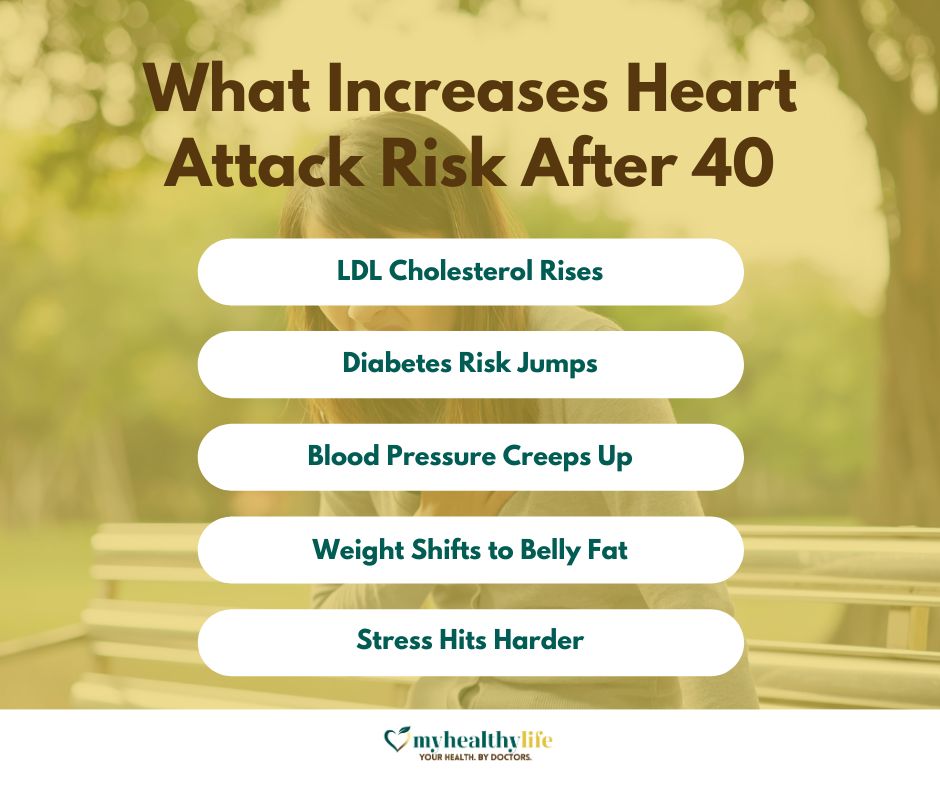
1. LDL Cholesterol Rises
Even with a decent diet, LDL (“bad” cholesterol) tends to go up around midlife. Your body:
- Produces more cholesterol
- Clears it from the blood more slowly
- May show early plaque buildup in arteries
Unchecked, this leads to atherosclerosis, where arteries narrow and stiffen—fueling heart attack risk.
2. New-Onset Diabetes Becomes More Common
Many people in their 40s are diagnosed with type 2 diabetes—or are already prediabetic without knowing it.
Why?
- Slower metabolism
- Belly fat gain
- Decreased insulin sensitivity
High blood sugar damages blood vessels, nerves, and increases clot risk—tripling your risk of heart attack over time.
3. Blood Pressure Creeps Up
You may have had perfect BP for years. But then suddenly:
- You’re hitting 130/85
- You’re tired more often
- Your doctor mentions “watching your numbers”
After 40, arteries begin to stiffen, and sodium sensitivity increases—which is why monitoring salt intake becomes more important.
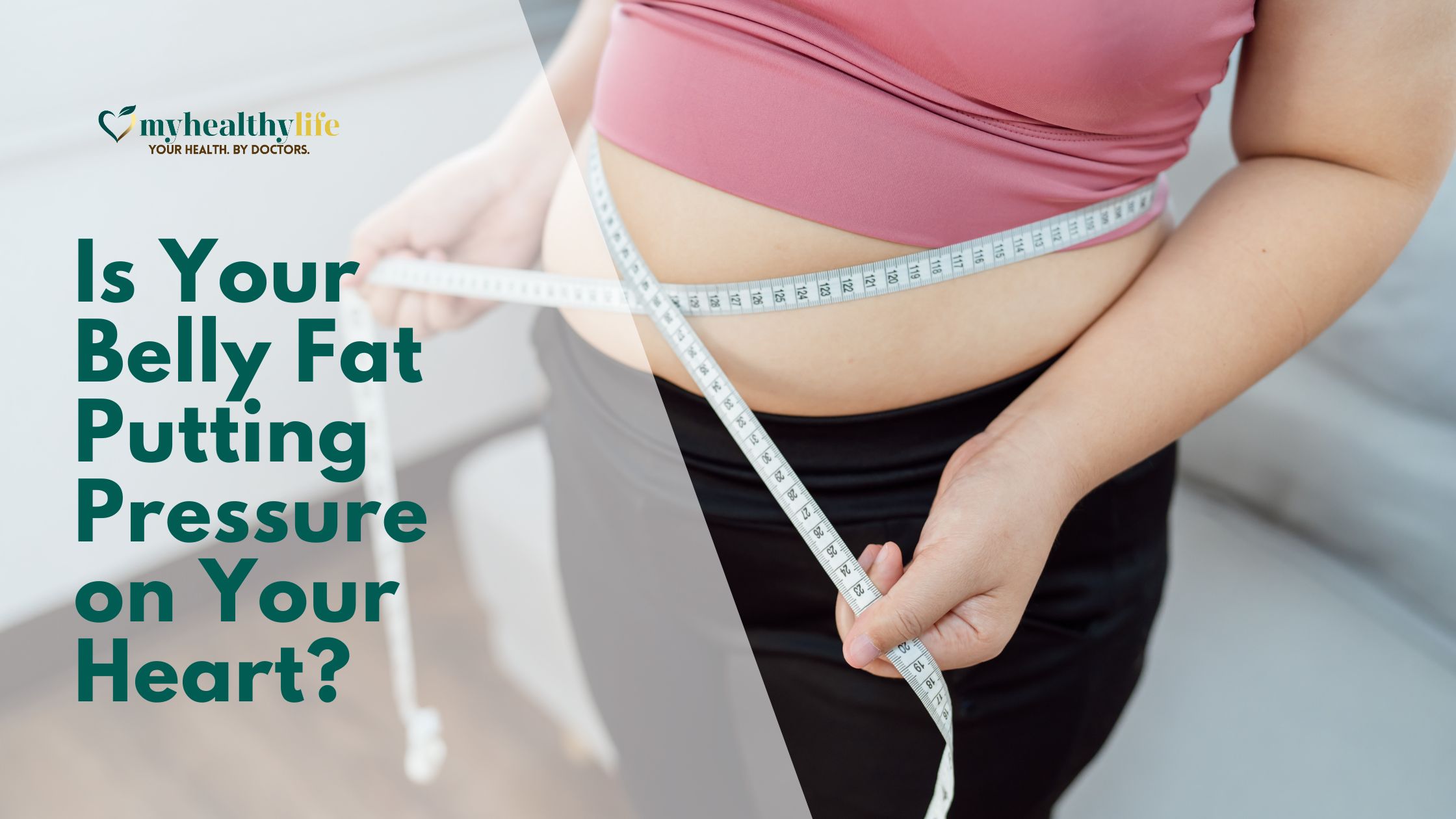
4. Weight Shifts to the Belly
Even without major weight gain, fat tends to accumulate around the midsection in your 40s. This visceral fat:
- Increases inflammation
- Raises BP
- Disrupts cholesterol balance
You don’t need to be “overweight” to be at risk. Belly size matters more than the number on the scale.
5. Stress Has a Bigger Impact
Stress in your 40s—work, aging parents, kids, finances—can hit harder and stay longer. Chronic stress raises cortisol, which:
- Increases BP
- Raises blood sugar
- Promotes belly fat
- Disrupts sleep
This combination becomes a silent accelerator of heart risk.
What Stays the Same: Lifelong Heart Risk Factors
Even as new risks show up, some heart health principles never change. These are your non-negotiables:
1. Smoking Still Destroys Arteries
If you’ve been smoking for years, the damage compounds.
If you’re considering quitting, now is the best time—because after 40, your body heals more slowly.
Quitting now still significantly lowers your risk of heart disease within 2–5 years.
2. Diet Still Makes or Breaks You
A high-sodium, high-fat, sugar-loaded diet in your 40s affects:
- Cholesterol
- BP
- Blood sugar
- Inflammation
What you eat daily matters more now than ever.
3. Lack of Exercise Still Raises Risk
Movement has always been medicine—but in your 40s, it helps:
- Maintain metabolism
- Lower BP
- Improve cholesterol
- Regulate blood sugar
Aim for at least 150 minutes of moderate exercise per week.
4. Family History Still Counts
If your parent or sibling had a heart attack before age 55 (men) or 65 (women), your risk is significantly higher—especially after 40.
But genes are not destiny. You can still intervene early with lifestyle and screenings.
Signs Your Heart Might Be Struggling
Heart attacks after 40 don’t always come with movie-style chest clutching.
Look for these more subtle signals:
- Shortness of breath on mild exertion
- Fatigue that doesn’t improve with rest
- Chest discomfort, pressure, or heaviness (especially left side)
- Pain in jaw, back, or arm
- Nausea or lightheadedness after meals or stress
These are especially common in women, who may not experience classic chest pain.
Midlife Heart Health Audit: Are You on Track?
Use this checklist to see where you stand and what needs a reset:
Blood Pressure
- Goal: Below 120/80
- Check at least once a year (more if elevated)
LDL Cholesterol
- Goal: Below 100 mg/dL (or lower if high risk)
- Lipid panel every 1–3 years
Fasting Blood Sugar (or HbA1c)
- Goal: Fasting glucose <100 mg/dL
- If 100–125 = prediabetes
- Above 126 = diabetes
Waistline
- Goal:
- Men: Below 90 cm
- Women: Below 80 cm
- Men: Below 90 cm
- Belly fat is a stronger predictor than BMI
Exercise
- Goal: 150 min/week of moderate cardio + 2 days of strength training
- Add stretching and mobility to reduce injury risk
Sleep and Stress
- Goal: 7–8 hours of quality sleep
- Daily relaxation habits (not just weekends)
Final Thought: It’s Not Too Late—It’s Just On You Now
In your 20s, your body could bounce back from anything.
In your 30s, the cracks began to form.
But in your 40s?
You’re at the fork in the road.
One path leads to silent buildup, sudden attacks, and late-stage fixes.
The other leads to control, prevention, and strength that lasts into your 50s, 60s, and beyond.
💡 At MyHealthyLife, we’re all about proactive power.
Don’t wait for symptoms to start caring about your heart.
Make 40 the decade you get ahead—not fall behind.
Share:
Related Posts
Heart Smart, Life Strong: Why Fitness Matters for Your Heart—Beyond the Number on the Scale
Meal Timing and Heart Health: What New Science Says