Your heart skips.
Or races.
Or pounds for no reason.
You’re in your 30s—still young, relatively healthy, not exactly the type to have heart issues… right?
So why does it sometimes feel like your heart is staging a drum solo in your chest?
While heart palpitations in your 30s are common, they’re not always harmless. They can be triggered by everything from stress and hormones to caffeine, thyroid issues, or early heart rhythm disorders.
Let’s break down what might be going on, when to worry about heart palpitations, and how to keep your ticker in check—without losing sleep over every flutter.
What Are Heart Palpitations?
Palpitations are sensations where you become aware of your heartbeat. It might feel like:
- Your heart is racing or pounding
- A flutter or flip-flop in your chest
- A skipped or extra beat
- A sudden burst of fast heartbeats (especially after standing up, eating, or getting startled)
They can last for seconds or minutes—and sometimes come with chest tightness, shortness of breath, or dizziness.
So… Are They Dangerous?
Usually not. Especially if:
- They happen occasionally
- They go away with rest or hydration
- You’re not dizzy, faint, or in pain
That said, palpitations can be a red flag if they:
- Happen frequently or daily
- Get worse over time
- Occur during sleep or rest
- Come with chest pain, fainting, or severe breathlessness
Knowing the underlying trigger is key.
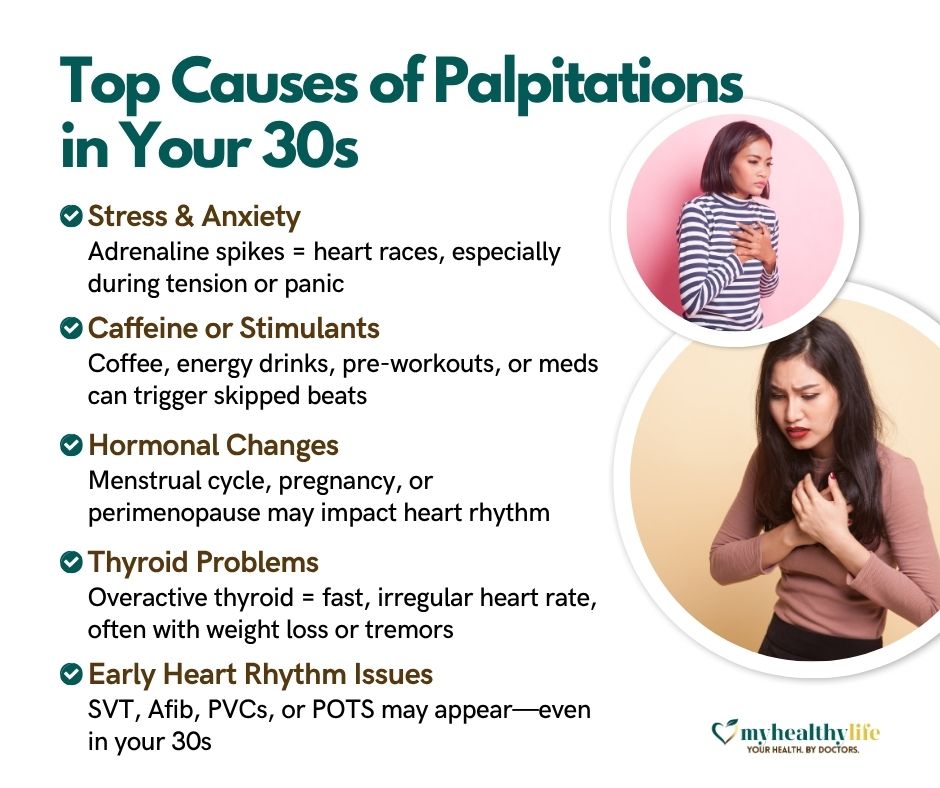
Top Causes of Heart Palpitations in Your 30s
Let’s explore the usual suspects—ranging from lifestyle to medical.
1. Stress and Anxiety
This is the #1 cause in people under 40.
When your brain detects stress, it floods your body with adrenaline, activating your “fight or flight” system. This:
- Increases heart rate
- Enhances heart muscle contraction
- Makes your heartbeat more noticeable
Even low-level anxiety can cause noticeable palpitations, especially when paired with shallow breathing, tight muscles, or poor sleep.
If your palpitations come during stressful moments, public speaking, or arguments—it’s likely adrenaline-driven.
2. Caffeine and Stimulants
Some people are more sensitive to caffeine than others. You might notice coffee palpitations especially if you:
- Drink strong brewed coffee or energy drinks
- Combine caffeine with lack of sleep
- Take decongestants (pseudoephedrine) or diet pills
- Use nicotine or pre-workout powders
Caffeine can trigger premature beats (PVCs or PACs)—felt as skipped beats or flutters.
3. Hormonal Fluctuations
Yes—hormones can affect your heart rhythm.
Palpitations may increase:
- Before or during your period
- In early pregnancy
- Around ovulation
- During perimenopause (often starts in late 30s to early 40s)
These are generally harmless but can feel alarming. Estrogen and progesterone shifts can impact fluid balance, blood pressure, and your heart’s electrical system.
4. Thyroid Imbalance
Your thyroid is a small gland with big power over your metabolism—and your heart rate.
Hyperthyroidism (overactive thyroid) can cause:
- Rapid or irregular heartbeat
- Heat intolerance
- Weight loss despite eating
- Anxiety and tremors
Even mild overactivity can produce palpitations and restlessness, especially at night.
5. Early Cardiac Arrhythmias
Not all palpitations are benign. In some cases, they point to early forms of arrhythmia (irregular heart rhythms) such as:
- Supraventricular Tachycardia (SVT) – episodes of fast heart rate
- Atrial Fibrillation (Afib) – irregular, often fast heartbeat
- Premature Ventricular Contractions (PVCs) – extra beats
- Postural Orthostatic Tachycardia Syndrome (POTS) – fast heart rate when standing
These may be more likely if you have:
- Family history of heart issues
- Frequent symptoms disrupting daily life
- Underlying conditions like anemia, thyroid issues, or congenital heart defects
Tests Your Doctor Might Order
If palpitations persist or feel suspicious, your provider may recommend:
- ECG (Electrocardiogram): Snapshot of heart rhythm
- 24-hour Holter Monitor: Detects intermittent arrhythmias
- Thyroid blood tests
- Electrolyte panel
- Echocardiogram (ultrasound of the heart)
- Stress test (especially if symptoms occur during exertion)
Not all palpitations show up on tests—so keeping a symptom journal helps.
Tip:
Use your smartwatch ECG (if available) to capture episodes. Some models detect irregular heartbeats or Afib.
What You Can Do to Reduce Palpitations
Even without medication, many lifestyle tweaks make a huge difference.
Stay Hydrated
Dehydration makes your heart work harder. Aim for 8–10 glasses of water per day, more if you’re active or sweating.
Cut the Caffeine
Try a caffeine “holiday” for 7–10 days and monitor changes. Replace coffee with herbal tea or decaf.
Balance Electrolytes
Low potassium, magnesium, or calcium can trigger palpitations. Eat leafy greens, bananas, beans, yogurt, and whole grains.
Prioritize Sleep
Sleep deprivation spikes cortisol and adrenaline, both of which disrupt rhythm. Aim for 7–8 hours a night.
Practice Slow Breathing
Deep diaphragmatic breathing can shift your nervous system from fight-or-flight to rest-and-digest. Try box breathing:
Inhale 4 – Hold 4 – Exhale 4 – Hold 4.
When Should You Worry?
Use this guide to know when it’s worth seeing your doctor vs when to relax.
What’s Worth Worrying About?
Situation | Action |
Palpitations + fainting | Get urgent care |
Palpitations + chest pain or shortness of breath | ER visit or immediate checkup |
Episodes last more than a few minutes regularly | See your cardiologist |
Family history of sudden cardiac death or arrhythmia | Early screening recommended |
No clear trigger (not stress, caffeine, etc.) | Get monitored with Holter or ECG |
Final Thoughts
Heart palpitations in your 30s aren’t rare—but they’re never random.
Sometimes it’s stress. Sometimes it’s hormones.
And sometimes it’s your body quietly asking for attention.
Either way, your 30s are the perfect time to start listening. With the right lifestyle, awareness, and check-ins, you can keep your heart steady—not just now, but for decades to come.
💡 At MyHealthyLife, we decode the weird stuff your body does—so you don’t panic or ignore it.
Palpitations don’t mean you’re broken. They mean it’s time to get curious. Start with knowledge. End with peace of mind.
Share:
Related Posts
Heart Smart, Life Strong: Why Fitness Matters for Your Heart—Beyond the Number on the Scale
Meal Timing and Heart Health: What New Science Says