
Your heart never takes a break.
From your first breath to your last, it beats over 100,000 times a day—pumping life through your blood vessels, powering every organ, and adapting to every stage of life.
But here’s the thing: while we may feel “the same” on the outside, your cardiovascular system is changing silently behind the scenes—especially from your 30s to your 50s.
These two decades are make-or-break years for long-term heart health. And what you do (or don’t do) during this stretch can either set you up for decades of strength—or sneak in serious risk for cardiovascular disease.
So what exactly happens to your heart and vessels during midlife? Let’s walk through the changes—and how to stay one step ahead.
Your 30s: The Calm Before the Climb
You’re still young, energetic, and probably feel far from anything resembling heart trouble. But under the surface, early changes may be starting.
What’s Happening:
- Blood pressure may start to slowly increase—especially with more job stress, long hours, or poor sleep
- Cholesterol levels may creep up if diet shifts toward convenience foods or portions grow
- Cardiovascular fitness might dip if activity slows down after college or early adulthood
- Heart valves and blood vessels are still flexible—but may begin to lose elasticity if smoking, poor diet, or stress is unchecked
You may not feel a single symptom. But this is when small daily habits start laying the groundwork—good or bad.
Smart moves in your 30s:
- Build an exercise routine (don’t wait for your 40s)
- Get a baseline BP, cholesterol, and blood sugar test
- Cut back on smoking, processed food, and excess sugar
- Start tracking your family history for heart conditions
Your 40s: The Silent Acceleration
This is the decade when things start to shift noticeably—even if you feel healthy.
What’s Happening:
- Blood vessels gradually stiffen, making it harder for your heart to pump blood efficiently
- Blood pressure and cholesterol rise more easily, especially with weight gain, poor diet, or lack of movement
- Diabetes risk increases, especially if you have belly fat, poor sleep, or chronic stress
- Heart valves can start to thicken slightly or become less flexible
- You might feel slower recovery after workouts or need more time to return to baseline after exertion
These changes are often gradual and symptom-free. That’s why many people are surprised by a mid-40s heart scare, like high BP, angina, or even a mild heart attack.
Warning signs to watch for in your 40s:
- Shortness of breath with basic exercise
- Feeling “more tired than usual” doing everyday tasks
- Resting BP consistently over 130/80 mmHg
- Changes in sleep, stress tolerance, or weight you can’t explain
- Skipped or irregular heartbeats that are new or persistent
Smart moves in your 40s:
- Prioritize cardiovascular fitness: 150 minutes of moderate cardio per week
- Keep tabs on cholesterol and glucose every 1–2 years
- Reduce salt, saturated fats, and refined carbs
- Introduce strength training to preserve heart-protective muscle mass
- Manage stress with breathwork, walks, or digital detox breaks
- Consider a 24-hour BP monitor if clinic readings seem off or you feel fine but suspect stress-related spikes
Your 50s: Turning Point or Tipping Point
Midlife Heart Game Plan: What to Start, Keep, or Stop
Now the stakes go up. If you haven’t built a heart-healthy foundation by now, changes become harder to reverse—but not impossible.
What’s Happening:
- Arteries lose more elasticity, raising systolic BP (the top number)
- Heart muscle may start to thicken if BP has been high for years
- Cholesterol plaque buildup becomes more visible on tests (e.g. CT scan or carotid ultrasound)
- Cardiovascular fitness drops faster if not maintained—making stairs or walking uphill harder
- Recovery from illness or intense exercise becomes slower and more fatiguing
For women, menopause shifts estrogen levels, which previously helped protect the heart. That’s why post-menopausal women see a rapid rise in heart disease risk.
Red flags in your 50s:
- Morning chest tightness, especially after exertion or emotional stress
- Skipped or racing heartbeat during rest
- Persistent fatigue not explained by lifestyle
- Swelling in the legs, shortness of breath lying flat, or waking up gasping
- BP consistently over 140/90 mmHg despite medication or lifestyle changes
Smart moves in your 50s:
- Get a full cardiovascular work-up every 1–2 years (cholesterol, BP, ECG, sugar, weight, lifestyle)
- If you haven’t been exercising regularly, start now—with low-impact, heart-friendly workouts
- Be mindful of muscle loss—it impacts glucose control and blood flow
- Get screened for atrial fibrillation or arrhythmias, especially if experiencing palpitations
- Talk to your doctor about statins or BP meds if lifestyle changes aren’t enough
- Consider a stress test if you’re planning to start a new fitness program or have symptoms
It’s Not Just About Disease—It’s About Performance
Let’s be clear: this isn’t just about preventing heart attacks.
Your cardiovascular fitness affects:
- Your energy levels
- Your ability to focus
- Your mood and sleep quality
- Your resilience during illness
- Your independence and mobility in later years
Investing in your heart now pays off in every area of your life—not just medically, but mentally, socially, and emotionally.
Heart attacks after 40 don’t always come with movie-style chest clutching.
Look for these more subtle signals:
- Shortness of breath on mild exertion
- Fatigue that doesn’t improve with rest
- Chest discomfort, pressure, or heaviness (especially left side)
- Pain in jaw, back, or arm
- Nausea or lightheadedness after meals or stress
These are especially common in women, who may not experience classic chest pain.
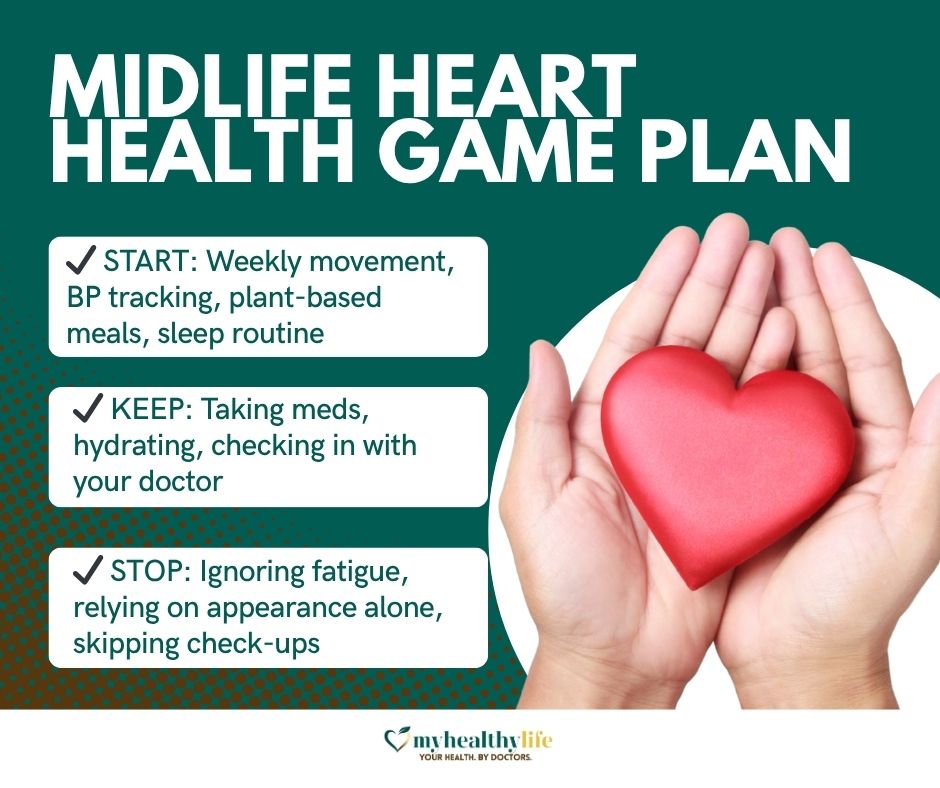
Midlife Heart Health Audit: Are You on Track?
Let’s wrap with this:
No matter your age or current fitness level, there’s always something you can start, keep, or stop to protect your heart.
START:
- Weekly cardio (walking, biking, dancing—just move)
- Tracking your BP at home if you’re 40+
- Eating more plants, fish, and fiber
- Scheduling annual checkups—even if you feel fine
- Sleeping 7–8 hours per night consistently
KEEP:
- Taking meds as prescribed (no self-adjusting!)
- Hydrating and reducing alcohol
- Talking to your doctor when new symptoms show up
- Supporting your mental health—it directly affects your heart
STOP:
- Ignoring “minor” symptoms like fatigue or chest tightness
- Smoking or frequent vaping (yes, they still damage your vessels)
- Over-relying on “healthy” appearance to gauge internal health
- Skipping check-ups because you’re “too busy”
💡 At MyHealthyLife, we help you protect your heart through every season of life.
From your first cholesterol test to your 50th birthday, we break down what changes—and how to stay in control. Because your best years are still ahead—and your heart deserves to be there for all of them.
Share:
Related Posts
Heart Smart, Life Strong: Why Fitness Matters for Your Heart—Beyond the Number on the Scale
Meal Timing and Heart Health: What New Science Says