😴 Tired for no reason?
🍰 Craving sweets like clockwork?
📈 Gaining belly fat—yet your diet hasn’t changed?
These could be early signs your body’s glucose regulation is going off track—even if your doctor says you’re “normal.”
Prediabetes is more common than you think. In the Philippines alone, millions of adults have it—most don’t even know. And it doesn’t wait until you’re “older.” Insulin resistance can begin in your 20s and snowball if you miss the warning signs.
So let’s break it down by age group: what prediabetes might look like in your 20s, 30s, 40s, and 50s—and how you can stop it before it starts.
What Exactly Is Prediabetes?
Prediabetes happens when your body can’t regulate blood sugar efficiently—glucose stays too high for too long, but not quite enough to qualify as diabetes (yet).
The culprit? Insulin resistance.
Insulin is the hormone made by your pancreas that helps glucose get into your cells for energy. But when your cells stop responding well to insulin, sugar builds up in the blood, and the pancreas has to work overtime. Over time, this leads to burnout—then full-blown type 2 diabetes.
The Sneaky Signs You Might Miss
Before your fasting blood sugar hits diabetic range, your body often sends signals:
- Belly fat that’s hard to lose
- Brain fog or tiredness after meals
- Cravings for sweets or carbs
- Feeling sleepy in the afternoon
- Dark patches of skin on the neck or armpits (acanthosis nigricans)
- Polycystic ovary syndrome (PCOS) in women
- Irregular periods or fertility struggles
- Elevated triglycerides or blood pressure
You don’t need all of these—but even just one, especially alongside weight gain or a family history, could be a clue.
In Your 20s: The PCOS and Cravings Connection
Think you’re too young for blood sugar issues? Think again.
In your 20s, signs of prediabetes may show up as:
🩸 Irregular periods, acne, or unwanted facial hair?
These are signs of PCOS, which is deeply tied to insulin resistance.
🍫 Strong sugar cravings or “hangry” episodes?
Your cells might not be getting glucose efficiently, triggering those intense urges.
🏋️♀️ Struggling to lose weight even with exercise?
If fat gathers around your belly, insulin resistance could be the culprit.
If this sounds familiar, it’s time to get checked—fasting blood sugar, HbA1c, or even an oral glucose tolerance test can uncover early issues.
In Your 30s: The Fatigue and Weight Plateau Phase
In your 30s, life often gets busier—and your body might start showing stress more visibly.
😴 Afternoon fatigue even after a decent night’s sleep
🥐 Food cravings—especially after meals
🎢 Mood swings or trouble concentrating
You might also notice belly fat creeping in, even without eating more. This isn’t just about calories—insulin resistance makes your body store fat more easily, especially in the abdomen.
For women, hormonal shifts in your 30s may make insulin resistance worse. For men, testosterone dips can slow metabolism and reduce insulin sensitivity too.
In Your 40s: Metabolic Red Flags
Here’s where things can accelerate. Your metabolism naturally slows with age—but prediabetes makes everything worse.
Key signs in your 40s:
🩺 Elevated blood pressure or high triglycerides at your annual checkup
⚖️ Weight gain around your middle that resists diet changes
📉 Lower energy and motivation
😬 Sleep problems or frequent urination at night
This decade is also when metabolic syndrome may develop—a cluster of conditions including high BP, high sugar, high triglycerides, and increased waist size.
If you have three or more, you’re at high risk of developing diabetes and heart disease.
In Your 50s: Hidden Damage, Visible Symptoms
By your 50s, insulin resistance may have been building for decades—now, the effects show up more clearly:
👁️ Blurry vision or slow wound healing
🚽 Increased urination, especially at night
🧠 Forgetfulness or foggy thinking
💤 Sleep apnea or snoring (often linked to weight gain + inflammation)
At this stage, your pancreas is fighting to keep up, and your body is less resilient to sugar swings. The good news? Even now, it’s not too late to reverse the trend.
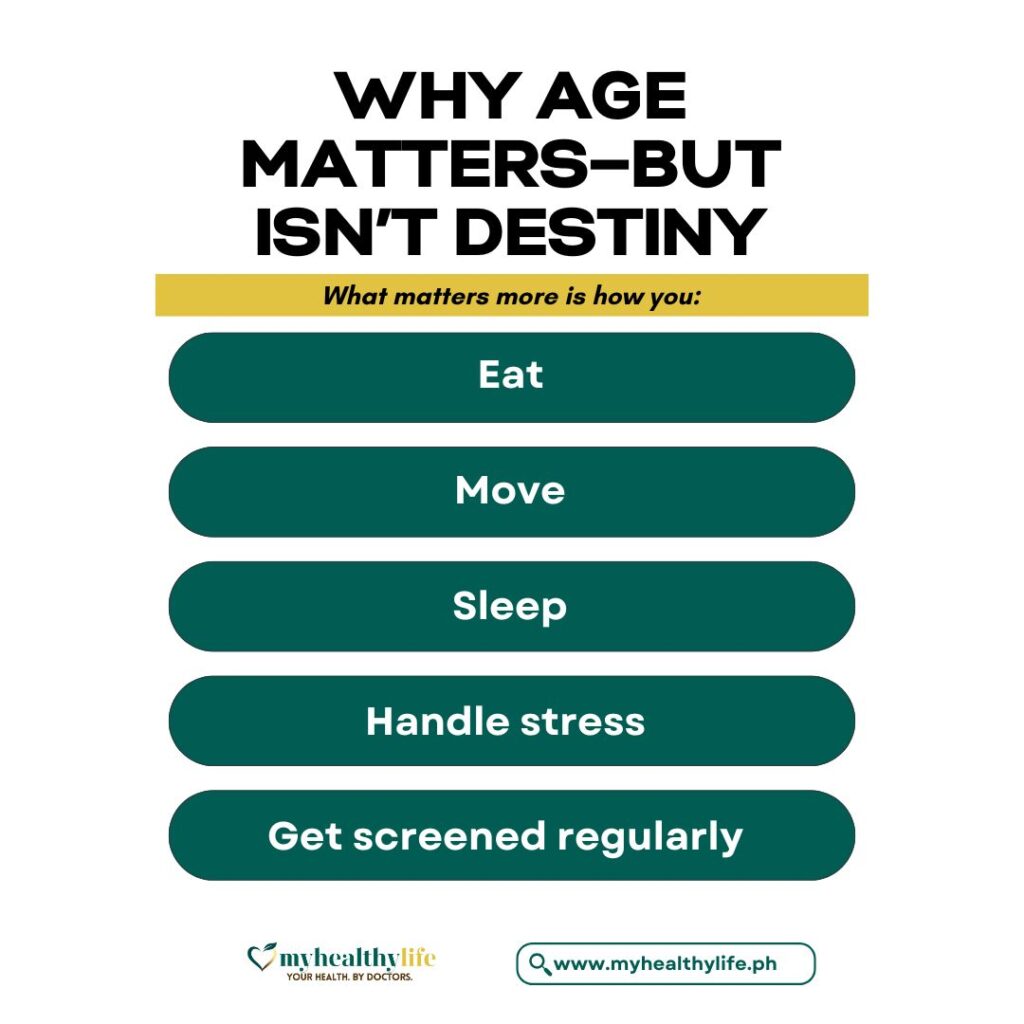
Why Age Matters—But Isn’t Destiny
Your risk of prediabetes rises with age—but lifestyle plays a bigger role. You could be 25 and prediabetic, or 55 and completely in the clear.
The secret lies in how you treat your body:
- What you eat
- How much you move
- How you sleep
- How you manage stress
- How often you get screened
Understanding when to watch for signs helps you stay ahead.
How to Lower Your Risk at Any Age
🎯 1. Balance Your Plate
Eat high-fiber carbs (like brown rice, oats, sweet potato) + protein + healthy fats. This slows glucose spikes.
🚶♀️ 2. Move After Meals
Even a 10-minute walk after lunch or dinner helps your muscles use glucose more effectively.
🛌 3. Sleep 7–9 Hours
Poor sleep = higher cortisol = more insulin resistance.
🧘 4. Chill Out
Stress triggers hormones that raise blood sugar. Try mindfulness, stretching, prayer, or just more time offline.
🩺 5. Get Checked
Ask your doctor for fasting glucose, HbA1c, or an oral glucose tolerance test—especially if you have a family history or any of the symptoms above.
Quiz Yourself: Could You Be At Risk?
Answer honestly:
- Do you have a parent or sibling with diabetes?
- Is your waist measurement above 35 inches (women) or 40 inches (men)?
- Do you feel sleepy after meals or crave sweets often?
- Has your doctor ever mentioned elevated BP, cholesterol, or sugar?
If you said yes to 2 or more, it’s time to book a screening.
Better to know now—and take control—than wait for things to worsen.
Prediabetes doesn’t have to turn into diabetes.
Not if you catch it early.
Not if you listen to your body.
You’ve got the info—now take the first step.
Share:
Related Posts

How Thyroid Issues Hide Behind Common Symptoms

How Hormones Affect Men’s Mood More Than We Admit