Ever felt off for weeks and couldn’t explain why?
You’re not stressed.
You’re not sick.
Life’s okay—but you still feel flat, foggy, or quick to snap.
We often talk about hormones and mood in women.
But men? Nah, we’re “supposed” to be steady, logical, and emotionally bulletproof. Right?
Let’s bust that myth.
The truth is, male hormones play a major role in how we feel—and most guys have no clue it’s even happening.
Mood swings, irritability, low motivation, even burnout?
Sometimes it’s not “just life.”
It’s your testosterone—and maybe even your estrogen—calling the shots.
Mood and Hormones: The Connection You Weren’t Told
Testosterone isn’t just about sex drive and muscles.
It helps regulate:
- Serotonin, your feel-good brain chemical
- Energy and motivation
- Stress resilience and emotional balance
- Confidence, focus, and sense of drive
When testosterone levels fall (which they naturally do with age), these systems start to misfire.
And the emotional changes are often the first signs—even before physical ones.
Signs Your Mood Might Be Hormone-Driven
Low testosterone isn’t always obvious. But if you’re nodding at these, it’s worth checking:
- You feel more irritable than usual (snapping at small things)
- You’re less motivated to get stuff done
- Your confidence or self-esteem has dipped
- You feel down or numb, even when things are going well
- Your sleep quality has dropped
- You’re more anxious or restless than before
- You feel disconnected—from others, or even yourself
The tough part? These signs can be subtle. And since most men are trained to “tough it out,” we ignore the early warnings until they get louder.
How Low Testosterone Impacts Mental Health
Research links low testosterone to:
- Higher rates of depression and anxiety in men
- Increased emotional sensitivity (yes, men can feel that too)
- Lower cognitive function and memory issues
- Chronic fatigue and mental fog
In fact, some men with depression don’t respond to standard antidepressants—until their testosterone levels are optimized.
We’re not saying T fixes everything.
But for a lot of men, it’s the missing piece in their mental health puzzle.
Testosterone’s Role in Emotional Regulation
So what exactly does testosterone do to your mood?
Think of it like your body’s mental backbone. It stabilizes your response to stress, helps your brain fire up focus and reward circuits, and keeps your drive dialed in.
When testosterone is in check, you tend to feel:
✅ Calm under pressure
✅ Competitive and motivated
✅ Connected to others
✅ Energetic and upbeat
But when T drops?
😤 Small frustrations feel massive
😓 You get emotionally drained quicker
🛑 You pull back from challenges instead of leaning in
In short: you stop feeling like yourself.
What About Estrogen in Men?
Surprise—men have estrogen too.
And while testosterone gets all the headlines, estrogen (especially estradiol) helps regulate:
- Brain function
- Emotional processing
- Sexual function
- Joint and bone health
Most of your estrogen is made from testosterone. But when T drops, your estrogen levels can also fluctuate—and that throws off your mental game even more.
High estrogen in men has been linked to:
- Mood instability
- Irritability
- Low libido
- “Foggy” or indecisive thinking
So yes—your emotional health is tied to the balance of both hormones.
Should You Get Your Hormones Checked?
If you’ve been feeling “off” and can’t quite pinpoint why, it’s worth a lab check.
Ask your doctor about:
- Total Testosterone
- Free Testosterone
- Estradiol (E2)
- SHBG
- Optional: Cortisol, TSH (to rule out thyroid issues)
🕒 Test in the morning, when levels are at their highest.
Don’t worry—it’s just a simple blood draw, and it could change everything.
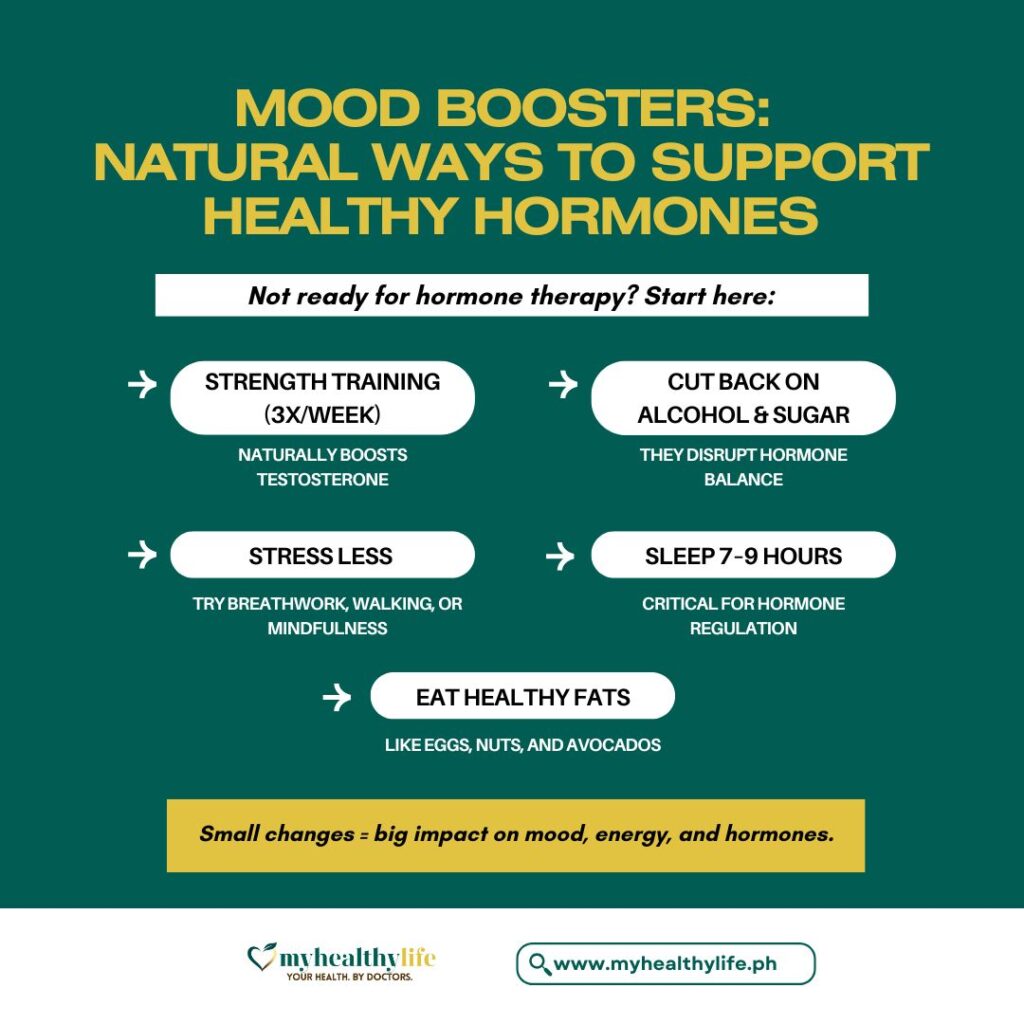
Mood Boosters: Natural Ways to Support Healthy Hormones
Not ready for testosterone therapy? These habits can help rebalance you:
- Strength training (3x/week): Naturally increases testosterone
- Quality sleep: 7–9 hours helps regulate hormone production
- Stress control: Try mindfulness, walks, or even just breathing breaks
- Eat healthy fats: Avocados, eggs, and nuts help hormone synthesis
- Limit alcohol: It wrecks testosterone and boosts estrogen
- Cut sugar and processed food: Insulin spikes throw hormones off balance
Remember—small changes add up fast when it comes to mood and hormones.
Let’s Talk About It More
There’s no shame in asking, “Could my hormones be messing with me?”
In fact, that question might be the smartest move you’ve made in a while.
Mood changes don’t mean weakness.
They mean your body is sending a signal—and it’s time to listen.
REFRAME THIS: What If It’s Not You? What If It’s Your Hormones?
You don’t have to white-knuckle your way through low energy, short tempers, or feeling emotionally off.
You don’t need to explain it away as “burnout” or “just getting older.”
What if it’s just your hormones?
And what if tuning them up helps you reclaim your clarity, confidence, and calm?
That’s not just mental health.
That’s total health.
Let’s stop ignoring men’s hormones.
Let’s start owning them.
Share:
Related Posts
How Thyroid Issues Hide Behind Common Symptoms
Does Your Metabolism Really Slow After 40?