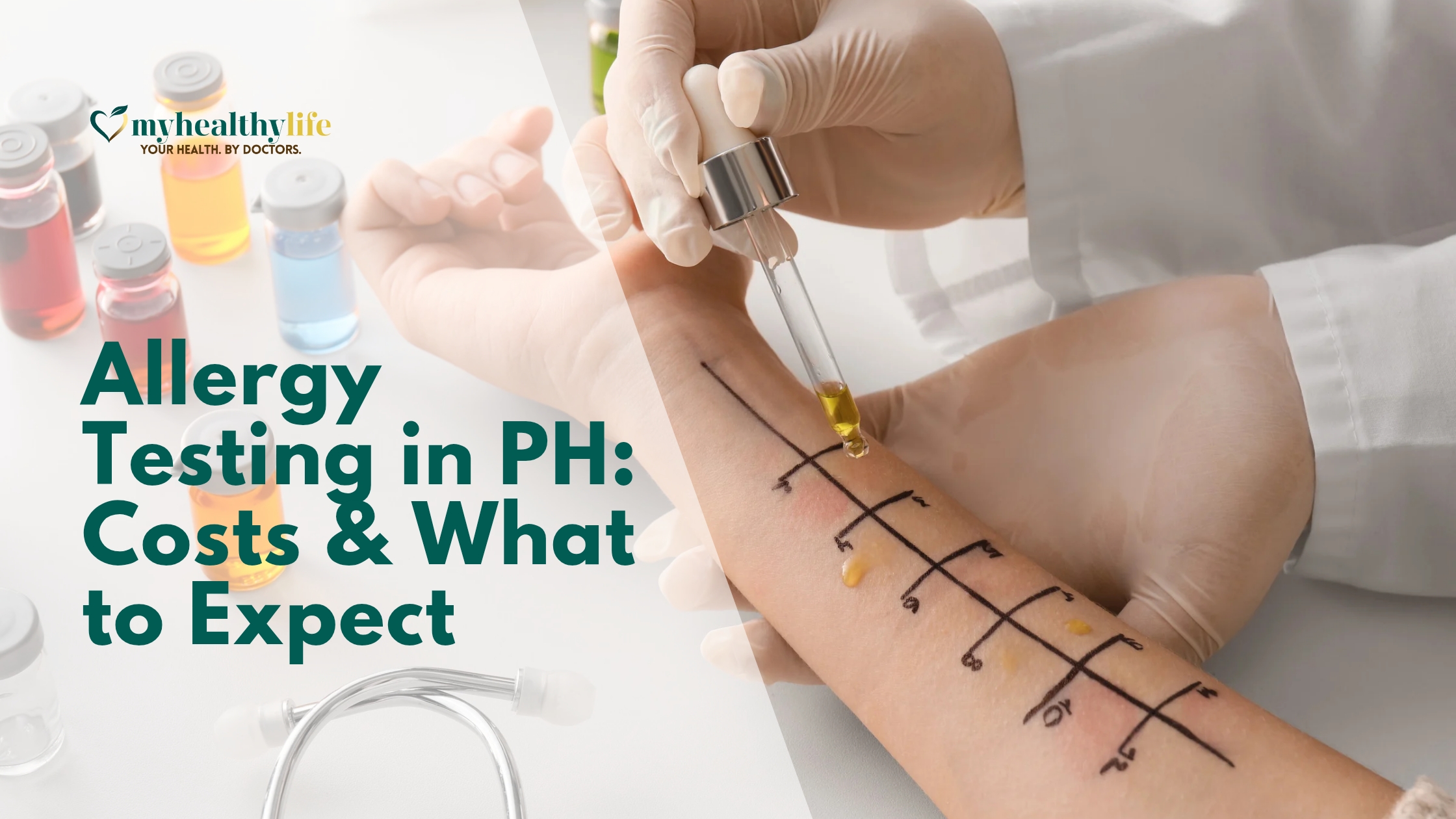
Allergies can make life uncomfortable—whether it’s constant sneezing, unexplained rashes, or a reaction to food you’ve eaten all your life. In the Philippines, allergy tests are widely available in hospitals, clinics, and diagnostic centers, helping you pinpoint the triggers so you can take control of your health.
This guide covers what to expect before, during, and after the test, plus typical costs in the Philippines.
When to Consider an Allergy Test
You might think allergies are just a seasonal nuisance, but untreated allergies can lead to chronic skin allergy, recurring respiratory issues, and even life-threatening reactions. Consider getting tested if you have:
- Rashes or urticaria (hives) that appear repeatedly without a clear reason
- Persistent allergy symptoms such as sneezing, watery eyes, or nasal congestion
- Swelling of lips, eyelids, or throat after eating certain foods
- Frequent flare-ups of asthma or eczema
Types of Allergy Tests in the Philippines
Allergy testing typically falls into two main categories:
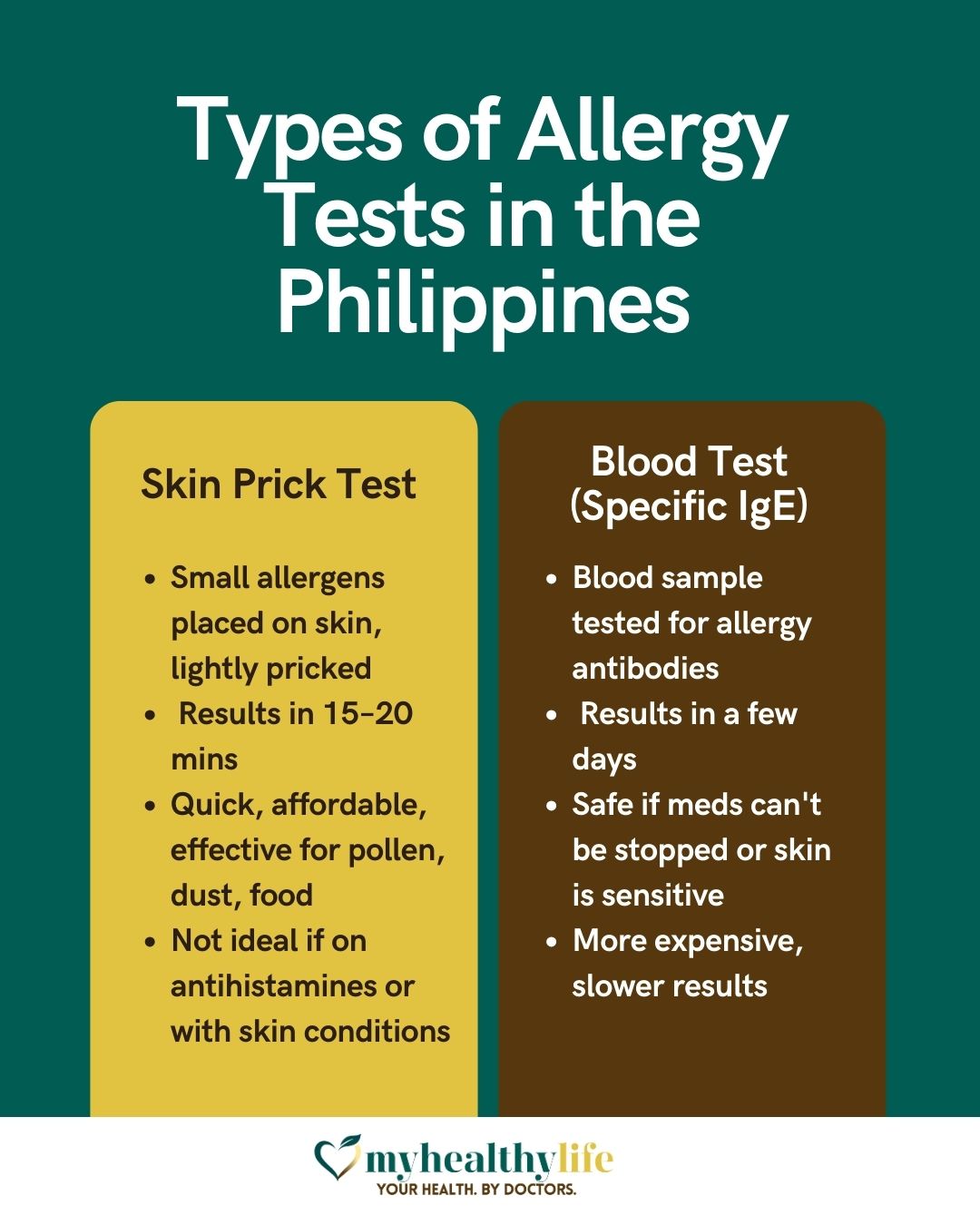
1. Skin Prick Test
- How it works: A small amount of suspected allergens is placed on your skin, usually on the forearm or back, and then lightly pricked so the allergen enters the skin’s surface.
- Results: Reactions—like redness or raised bumps—are checked after 15–20 minutes.
- Pros: Quick results, affordable, and highly effective for common allergens such as pollen, dust mites, pet dander, and certain foods.
- Cons: May not be suitable if you’re on strong antihistamine medication or have severe skin conditions.
2. Blood Test (Specific IgE Test)
- How it works: A blood sample is taken and analyzed in a lab for allergic antibodies (IgE) to specific allergens.
- Results: Usually available within a few days.
- Pros: Safe for patients who can’t stop taking medications or have extensive skin conditions.
Cons: More expensive and results take longer.
Typical Costs in the Philippines
Prices vary depending on the facility and the number of allergens tested. As of 2025, here’s a general cost guide:
Type of Test | Price Range (PHP) |
Skin Prick Test | ₱1,500 – ₱4,000 |
Blood Test (IgE) | ₱2,500 – ₱6,000+ |
Note: Some packages cover only a limited panel of allergens, while others offer a comprehensive test for dozens of allergens.
Preparing for an Allergy Test
- Stop certain medications: Some allergy medicines, especially antihistamines, need to be stopped a few days before testing (follow your doctor’s advice).
- Avoid skincare products: If you have a skin test scheduled, don’t apply creams or lotions on the test area.
- List symptoms: Keep track of when and where symptoms appear to help your doctor decide which allergens to test.
What Happens After Testing
- Positive results: You’ll know which allergens trigger your symptoms and can create a treatment plan, which may include avoidance strategies, medications, or immunotherapy.
- Negative results: Your symptoms might be due to other causes, so your doctor may recommend further tests.
- Treatment: Mild reactions can often be managed with over-the-counter antihistamines, while more severe allergies may require prescription medication or desensitization therapy.
Checklist Before Booking an Allergy Test
☑ Have I experienced recurring rashes, hives, or swelling?
☑ Do I have seasonal or year-round allergy symptoms?
☑ Have over-the-counter treatments failed to control my symptoms?
☑ Do I want to identify specific triggers for prevention?
☑ Am I willing to make lifestyle changes based on results?
Bottom Line: Getting an allergy test in the Philippines is an important step in controlling your health and improving your quality of life. Whether you choose a skin test or a blood test, the key is working closely with a qualified doctor to interpret your results and create a tailored treatment plan.
If you want more reliable, research-backed health guides like this, MyHealthyLife offers expert tips and articles designed to keep you informed, healthy, and in control.
https://www.mayoclinic.org/tests-procedures/allergy-tests/about/pac-20392895
https://www.webmd.com/allergies/guide/allergy-testing
https://www.aaaai.org/tools-for-the-public/conditions-library/allergies/allergy-testing
Share:
Related Posts

Skin & Immunity in Your 30s, 40s, and 50s: How to Keep Both in Top Shape
Shingles: Why Your Risk Grows After 50