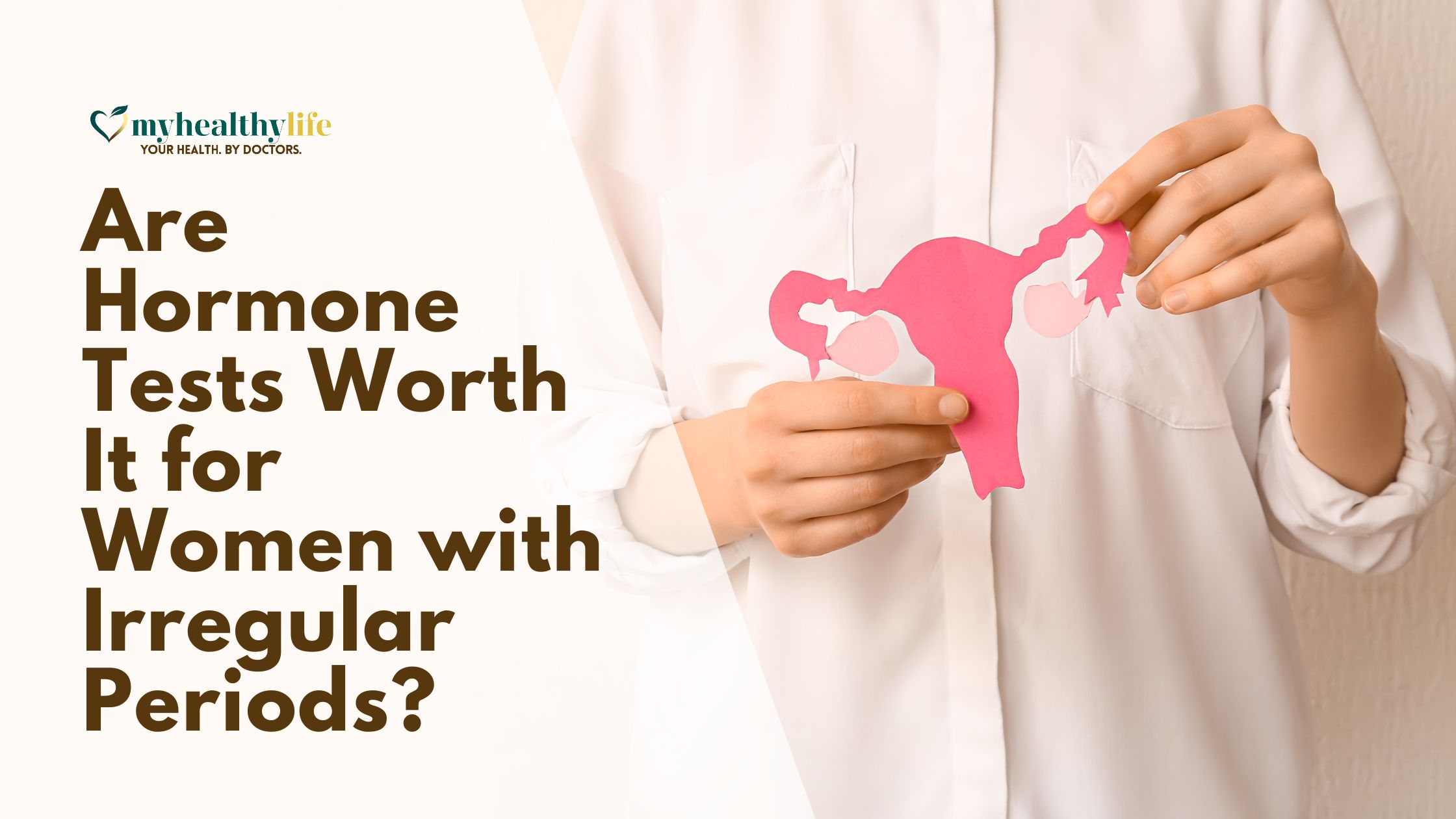
So your period has gone rogue. It’s late, early, skipping months, or sticking around longer than it should.
Cue the stress.
You open Google and fall into a rabbit hole of PCOS, thyroid problems, estrogen imbalances, and a long list of scary-sounding diagnoses. Now you’re asking: Do I need hormone tests?
Let’s take a deep breath—and unpack this properly.
Irregular periods are common, especially in your 20s and 30s. Sometimes they’re harmless and temporary. But other times, they’re your body waving a hormonal red flag. The trick is knowing when to ride it out—and when to get those hormones checked.
First Things First: What Counts as “Irregular”?
If you:
- Go more than 35 days between periods (or less than 21),
- Skip more than 3 months without pregnancy,
- Have wildly varying cycle lengths each month,
- Experience prolonged bleeding (longer than 7 days),
Then yes—your period is officially irregular.
This doesn’t always mean danger. But it does mean it’s time to tune in to what your hormones might be saying.
When Are Hormones to Blame?
Your menstrual cycle is orchestrated by a symphony of hormones—primarily:
- FSH (follicle-stimulating hormone)
- LH (luteinizing hormone)
- Estrogen
- Progesterone
- Thyroid hormones
- Prolactin
- Testosterone
If even one is out of balance, your cycle can get thrown off.
Let’s break down the usual hormonal suspects behind irregular menstruation:
1. Polycystic Ovary Syndrome (PCOS)
- Common in Filipinas
- Often linked to high testosterone
- May show up as acne, facial hair, weight gain, or missed periods
🔍 Test to ask for: Total and free testosterone, LH:FSH ratio
2. Thyroid Disease
- An underactive thyroid (hypothyroidism) can make periods heavy or irregular
- An overactive thyroid (hyperthyroidism) can stop them altogether
🔍 Test to ask for: TSH, Free T4, T3
3. High Prolactin
- This hormone helps with breastfeeding—but can also cause missed periods in non-pregnant women
- Can be triggered by stress or a tiny pituitary tumor
🔍 Test to ask for: Prolactin level
4. Perimenopause (Late 30s and Beyond)
- Cycles may shorten, then become erratic
- Often paired with mood changes, hot flashes, or sleep issues
🔍 Test to ask for: FSH, Estradiol, and track symptoms
What Hormone Tests Are Typically Done?
Here’s a look at the most commonly ordered blood tests and what they can tell you:
Hormone Test | What It Checks | Why It’s Useful |
FSH & LH | Ovarian reserve, ovulation patterns | Helps detect PCOS, early menopause |
TSH, Free T4 | Thyroid function | Identifies under- or overactive thyroid |
Prolactin | Pituitary function | Explains missed periods, galactorrhea |
Estradiol | Estrogen levels | Reveals ovarian hormone production |
Testosterone | Androgen excess | Crucial in PCOS diagnosis |
⚠️ Timing matters: Some tests need to be done on Day 3 of your cycle, others vary depending on symptoms.
When Hormone Tests Aren’t Needed (Yet)
Let’s be real—not everyone needs labs right away.
Sometimes, your body just needs time, rest, or better tracking.
Try lifestyle changes and tracking first if:
- You’ve only had 1–2 irregular cycles recently
- You’re under major stress or shifted sleep/work schedules
- You’re recovering from illness or travel
- You’ve changed birth control or stopped hormonal contraception
📝 Tip: Use an app or notebook to track your cycle length, flow, and symptoms. This gives your doctor helpful patterns to work with—especially if you end up needing labs later.
When to Talk to a Doctor About Hormonal Imbalance
Don’t ignore persistent changes. It’s time to get checked if:
- You’ve skipped 3 or more periods (and you’re not pregnant)
- Your cycle is consistently shorter than 21 or longer than 35 days
- You experience excessive hair growth, acne, weight changes, or mood swings
- Your periods are extremely painful or heavy
- You’re trying to get pregnant with no success
These are signs your body’s hormonal rhythm needs a closer look.
Natural Ways to Support Hormonal Balance
Whether you’re waiting for tests or just trying to stay balanced, these tips can help:
✅ Eat blood sugar-stabilizing meals: Whole grains, healthy fats, lean protein
✅ Cut back on added sugar, soda, and refined carbs
✅ Move your body daily—even a 20-minute walk helps!
✅ Prioritize sleep and stress reduction
✅ Consider speaking with a gynecologist or endocrinologist if your symptoms persist
Self Check-In: Are You Hormone-Test Ready?
Ask yourself:
- Have my irregular periods lasted more than 3 months?
- Am I seeing other symptoms like acne, hair changes, fatigue, or weight shifts?
- Do I want to get pregnant soon and need clarity on my cycle?
If you said yes to any of the above, it’s totally reasonable to bring up hormone testing with your doctor.
Final Word: Your Body Deserves Better Than Guesswork
Hormonal imbalance doesn’t always scream loud—it whispers through missed periods, mood shifts, and subtle changes that are easy to ignore. But you know your body best—and asking questions doesn’t make you dramatic, it makes you smart.
So whether you’re just starting to track your cycle or thinking about blood tests, remember this:
💬 You don’t need a medical degree to advocate for your health.
💬 You just need to be curious, proactive, and willing to listen to your body.
Stay tuned, stay informed—and don’t be afraid to get answers.
Your hormones? They’re worth understanding.
Share:
Related Posts
How Thyroid Issues Hide Behind Common Symptoms

How Hormones Affect Men’s Mood More Than We Admit