

Your dad. Your brother. Your husband. Your best friend.
They’re tough. They power through pain. They shrug off symptoms.
And they almost never want to go to the doctor.
But when it comes to heart disease symptoms in men, that silence can be deadly.
Studies and hospital data across the Philippines and worldwide confirm it:
Men are far more likely to ignore early signs of heart problems—often until it’s too late.
Why does this happen? What are the signs they miss? And how can we change the outcome?
Let’s talk about the real reasons men delay—and how to break the cycle.
Why Men Downplay the Warning Signs
It’s not just stubbornness.
Men have been socially and culturally trained to “tough it out” since childhood.
Here are the most common reasons they delay or avoid heart screenings—even when symptoms show up:
1. Fear of Diagnosis
Many men fear being told something’s wrong more than the symptoms themselves.
- “What if it’s serious?”
- “What if I have to take meds forever?”
- “What if I can’t work if something’s wrong?”
This fear leads to avoidance. But the longer they wait, the worse the outcome becomes.
2. Cultural Pressure to Stay Strong
In many Filipino households, men are expected to be the pillar—financially, emotionally, physically.
Admitting weakness? That’s often seen as “unmanly” or “dramatic.”
So instead, they:
- Ignore fatigue
- Downplay palpitations
- Push through chest pain
They don’t want to worry others. Ironically, this silence increases the risk of leaving loved ones behind.
3. Work Comes First
Men in their 30s, 40s, and 50s are often juggling high-stress jobs or labor-intensive work.
Getting a check-up means:
- Taking time off
- Falling behind on bills
- “Looking weak” at work
So, they tell themselves, “I’ll get checked when things slow down.” But life rarely does—and their heart pays the price.
4. They Don’t Recognize the Symptoms
Contrary to TV portrayals, heart problems don’t always look like crushing chest pain.
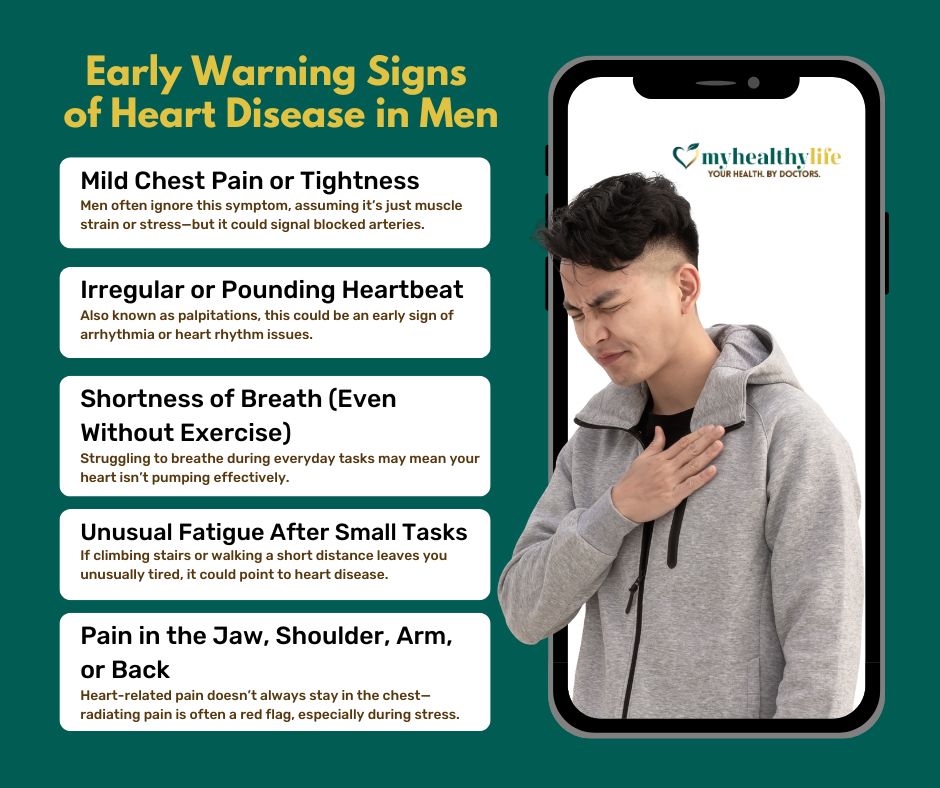
Men often miss or mislabel these symptoms:
- Mild chest tightness
- Palpitations after meals or stress
- Shortness of breath climbing stairs
- Fatigue, especially after lunch
- Jaw or arm discomfort
They write it off as: “Pagod lang,” “init lang,” or “wala yan.”
The Silent Risks: What’s Happening Inside
Even if a man feels “normal,” silent heart risks may be building:
- High blood pressure: Often has no symptoms but increases stroke/attack risk
- High LDL (bad cholesterol): Clogs arteries slowly over decades
- Palpitations: May signal early arrhythmias like atrial fibrillation
- Borderline blood sugar: Can damage blood vessels before full-blown diabetes hits
These don’t always scream for attention. But over time, they weaken the heart muscle, harden the arteries, and increase clot risk.
The Cost of Waiting: Real Numbers
Filipino men are:
- More likely to experience heart attacks before age 55
- Less likely to visit a doctor annually
- More likely to die within the first 30 days after a heart attack—often due to delayed treatment
And still, many only go to the hospital when they collapse or experience extreme pain.
What Early Heart Symptoms Should Men Watch Out For?
Encourage the men in your life to speak up if they experience:
Classic and Not-So-Classic Signs
- Chest pain (even mild or left-side tightness)
- Fast, irregular, or pounding heartbeat
- Shortness of breath—even without exercise
- Dizziness or lightheadedness
- Fatigue after small tasks
- Nausea, indigestion, or upper stomach discomfort
- Jaw, shoulder, or back pain (especially during stress or exertion)
How to Help Men Take Action (Without Nagging)
Changing habits—especially around health—takes strategy.
Here’s how partners, kids, and friends can support the men they care about:
1. Speak to Logic, Not Fear
- “A check-up now avoids bigger bills later.”
- “It’s just data. You don’t have to take meds unless necessary.”
- “Even if you feel fine, let’s make sure everything’s on track.”
Appeal to planning, protection, and being in control.
2. Don’t Guilt—Invite
- “I’m going for a health check—come with me?”
- “Let’s both get screened this month.”
- “Doctor said it’s part of adulting after 40.”
Framing it as teamwork removes defensiveness.
3. Frame It Around Family
- “I want you around longer.”
- “Your kids copy your health habits.”
- “We need you healthy, not just hardworking.”
This reminds them that self-care is a form of service, not selfishness.
4. Make It Simple and Accessible
- Offer to help schedule the appointment
- Choose clinics with fast or walk-in options
- Consider Sunday health fairs or worksite screenings
Reduce friction, increase follow-through.
Men, Here’s What You Can Do Now
If you’re reading this and you’re a guy over 30, ask yourself:
- Have I had a blood pressure check this year?
- When was my last cholesterol or sugar test?
- Do I feel more tired lately—even if I sleep well?
- Am I having weird heart flutters or chest tightness that I’ve ignored?
If yes to any of these—book a check-up this week. Don’t wait for a collapse to act.
Closing Thought: Being Strong Means Being Smart
Going to the doctor doesn’t make you weak.
Ignoring your health doesn’t make you strong.
What’s manly?
- Showing up for your family.
- Taking charge before it’s too late.
- Modeling strength through action, not silence.
At MyHealthyLife, we help men rethink health—not as a problem, but as a plan.
You don’t need to change overnight. Just start by checking in.
Your body has been giving you signals. It’s time to listen.
Share:
Related Posts

Heart Smart, Life Strong: Why Fitness Matters for Your Heart—Beyond the Number on the Scale
Meal Timing and Heart Health: What New Science Says