Let’s be honest—checking your blood pressure at home isn’t the most exciting part of adulting. But when it comes to preventing stroke, heart attack, and kidney disease, it’s one of the smartest things you can do.
That’s why home BP check devices have exploded in popularity. And among them, wrist monitors are catching attention for one big reason: they’re easy. Slip it on, press a button, boom—reading done.
But here’s the million-peso question: Are wrist blood pressure monitors accurate enough—or are they just too good to be true?
Let’s break it down: the science, the pros and cons, and when a wrist model might be okay (or not).
First, Why Monitor Blood Pressure at All?
High blood pressure—or hypertension—is called the “silent killer” for a reason. It often has no symptoms, yet silently damages your arteries, heart, kidneys, and brain over time.
By regularly using a blood pressure monitor at home, you can:
- Catch hypertension early
- See how your lifestyle changes are working
- Track medication effectiveness
- Avoid the “white coat effect” (higher readings at the doctor’s office)
But only if your device is accurate.
The Positioning Problem with Wrist BP Monitors
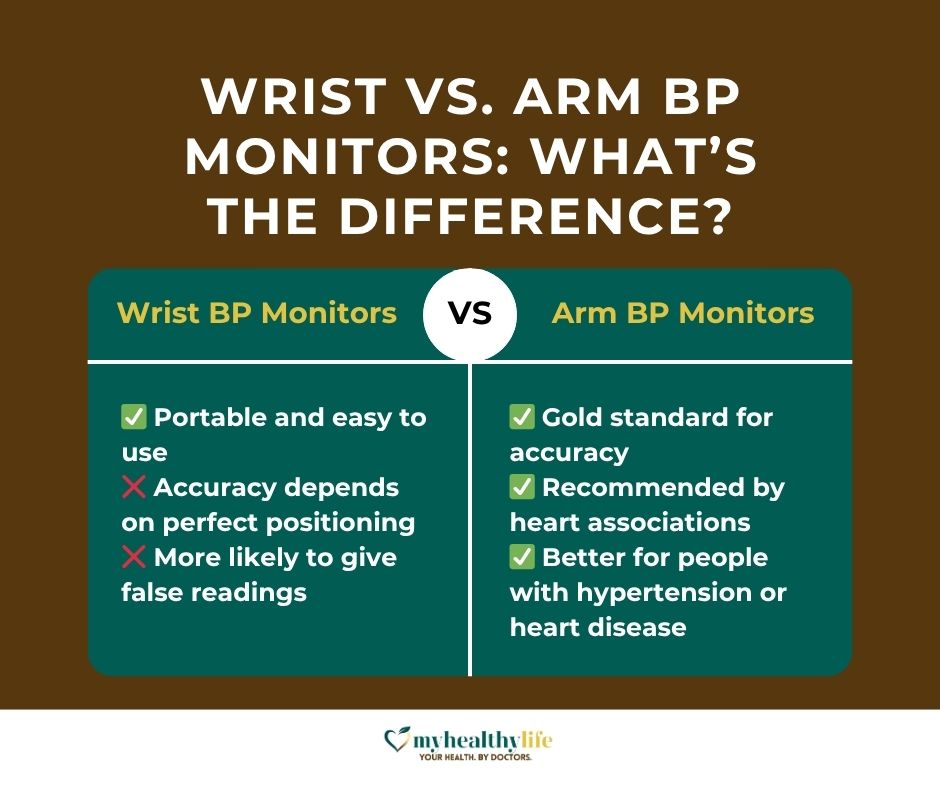
Here’s the catch: your wrist is farther from your heart, and the arteries there are smaller and more sensitive to movement.
That means even a slight positioning error can mess up your reading.
To get a proper result:
- Your wrist must be at heart level—not lower or higher.
- You must be relaxed, sitting straight, and not moving or talking.
- Repeated measurements should be taken on the same wrist, at the same time of day.
Mess up even one of these, and you might see false highs or lows.
So... Are Wrist Monitors Accurate?
They can be accurate—if:
- The device is clinically validated (check for BP certification logos)
- You strictly follow positioning instructions
- You don’t have any medical conditions that affect blood flow (like arteriosclerosis)
But they’re less reliable:
- For older adults (whose arteries may be stiffer or more sensitive to movement)
- If you don’t hold your wrist at heart level
- If you’re using a non-validated or cheap generic device
- During irregular heart rhythms, which throw off sensors
In short: the margin of error is higher. For people managing hypertension or heart disease, that extra risk could lead to wrong medication changes or missed diagnoses.
When Wrist Monitors Might Be a Good Choice
Let’s be fair—wrist monitors aren’t useless. In fact, they can be helpful for:
Travel and on-the-go monitoring
Lightweight and compact, wrist models are great for work, trips, or quick checks in between busy schedules.
People with large upper arms
If a standard cuff doesn’t fit well—or feels painful—wrist monitors offer a more comfortable alternative.
Limited arm mobility
For people with shoulder injuries, post-surgery limitations, or certain disabilities, wrist monitors are easier to use independently.
But in all these cases, proper technique still matters. If in doubt, bring your wrist monitor to a clinic and compare it with a professional arm reading to see how it stacks up.
Reading Your Results: What’s Normal Anyway?
Here’s a quick blood pressure chart (based on guidelines from the Philippine Society of Hypertension):
Category | Systolic (Upper #) | Diastolic (Lower #) |
Normal | <120 | <80 |
Elevated | 120–129 | <80 |
Hypertension Stage 1 | 130–139 | 80–89 |
Hypertension Stage 2 | ≥140 | ≥90 |
Hypertensive Crisis | ≥180 | ≥120 |
One high reading isn’t enough to diagnose hypertension. Take readings at the same time daily for a week, then average them for a clearer picture.
Best Practices for Home BP Checks
No matter which monitor you use, follow these habits for consistent results:
- Rest for 5 minutes before checking
- Sit with feet flat, back supported, and no talking
- Take two readings, 1–2 minutes apart
- Log your results with date and time
- Avoid caffeine, smoking, or exercise 30 minutes before checking
Check at consistent times, usually morning and evening
Don’t Forget: Bring It to Your Doctor
Whichever model you use, take it to your next check-up. Let your doctor:
- Validate it against a clinic monitor
- Show you how to use it correctly
- Adjust your BP targets based on your risk factors
They may also suggest repeating a test with an arm model if your wrist readings are inconsistent or seem off.
Quick Decision Guide: Which BP Monitor Should You Choose?
You’re… | Recommended Monitor |
Managing known hypertension | Upper arm monitor (validated) |
Young, healthy, tracking casually | Either (if used properly) |
Traveling a lot or working on the go | Wrist monitor, with caution |
Elderly or have stiff arteries | Upper arm monitor only |
Unable to use arm cuffs | Wrist monitor, but validate regularly |
At MyHealthyLife, we simplify the tech that monitors your health.
Whether you’re using a wrist device or a full arm cuff, we’ll guide you toward accurate readings, smart habits, and real confidence in your numbers.
Share:
Related Posts

Heart Smart, Life Strong: Why Fitness Matters for Your Heart—Beyond the Number on the Scale

Meal Timing and Heart Health: What New Science Says