

You’ve probably heard the golden number: 10,000 steps a day.
But is that the only way to stay healthy—or is there heart-saving power in just 5,000 steps?
Good news: recent science shows you don’t need to hit 10K to protect your heart.
Even half that number—5,000 steps—can bring big benefits for your blood pressure, cholesterol, and overall cardiovascular endurance.
Whether you’re a busy parent, WFH warrior, or starting from zero fitness, this one’s for you.
Let’s walk through the facts.
First: Why Movement Matters for the Heart
When you walk, your heart:
- Pumps more efficiently
- Delivers oxygen to tissues
- Trains your blood vessels to stay flexible
- Burns fat and stabilizes cholesterol
That’s why walking is one of the simplest but most powerful cardio exercise examples out there.
The Science: What Studies Say About Steps and Heart Risk
A 2023 study published in the European Journal of Preventive Cardiology followed over 220,000 adults. Here’s what they found:
- Just 4,000 steps per day reduced all-cause mortality
- Around 5,000–6,000 steps was linked to significantly lower risk of dying from heart disease
- Benefits increased up to 10,000 steps, but early improvements start much sooner
In short:
Any walking is better than none—and 5,000 steps is a real turning point.
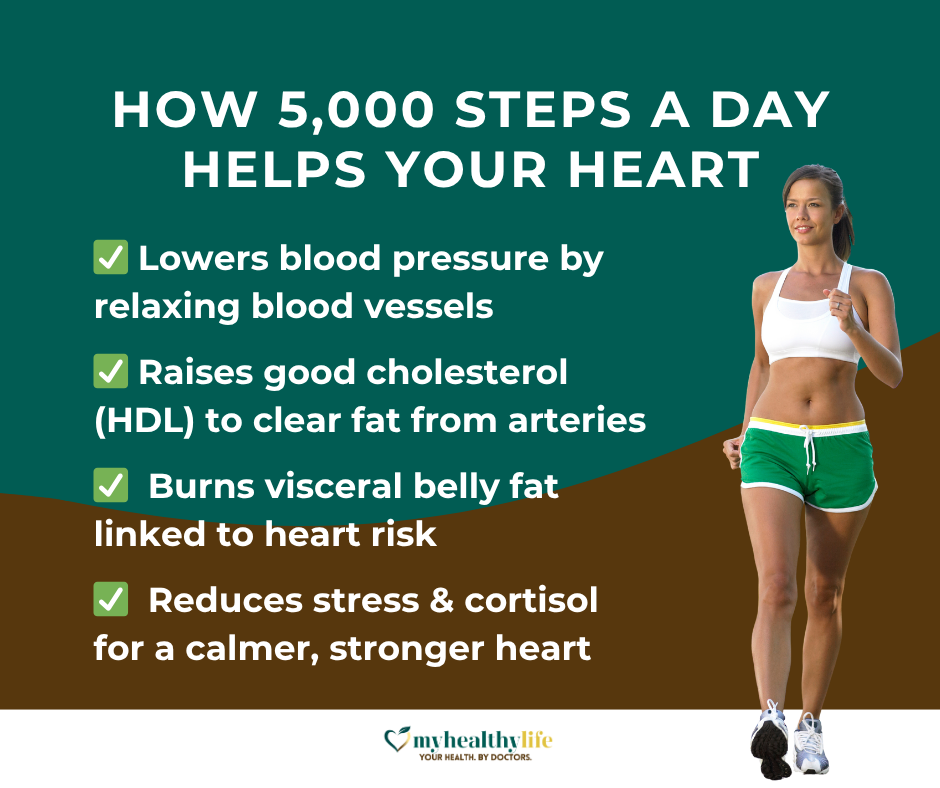
What Happens to the Body at 5,000+ Steps
Even moderate walking (about 30–45 minutes total per day) can help:
Lower Blood Pressure
A walking habit helps relax blood vessels and improve circulation. Studies show:
- Systolic BP (the top number) can drop by 4–10 mmHg
- That’s enough to reduce stroke and heart attack risk by up to 25%
Raise HDL (Good) Cholesterol
Moderate walking can raise HDL levels—helping clear bad fats from your arteries.
This matters even more if:
- You eat a high-fat diet
- You have a family history of heart disease
- You’re managing metabolic issues like diabetes
Burn Fat, Reduce Visceral Belly Fat
Even without dramatic weight loss, walking targets dangerous belly fat that surrounds organs and raises heart risk.
A regular 5K-step routine can shrink waistlines and inflammation over time.
Reduce Stress
Walking improves circulation to the brain and lowers cortisol, your body’s stress hormone.
Lower stress = lower resting heart rate and BP = happier heart.
But How Much Is 5,000 Steps, Really?
5,000 steps equals roughly:
- 3.5–4 km (2–2.5 miles)
- About 45 minutes of total walking in a day
- Can be broken into short bursts (10–15 mins each)
You don’t need to do it all at once.
Even short walks after meals or during breaks count.
Step Count Benchmarks: What’s Ideal?
Daily Step Count | Health Impact |
Under 3,000 | Sedentary lifestyle (higher risk) |
3,000–5,000 | Light activity, early benefits start |
5,000–7,500 | Heart health improvements, reduced BP |
7,500–10,000 | Ideal for long-term cardio fitness |
10,000+ | Great for weight control and endurance |
Remember: 5,000+ is a realistic, sustainable goal—especially if you’re just getting started.
How to Improve Cardiovascular Endurance with Walking
Walking isn’t just about steps. It’s also about intensity and consistency.
Try these science-backed strategies:
1. Add Intervals
- Walk faster for 1 minute, then slow down for 2 minutes
- Repeat for 20–30 minutes
This boosts heart rate safely and mimics cardio workouts without the strain.
2. Walk Uphill or Use Stairs
Inclines engage more muscle groups and challenge your cardiovascular system.
- Use stairs at work or malls
- Add one slope to your walking route
3. Take “Movement Snacks”
No time for a 45-minute walk? Do 10-minute bursts:
- Morning: 1,000 steps
- Lunch break: 2,000 steps
- After dinner: 2,000 steps
This structure adds up quickly without disrupting your schedule.
4. Stand Up Every Hour
Sitting too long raises heart disease risk—even if you walk later.
Set a timer every hour to stand, stretch, and walk for 1–2 minutes.
It resets circulation and wakes up your metabolism.
Can Walking Replace Workouts?
Yes—for many people, brisk walking is enough.
It’s especially ideal for:
- Adults aged 30–60
- People with joint or mobility issues
- Beginners or busy professionals
- Post-pregnancy recovery
- Those managing high BP, cholesterol, or diabetes
That said, combining walking with other cardio exercise examples like biking, dancing, or swimming improves cardiovascular endurance even more.
Real Talk: Walking Won’t Work If…
You’re walking—but also:
- Smoking
- Eating processed high-sodium food
- Getting 4 hours of sleep
- Ignoring stress
Walking amplifies your lifestyle. To truly prevent heart disease, combine walking with:
- Balanced diet
- Sleep
- Stress reduction
- BP and cholesterol monitoring
Doctor checkups (especially after age 40)
Walk Smart, Not Just Far
Don’t obsess over hitting 10K steps right away.
Start by hitting 5,000+ daily—and do it with intention.
Here’s a guide to build the habit:
Week | Target Steps | How to Do It |
Week 1 | 3,000 steps | 10-min walk x 3/day |
Week 2 | 4,000 steps | Add after-dinner stroll |
Week 3 | 5,000+ steps | Walk to errands, take stairs |
Week 4+ | 5,000–7,500 | Add intervals or longer routes |
You’ll feel stronger, more energized, and more in control of your health.
💡 At MyHealthyLife, we believe every step counts—especially when it’s for your heart.
You don’t need a gym or gadgets.
Just a pair of shoes and the decision to start today.
Your heart will thank you.
Share:
Related Posts

Heart Smart, Life Strong: Why Fitness Matters for Your Heart—Beyond the Number on the Scale

Meal Timing and Heart Health: What New Science Says