If you’ve ever looked in the mirror and thought,
“I need to lose weight for my health,”
—you’re not wrong. But you might not be entirely right either.
Because according to new science, what protects your heart the most isn’t always your weight.
It’s your cardio fitness—regardless of the number on the scale.
So what’s more important: shedding pounds or building endurance?
Let’s settle the cardio vs weight debate with real-world answers.
What Does “Cardio Fitness” Even Mean?
Cardio fitness, also known as cardiorespiratory fitness, refers to how well your heart and lungs:
- Deliver oxygen to your body during exercise
- Handle physical effort over time
- Recover after movement
One major marker? Your VO₂ max—the maximum amount of oxygen your body can use during intense activity.
The higher your VO₂ max, the better your heart handles stress—and the lower your risk of heart disease, stroke, or death from any cause.
The Research: Fitness Beats Thinness
A large 2021 review from The European Heart Journal found something surprising:
✅ Overweight or obese adults with high cardio fitness had lower heart disease risk
❌ Compared to normal-weight adults with poor fitness who had higher risk
In other words:
You can be “fat but fit”—and it can protect your heart better than being skinny but sedentary.
Let that sink in.
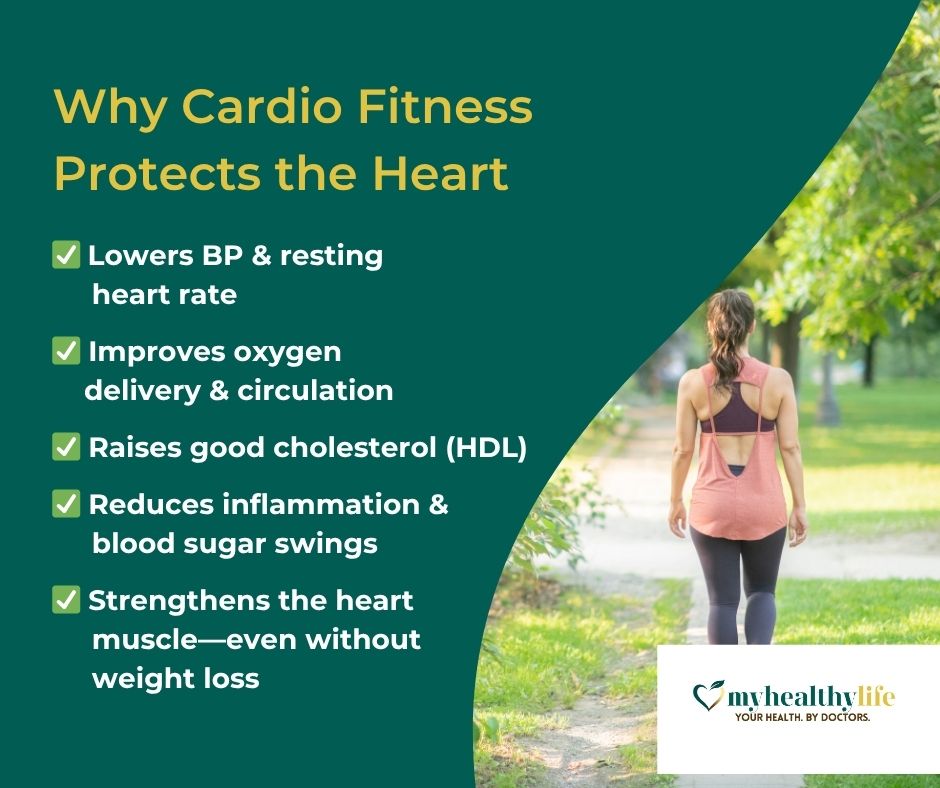
Why Fitness Protects the Heart
Being active helps your heart in more ways than just burning fat. It:
- Lowers resting heart rate and blood pressure
- Improves circulation and oxygen use
- Boosts HDL (good) cholesterol
- Reduces inflammation and blood sugar swings
- Strengthens the heart muscle itself
- Fights metabolic syndrome, even without major weight loss
You don’t have to run marathons.
Just move more, breathe heavier, and be consistent.
But Isn’t Belly Fat Still a Problem?
Yes—belly fat still matters.
Visceral fat (the deep stuff that wraps around organs) is dangerous because it:
- Releases inflammatory hormones
- Raises insulin resistance
- Drives up LDL cholesterol and triglycerides
- Increases blood pressure
Even a fit person with too much belly fat can carry higher metabolic risk.
That’s why both cardio fitness and weight matter—but fitness still takes the lead in protecting your heart.
How Much Cardio Do You Need?
The World Health Organization recommends:
- At least 150 minutes of moderate aerobic activity per week (brisk walking, dancing, biking)
- Or 75 minutes of vigorous aerobic activity (running, HIIT)
- PLUS 2 days of strength training
That sounds like a lot. But broken down, it’s:
- Just 30 minutes a day, 5 days a week
- Or even three 10-minute walks per day
Consistency over perfection is the key.
What If I’m Overweight and Just Starting?
Great—because the biggest benefits of fitness happen early.
Even if the scale doesn’t change much, you’ll likely see:
- Better blood sugar and cholesterol
- Lower resting heart rate
- Fewer palpitations or shortness of breath
- Better mood and energy
Cardio activity teaches your heart to work more efficiently, even before weight loss kicks in.
Thin Doesn’t Always Mean Healthy
Let’s debunk this myth too.
Someone can be:
- Slim but inactive
- Eat poorly
- Smoke or have high stress
- Have weak cardio endurance
This person might have normal BMI but high cardiovascular risk—a phenomenon called “TOFI” (Thin Outside, Fat Inside).
Don’t judge health by appearance alone.
How to Know If You’re “Fit Enough”
You don’t need a lab VO₂ max test to check fitness. Watch for:
- Can you climb stairs without gasping?
- Can you walk briskly for 20–30 minutes?
- Do you recover quickly after light jogging or dancing?
- Can you exercise without dizziness, chest pain, or leg cramps?
If not, no shame. That’s your starting line, not your finish line.
The Best Exercise for Heart Health
Focus on cardio activities that raise your heart rate and make you sweat (but not suffer):
- 🏃 Brisk walking or light jogging
- 🚴 Stationary or outdoor cycling
- 💃 Dance workouts
- 🏊 Swimming
- 🧘 Active yoga
- 🥾 Hiking or incline walking
- ⏱️ HIIT or interval training (even just 10–20 mins)
Bonus: Mix in resistance training to support fat loss, bone strength, and blood sugar control.
The Fit-First Framework
Instead of stressing over your weight, try shifting to a Fit-First mindset:
Old Focus | Fit-First Shift |
“I need to lose 10 lbs.” | “I want to walk 5 days this week.” |
“My BMI is too high.” | “My resting heart rate is getting lower.” |
“I hate how I look in photos.” | “I love how strong I feel after dancing.” |
“I’m not thin enough to be healthy.” | “I’m getting healthier with every step I take.” |
This shift leads to longer-lasting motivation—because it’s about how you feel and function, not just how you look.
But Should I Still Try to Lose Weight?
If you’re carrying excess belly fat or already have high BP, diabetes, or cholesterol—yes, weight loss is still beneficial.
Even losing just 5–10% of your body weight can improve:
- Blood pressure
- Glucose control
- Cholesterol
- Inflammation
But remember:
The how matters more than the how much.
Crash diets or extreme workouts can harm your heart.
Sustainable cardio and nutrition wins every time.
💡 At MyHealthyLife, we believe your body deserves strength, not shame.
Start with movement. Stay consistent. Let fitness be your foundation—your weight will follow.
Because a strong, active heart doesn’t ask how much you weigh. It just thanks you for showing up.
Share:
Related Posts
Heart Smart, Life Strong: Why Fitness Matters for Your Heart—Beyond the Number on the Scale
Meal Timing and Heart Health: What New Science Says