The Hidden Cost of Screen Overload
If you’ve ever caught yourself mindlessly scrolling at midnight, only to wake up groggy and unfocused the next day, you’re not alone. What you may be experiencing is digital fatigue—a modern health challenge that goes far beyond sore eyes and stiff necks. This condition doesn’t just impact your productivity; it takes a serious toll on mental health awareness, emotional balance, and long-term wellbeing.
With our work, entertainment, and social lives all glued to screens, the line between connection and exhaustion blurs quickly. The question is—are your screens controlling you, or are you controlling them?
The Dopamine Trap: Why Screens Keep You Hooked
Social media platforms are designed like slot machines. Every like, comment, or notification gives your brain a quick burst of dopamine, the same “reward chemical” triggered by eating sweets or winning a prize. But just like sugar highs, these dopamine hits don’t last. Instead, they train your brain to crave more, leading to constant checking, multitasking, and distraction.
Over time, this loop doesn’t just affect focus—it chips away at your emotional wellness. For example, comparing yourself to filtered highlight reels of others’ lives can lower self-esteem, increase anxiety, and trigger depressive thoughts. These are subtle yet powerful mental health issues fueled by digital habits.
Blue Light and Broken Sleep
Another culprit behind digital fatigue is blue light exposure. The artificial glow from phones, tablets, and laptops signals your brain to stay alert, suppressing melatonin, the hormone that helps you sleep. Staying up late on screens not only cuts into rest but also disrupts deep sleep cycles critical for memory, focus, and mood regulation.
Chronic poor sleep is strongly linked to mental health problems such as anxiety and depression. In fact, studies show that sleep-deprived individuals are more likely to struggle with negative thinking and emotional regulation.
Multitasking Burnout
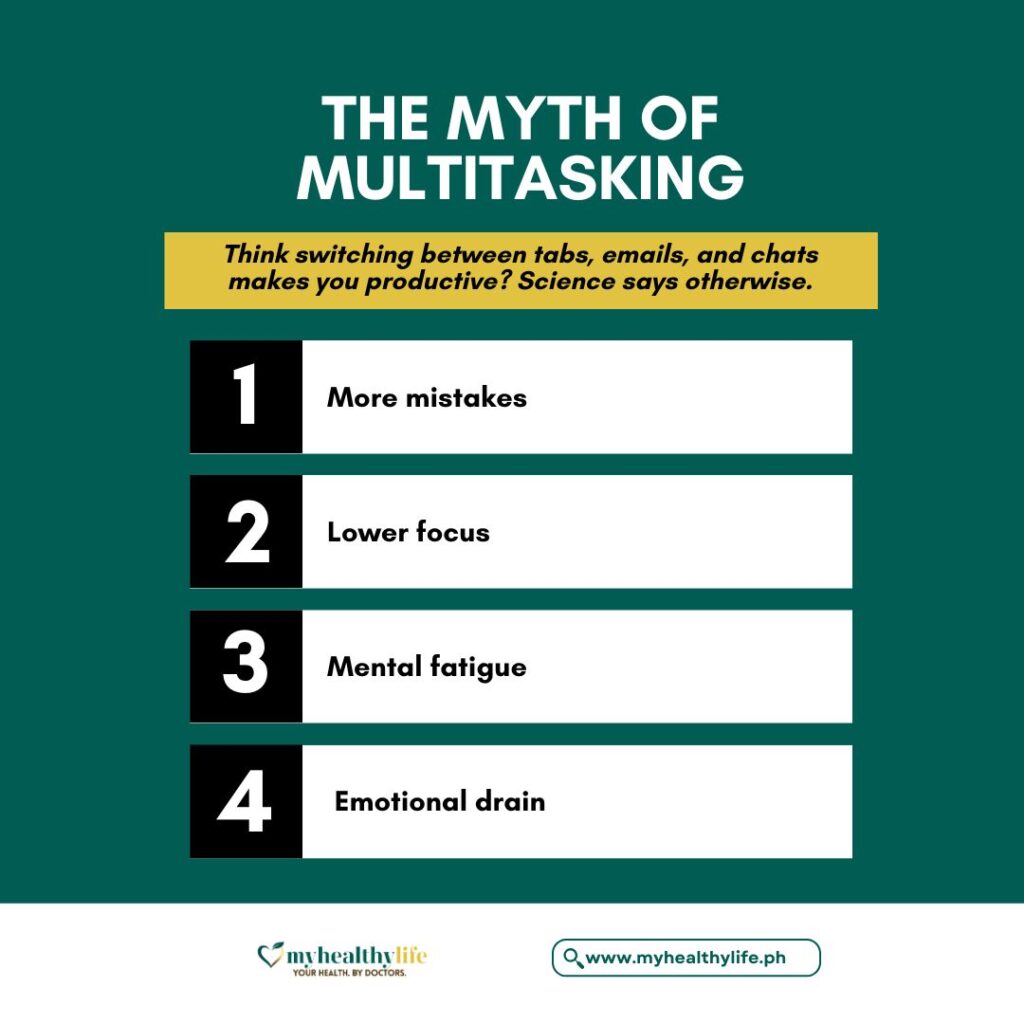
Think you’re a master multitasker? Science disagrees. Juggling between emails, chats, and multiple tabs doesn’t make you more efficient—it taxes your brain. Constant task-switching depletes focus, increases mistakes, and leaves you feeling mentally drained.
This kind of burnout doesn’t just affect work; it seeps into relationships and daily routines. When your brain is overstimulated, patience shortens, irritability rises, and emotional resilience drops.
Spotting the Warning Signs of Digital Fatigue
Digital fatigue can be sneaky, but here are some red flags to watch for:
- Difficulty concentrating or remembering details
- Irritability or mood swings after long screen sessions
- Eye strain, headaches, or body tension
- Trouble sleeping despite feeling exhausted
- Feeling “wired but tired” after scrolling at night
These symptoms are not just annoyances—they are signals that your digital habits may be feeding into bigger mental health problems.
Coping Mechanisms That Work
The good news? Small shifts in daily habits can create big changes in focus and mood. Here are practical coping mechanisms you can try right away:
- Micro-Detox Breaks: Follow the 20-20-20 rule: every 20 minutes, look 20 feet away for 20 seconds.
- Screen Curfews: Turn off devices at least one hour before bed to restore natural sleep cycles.
- Single-Tasking: Dedicate focused blocks of time for one task instead of juggling multiple windows.
- Digital Boundaries: Silence non-essential notifications and set app limits.
- Mindful Alternatives: Replace late-night scrolling with journaling, stretching, or reading—classic emotional wellness examples that calm the mind.
When Digital Fatigue Becomes a Mental Health Issue
For some, digital fatigue can escalate into chronic anxiety, depression, or social withdrawal. If screens are affecting your relationships, work performance, or daily joy, it’s time to seek professional support. Talking to a mental health professional can help uncover deeper patterns and provide personalized coping tools.
Remember: acknowledging the problem is not weakness—it’s strength. Mental health awareness begins with noticing the signals and acting on them before they become harder to manage.
Closing: Your Personal Digital Reset Plan
Digital fatigue is the price of living in an “always on” world—but it doesn’t have to own you. The key is not abandoning screens altogether, but reclaiming control with intentional habits.
Here’s a quick reset checklist you can start today:
- Set two non-negotiable screen-free hours daily (meals, exercise, or bedtime).
- Commit to one offline activity per day—a walk, a book, or real conversation.
- Reflect weekly: Is screen use fueling or draining your energy? Adjust accordingly.
Screens may shape our modern world, but your mental clarity, mood, and emotional wellness deserve to come first. Protect your mind, and focus will follow.
https://cookcounselingandconsulting.com/what-is-digital-fatigue
https://www.canr.msu.edu/news/digital_technology_and_mental_health
https://freedom.to/blog/digital-wellness-how-screen-time-affects-mental-health/
Share:
Related Posts
Can’t Sleep? It Might Be Stress Overload, Not Just Insomnia

Burnout in Men: The Hidden Ways It Shows Up