🥚 Skip breakfast, they said.
💪 You’ll burn fat, they said.
But nobody said your hormones might not like it.
Intermittent fasting (IF) has taken over fitness and wellness spaces—from gym bros to Instagram moms. But behind the success stories and before-after pics, there’s one big truth:
It doesn’t work the same for everyone.
Especially not for women.
Let’s talk science. And hormones. And how your gender may change everything.
First, What Is Intermittent Fasting?
Intermittent fasting isn’t about what you eat, but when you eat.
It cycles between periods of eating and fasting. Popular formats include:
- 16:8: Fast for 16 hours, eat within 8
- 14:10: A gentler version
- 5:2: Eat normally for 5 days, fast/restrict for 2
- OMAD (One Meal A Day): You guessed it—one big meal only
For men, IF is often praised for:
- Improved insulin sensitivity
- Increased testosterone levels
- Reduced belly fat
- Sharper mental focus
But women? That’s where it gets interesting.
Intermittent Fasting and the Female Body
Women’s bodies are biologically designed to preserve fertility—and they’re highly sensitive to signs of food scarcity. IF, especially when done aggressively, can disrupt that balance.
Estrogen, progesterone, and even stress hormone cortisol are deeply intertwined with a woman’s metabolic rhythm.
Here’s what can happen when women fast too long or too often:
- Menstrual cycles become irregular or disappear
- Estrogen levels drop, leading to fatigue or mood swings
- Thyroid function slows down
- Cravings and binge eating increase after fasting
- Ovulation may halt—especially in women with low body fat or PCOS
That’s not to say women can’t fast. But how—and when—matters a lot more.
Why Women Need a Different IF Approach
Let’s break down why IF hits women differently.
1. Estrogen Is Sensitive to Energy Signals
Estrogen production relies on a stable energy supply. If the brain detects “famine,” estrogen dips to conserve resources. Cue irregular periods, mood dips, and fatigue.
2. Progesterone + Stress = Not Friends
Fasting raises cortisol (the stress hormone), which can suppress progesterone—the hormone that supports calm, sleep, and fertility.
3. Women’s Metabolism Changes Across the Cycle
- In the follicular phase (right after your period), your body is more responsive to IF.
- During the luteal phase (before your period), your body needs more calories—fasting during this time can cause PMS to worsen.
So if you’re going to try IF, timing it with your cycle makes a difference.
Intermittent Fasting and the Male Body
Men tend to benefit more uniformly from intermittent fasting.
Here’s why:
- Testosterone levels may improve due to increased insulin sensitivity and better fat metabolism.
- The male hormone rhythm follows a 24-hour cycle—making them more adaptable to daily fasting.
- Less hormonal fluctuation means more consistency in energy, hunger, and mood.
In fact, men typically see improved weight loss, reduced blood sugar levels, and even increased growth hormone with regular IF.
But even for men, long-term extreme fasting can lead to fatigue, muscle loss, or sleep problems—so balance still matters.
What About Women with PCOS?
Now here’s a twist:
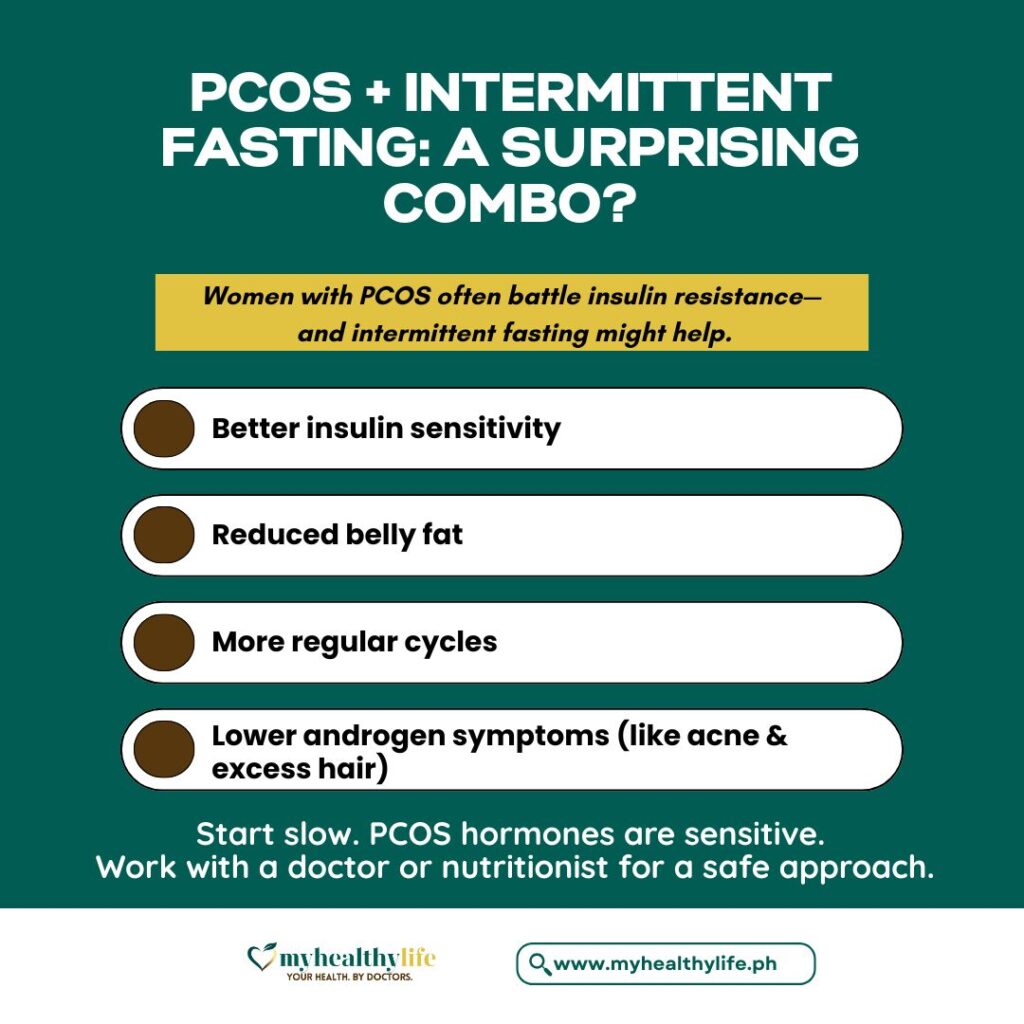
Women with PCOS (Polycystic Ovary Syndrome)—who often struggle with insulin resistance—may actually benefit from intermittent fasting.
Benefits may include:
- Improved insulin function
- Weight loss around the belly
- Better cycle regulation over time
- Reduced androgen dominance (like acne or hair growth)
But again, start slow and work with a doctor or nutritionist. PCOS women still have unique hormonal rhythms that need to be respected.
IF Tips Based on Gender
Let’s break it down:
Women | Men | |
Start with | 12:12 or 14:10 | 16:8 |
Best Time | Morning to early evening | Flexible |
Monitor | Menstrual cycle, mood, sleep | Energy, strength, sleep |
Watch Out For | Irregular periods, fatigue, cravings | Overfasting, muscle loss |
Pair With | Balanced meals, cycle syncing | Resistance training, high protein |
Mind the Red Flags: When IF Might Not Be Right
Fasting is a tool—not a rule.
🚩 Stop or adjust if you experience:
- Missed or irregular periods
- Hair thinning or acne
- Intense cravings or binge eating
- Anxiety, irritability, or brain fog
- Sleep disruptions
Your body is talking. Don’t ignore it.
Final Thoughts: Fasting Isn’t One-Size-Fits-All
Here’s the truth:
Intermittent fasting is a powerful approach—but it’s not automatically great for everyone.
✅ Men often thrive on it.
⚠️ Women need a more thoughtful, customized strategy—especially if you’re managing PCOS, trying to conceive, or noticing cycle shifts.
The key isn’t to copy someone else’s plan.
It’s to listen to your body, test what works, and adjust based on how you feel—not just what you see on the scale.
Hormone Check: Are You Fasting Right for You?
Here’s your reflection prompt for today:
“Does the way I eat support the way I want to feel every day?”
If not—maybe it’s not your willpower that needs fixing.
Maybe it’s your fasting schedule.
Let’s nourish smarter.
Let’s live in sync with our hormones—not against them.
Your rhythm. Your rules.
You’ve got this. 🧡
Share:
Related Posts
How Thyroid Issues Hide Behind Common Symptoms
How Hormones Affect Men’s Mood More Than We Admit