When someone struggles with depression, anxiety, or other mental health problems, one of the most common fears is: “Will I need a brain scan?” The thought of being sent for an MRI or hooked up for an EEG can sound intimidating—and sometimes unnecessary.
The truth? For most mental health concerns, especially depression, anxiety, or stress-related issues, brain imaging isn’t part of standard care. Instead, these conditions are diagnosed through careful interviews, questionnaires, and clinical evaluation. Scans are typically reserved for ruling out rare but serious conditions.
Let’s break down when EEGs and brain scans are actually used, what they measure, and why most people will never need one for mental health diagnosis.
What Is an EEG?
An EEG (electroencephalogram) records electrical activity in the brain using small sensors placed on the scalp. It looks for unusual patterns—like sudden spikes or irregular waves—that might suggest a seizure disorder or other neurological condition.
Doctors often order an EEG if a patient has:
- Unexplained fainting or “blackouts”
- Seizure-like episodes
- Severe, unusual headaches
- Changes in consciousness
For mental health, EEGs are not used to diagnose depression, anxiety, or bipolar disorder. Instead, they help rule out neurological causes that can mimic psychiatric symptoms. For example, epilepsy can sometimes cause mood changes or unusual behavior that looks like a mental health condition.
What About Brain Scans Like MRIs or CTs?
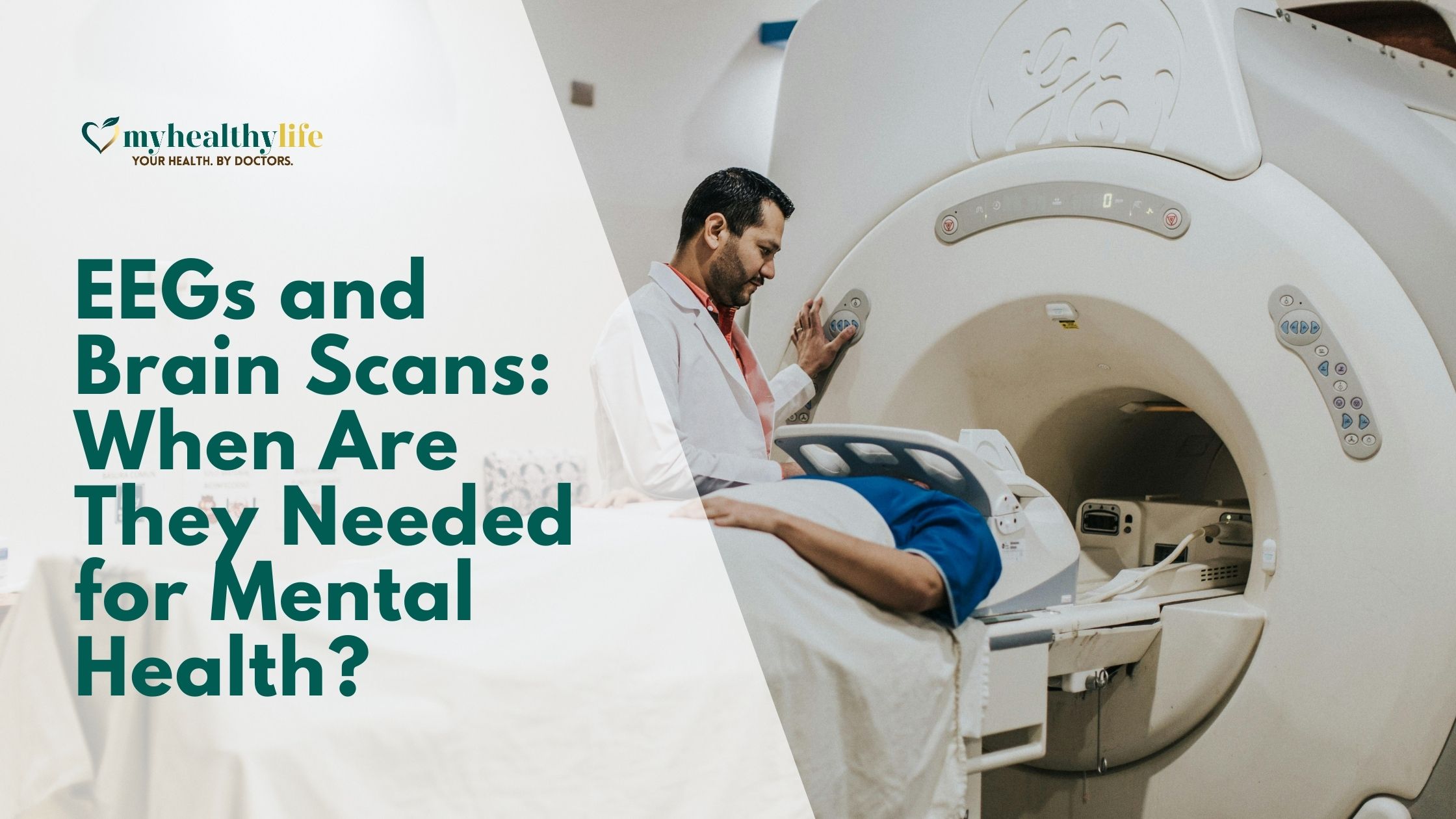
Brain scans—MRIs (magnetic resonance imaging) or CT scans (computed tomography)—produce detailed pictures of brain structure. These are usually requested when doctors want to check for:
- Tumors or masses
- Stroke or bleeding
- Traumatic brain injury
- Structural abnormalities
Similar to EEGs, MRIs aren’t used to diagnose anxiety or depression. Instead, they’re valuable for ruling out physical causes of psychiatric symptoms. For example, a brain tumor can sometimes cause personality changes, confusion, or even depressive symptoms.
Why Most Mental Health Diagnoses Don’t Need Scans
When it comes to conditions like depression, generalized anxiety disorder, or bipolar disorder, the diagnosis relies on:
- Patient history – how symptoms developed over time
- Clinical interviews – exploring mood, thought patterns, and behavior
- Screening questionnaires – such as PHQ-9 for depression or GAD-7 for anxiety
This approach is evidence-based and effective. Mental health conditions are considered functional disorders, meaning they affect how the brain works, not necessarily how it looks. That’s why scans often appear completely normal even when symptoms are severe.
The Role of Psychological Therapy
Instead of relying on scans, treatment often begins with psychological therapy:
- Cognitive Behavioral Therapy (CBT): reshaping thought patterns
- Interpersonal Therapy (IPT): addressing relationship stress
- Mindfulness-based therapy: managing rumination and stress
Therapy, combined with lifestyle changes or medication if needed, remains the foundation of care.
Reducing the Fear Around “Brain Tests”
Many people worry that seeing a psychiatrist means being sent for scary or expensive procedures. In reality:
- If your symptoms are straightforward—like persistent sadness, anxiety, or burnout—you probably won’t need a scan.
- EEGs and MRIs are only ordered if something unusual points to a neurological cause.
- Even in top facilities like a psychiatric hospital in the Philippines, most diagnoses rely on careful conversations, not machines.
This is important to know because it reduces stigma and anxiety about seeking help.
When a Doctor May Still Recommend a Scan
That said, sometimes a scan is appropriate. You may need an EEG or MRI if you experience:
- Sudden changes in personality or memory
- New-onset seizures or blackouts
- Severe headaches with mental changes
- Symptoms that don’t respond to typical treatments
In these cases, doctors want to make sure something physical isn’t being overlooked.
Beyond Scans: The Path to Healing
So if most people don’t need a scan, what should you expect?
- Initial assessment: a psychiatrist or psychologist asks about your history, symptoms, and daily functioning.
- Possible lab work: to rule out thyroid problems, vitamin deficiencies, or other health conditions.
- Therapy plan: often the first line of treatment.
- Medication (if needed): carefully prescribed and monitored.
The focus is always on building a recovery path that fits your needs—whether that means regular therapy sessions, support groups, or treatment in a mental health clinic in Manila or elsewhere.
Reassurance in the Process
If you’ve ever worried that seeking help means being sent for brain scans, here’s the truth: mental health care is built on listening, understanding, and support—not just machines.
EEGs and MRIs are powerful tools, but they’re only used when there’s a reason to suspect something beyond anxiety or depression. For most people, healing starts with a conversation, not a scan.
Taking the step to talk to a professional is far more important—and far less intimidating—than most people realize.
https://www.psychiatry.org/news-room/apa-blogs/apa-blog/2018/06/imaging-in-psychiatry
https://www.nimh.nih.gov/health/topics/brain-stimulation-therapies
https://www.mayoclinic.org/tests-procedures/eeg/about/pac-20393875
https://www.mayoclinic.org/tests-procedures/mri/about/pac-20384768
Share:
Related Posts

Can’t Sleep? It Might Be Stress Overload, Not Just Insomnia

Burnout in Men: The Hidden Ways It Shows Up