Pregnancy changes everything—from your sleep schedule to your shoe size. But one change that deserves more attention? Your blood pressure.
If you had high BP during pregnancy, you’re not alone. And while many women move on once the baby’s born, your heart doesn’t always.
Here’s the truth: Pregnancy-related hypertension can leave behind long-term risks for heart disease—sometimes years or even decades later.
The good news? Knowing this now gives you power. Let’s break it down—what high BP in pregnancy means, how it affects your future, and what you can do today to protect your heart for the long haul.
What’s Considered High BP in Pregnancy?
The standard for normal BP in pregnancy is similar to non-pregnant adults:
- Normal: Under 120/80 mmHg
- Elevated: 120–129/<80 mmHg
- High (Stage 1): 130–139 or 80–89 mmHg
- High (Stage 2): 140+/90+ mmHg
In pregnancy, there are specific hypertensive conditions doctors watch for:
1. Gestational Hypertension
- High BP that starts after 20 weeks of pregnancy
- No protein in urine
- Usually resolves after delivery
2. Preeclampsia
- High BP with protein in urine, swelling, or organ involvement
- Can be dangerous for mom and baby
- May need early delivery in severe cases
3. Chronic Hypertension
- High BP that began before pregnancy or in the first 20 weeks
- Often continues after birth
All three types are more than just pregnancy issues—they’re early warnings of cardiovascular risk.
What Does the Research Say?
Multiple large studies have shown that women who had high BP during pregnancy are more likely to develop:
- Hypertension later in life
- Heart disease (including coronary artery disease and heart failure)
- Stroke
- Kidney disease
- Diabetes
- Higher cholesterol and triglyceride levels
The numbers are eye-opening:
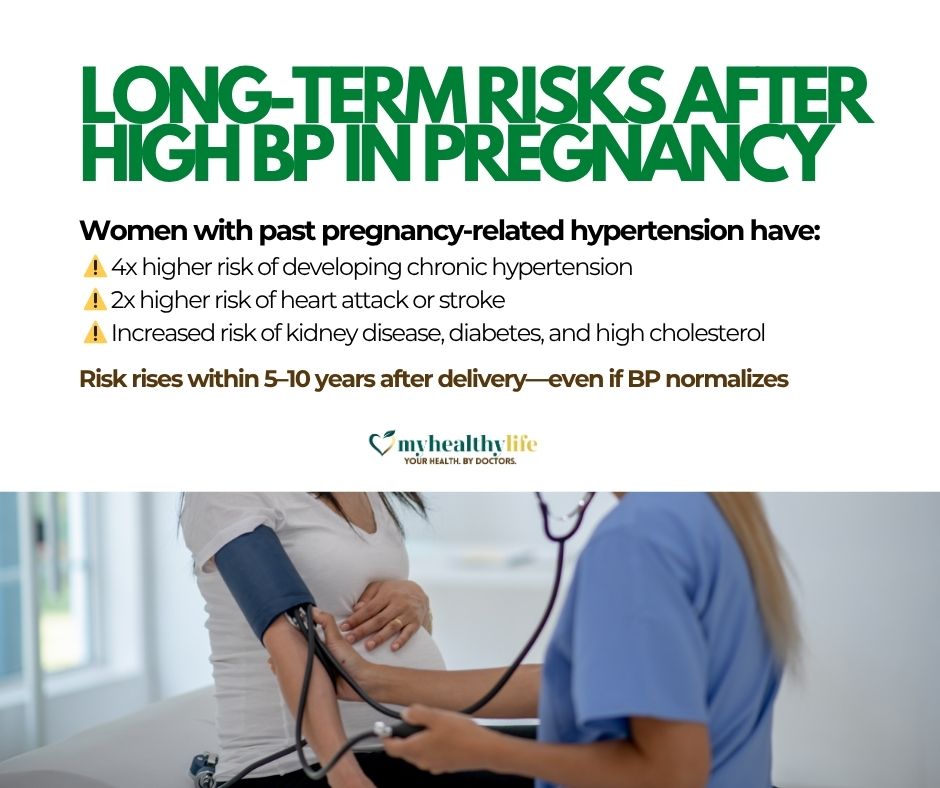
- Women with preeclampsia are 4x more likely to develop high BP later
- They’re 2x as likely to experience a heart attack or stroke
- Risk often begins to show up within 5–10 years postpartum
This means your pregnancy history is a vital part of your heart health record.
Why Does It Increase Your Risk?
Doctors believe high BP during pregnancy may either:
- Unmask existing cardiovascular vulnerability
- Or cause subtle damage to blood vessels, kidneys, and the heart itself
Over time, this damage builds up, especially when combined with other risk factors like:
- Lack of exercise
- Poor sleep
- Weight gain after pregnancy
- Unchecked cholesterol or glucose
Does BP Return to Normal After Birth?
Often, yes. But in many women, the risk lingers quietly. Some women who had normal readings postpartum eventually develop high blood pressure within a few years, especially if they don’t make preventive changes.
Even if your BP is normal now, the memory of that hypertensive pregnancy remains in your cardiovascular system—and needs long-term monitoring.
Should You Get Checked More Often?
Absolutely.
If you’ve had high BP in pregnancy, your doctor may recommend:
- Yearly BP monitoring (or more often if readings are borderline)
- Regular cholesterol and blood sugar checks
- Lifestyle coaching or early nutrition support
- Periodic heart screenings in your 40s and beyond
It’s also a good idea to keep your pregnancy records. Not every doctor asks about your obstetric history—but it can be a lifesaver for future care.
Does Breastfeeding Help?
Yes! Breastfeeding offers short- and long-term cardiovascular benefits, including:
- Lower postpartum weight retention
- Reduced stress hormones
- Improved glucose metabolism
- Potential lower risk of developing high blood pressure
Even a few months of breastfeeding can have protective effects for both mother and child.
What About Future Pregnancies?
If you’ve had pregnancy-related hypertension once, your risk increases for future pregnancies. But there’s still a lot you can do to prepare:
- Get preconception counseling
- Reach a healthy weight before pregnancy
- Optimize blood pressure and cholesterol before conceiving
- Watch for early signs of hypertension next time
A high-risk OB-GYN or maternal-fetal medicine specialist can guide you through a safe second (or third!) pregnancy.
What to Watch, What to Do: A Heart-Smart Guide After Pregnancy
If you’ve had any type of high BP during pregnancy, here’s your checklist for long-term heart health:
What to Watch:
- BP readings above 120/80
- Persistent fatigue, dizziness, or shortness of breath
- Swelling or headaches beyond the postpartum period
- High cholesterol or fasting glucose on routine labs
- Family history of heart disease or stroke
What to Do Now:
- Monitor your BP at home—wrist or upper arm cuff
- Ask your doctor for a blood pressure chart or use a mobile tracking app
- Get a cholesterol and glucose test once a year
- Prioritize 30 mins/day of physical activity
- Adopt a DASH-style diet: low salt, rich in fruits, veggies, whole grains
- Manage stress with tools like breathwork, therapy, or mindfulness
- Limit processed food and sugar-sweetened drinks
- Aim for 7+ hours of sleep, even in postpartum life (as much as possible)
And don’t skip your annual checkups. What happened in pregnancy is a powerful health clue—but only if you use it.
💡 At MyHealthyLife, we believe your body always leaves breadcrumbs.
High BP in pregnancy wasn’t a fluke—it was a flag. But with awareness and action, you can turn that flag into a fuel source for better heart health now and for decades to come.
Share:
Related Posts
Heart Smart, Life Strong: Why Fitness Matters for Your Heart—Beyond the Number on the Scale
Meal Timing and Heart Health: What New Science Says