Not every breakout is acne—and not every skin bump means you’re having an allergic reaction. Understanding the difference is crucial because the right treatment depends on the cause. Misdiagnosing a skin issue can lead to the wrong skincare routine, unnecessary medications, or even worsening symptoms.
This article will walk you through the key differences between hormonal acne and common allergic skin reactions like urticaria, eczema, and other rashes, so you can better recognize what’s happening on your skin and take the right next steps.
What is Hormonal Acne?
Hormonal acne is triggered by fluctuations in hormone levels—particularly androgens like testosterone—which increase oil (sebum) production in the skin. Excess oil mixes with dead skin cells, clogging pores and allowing bacteria to grow, leading to inflammation.
Common triggers include:
- Menstrual cycle changes
- Pregnancy
- Menopause
- Stress
- Certain medications (like birth control changes or steroids)
Key Signs of Hormonal Acne:
- Location: Often appears on the lower face, jawline, chin, and neck, but can also show up on the chest or back.
- Type of bumps: Deep, tender cysts or nodules; may also include whiteheads and blackheads.
- Timing: Flare-ups often follow a monthly pattern in women, aligning with hormonal changes.
- Chronic nature: Can persist for years if underlying hormone imbalance isn’t addressed.
What is an Allergic Reaction?
An allergic reaction occurs when your immune system overreacts to a harmless substance—like food, medication, skincare products, or environmental triggers (pollen, dust, pet dander). The immune system releases histamine, causing redness, swelling, and itching.
Common allergic skin reactions include:
- Urticaria (hives): Raised, itchy welts that can appear suddenly and move around the body.
- Eczema (atopic dermatitis): Red, inflamed patches that may ooze or crust, often chronic in nature.
- Contact dermatitis: Rash that appears where skin touches an allergen (e.g., nickel, fragrances, latex).
Allergic Reaction vs. Hormonal Acne: The Main Differences
Here’s how to tell them apart:
Feature | Hormonal Acne | Allergic Reaction (Urticaria/Eczema) |
Onset | Gradual, often tied to hormonal cycles | Sudden, within hours of exposure |
Appearance | Deep cysts, whiteheads, blackheads | Red welts, flat patches, or blistering rash |
Itchiness | Mild or absent | Often intense itching or burning |
Location | Lower face, chin, jawline, back, chest | Can appear anywhere; may spread quickly |
Duration | Persistent or recurring over weeks/months | Can resolve in hours (urticaria) or persist with re-exposure |
Triggers | Hormonal changes, stress, diet | Allergens (food, medication, skincare, environment) |
Understanding Urticaria
Urticaria, or hives, is one of the most common allergic skin reactions. It presents as raised, itchy welts that may vary in size and shape. The welts often fade within 24 hours but can reappear elsewhere on the body.
Clues it’s urticaria:
- Sudden onset after a meal, medication, or environmental change
- Lesions that come and go quickly
- Severe itchiness
- Associated swelling (angioedema) in lips, eyelids, or throat (in severe cases—requires emergency care)
What About Eczema?
Eczema is a chronic inflammatory skin condition that can be triggered by allergens, irritants, or genetic predisposition.
Visual difference:
Looking at eczema pictures, you’ll notice patches of dry, thickened skin, sometimes with oozing or crusting. The skin may appear red and scaly, and scratching can make it worse.
Common in:
- People with a family history of allergies or asthma
- Areas like elbows, knees, hands, and face
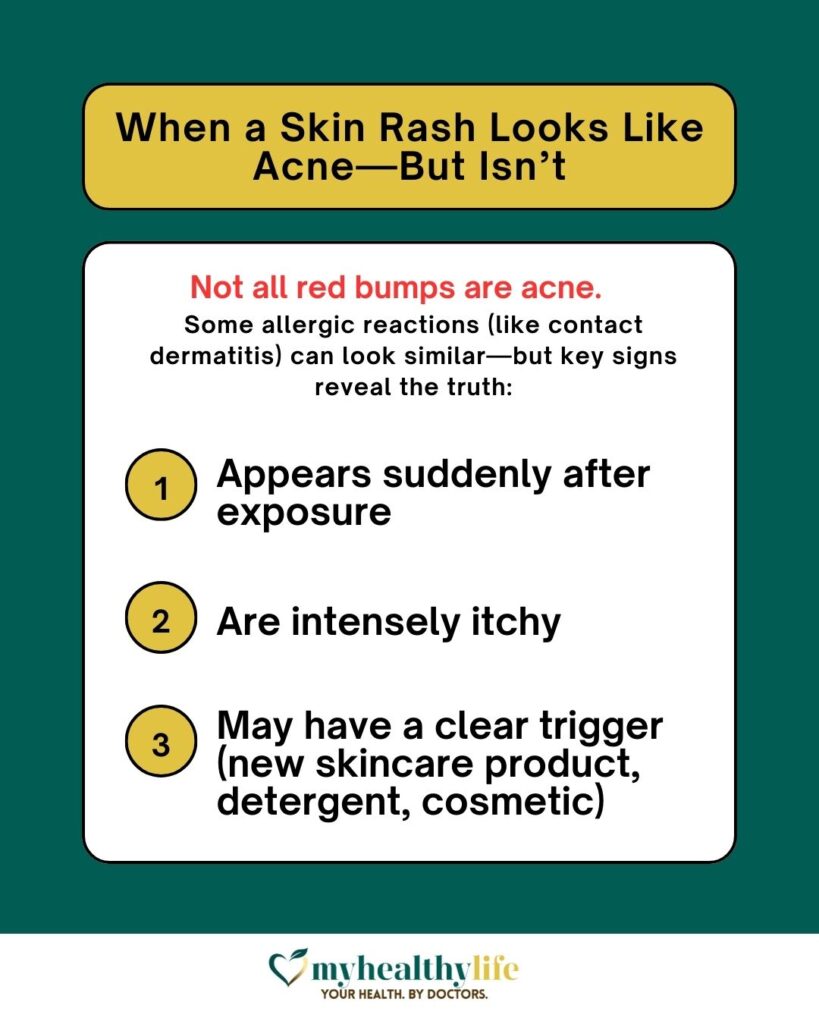
When Skin Rash Looks Like Acne But Isn’t
Some allergic reactions—especially contact dermatitis—can mimic acne by producing red bumps or pustules. However, unlike hormonal acne, these bumps:
- Appear rapidly after exposure
- Are intensely itchy
- May have a clear trigger (new skincare product, detergent, cosmetic)
Why Diagnosis Matters
Treating hormonal acne with antihistamines won’t work, and treating allergic rashes with acne cleansers can make the skin barrier worse. That’s why identifying the root cause is critical.
How to Tell at Home
While a dermatologist is the best person to give a definitive diagnosis, here are self-check questions:
- When did it appear?
- Slowly over weeks → more likely hormonal acne
- Suddenly in hours/days → more likely allergic reaction
- Slowly over weeks → more likely hormonal acne
- Does it itch a lot?
- Mild or no itch → more likely hormonal acne
- Intense itch → more likely allergic rash
- Mild or no itch → more likely hormonal acne
- Where is it located?
- Lower face/jawline pattern → hormonal acne
- Random or generalized spread → allergic rash
- Lower face/jawline pattern → hormonal acne
- Does it flare with your period or stress?
- Yes → hormonal acne
- No, but worsens with certain products/foods → allergic reaction
- Yes → hormonal acne
Professional Diagnosis
A dermatologist or allergist may use:
- Medical history: Timing, triggers, family history
- Physical exam: Examining the distribution and type of lesions
- Allergy testing: Skin prick or patch tests for suspected allergens
- Hormonal testing: Blood tests for androgen levels if acne is severe and persistent
Treatment for Hormonal Acne
- Topical treatments: Retinoids, benzoyl peroxide, salicylic acid
- Oral medications: Birth control pills, anti-androgen drugs like spironolactone
- Lifestyle adjustments: Stress management, balanced diet, consistent skincare routine
Treatment for Allergic Skin Reactions
- Avoidance: Identify and remove the allergen
- Medications: Oral antihistamines for itching, corticosteroid creams for inflammation
- Skin care: Use gentle, fragrance-free moisturizers; avoid harsh cleansers
When to Seek Immediate Care
Seek urgent medical attention if you experience:
- Rapid swelling of the face, lips, or throat
- Difficulty breathing
- Widespread rash with fever
- Severe pain or infection signs (pus, spreading redness)
Your Skin Clarity Action Plan
If you’re unsure whether you’re dealing with hormonal acne or an allergic reaction, here’s a quick action plan:
- Track symptoms: Note when flare-ups happen and any possible triggers.
- Check your products: New makeup, skincare, or laundry detergents could be culprits.
- Review your health changes: Hormonal shifts, stress levels, or diet changes can point to acne.
- Consult a specialist: Dermatologists can confirm acne; allergists can pinpoint triggers.
- Don’t self-medicate blindly: Using the wrong treatment can delay healing.
Skin issues are more than cosmetic—they can signal what’s happening inside your body. By learning to spot the difference between hormonal acne and allergic reactions, you can take control of your skin health and get the right treatment faster.
References:
https://www.aad.org/public/diseases/acne
https://www.aaaai.org/tools-for-the-public/conditions-library/allergies/hives-urticaria
Share:
Related Posts
Skin & Immunity in Your 30s, 40s, and 50s: How to Keep Both in Top Shape
Shingles: Why Your Risk Grows After 50