Most people think about lung health only when they’re already feeling winded—but the truth is, your lungs are changing every decade, whether you notice it or not. The good news? Many of these changes are a normal part of aging. The not-so-good news? Some breathing changes can signal early signs of respiratory disorder symptoms that you shouldn’t ignore.
This guide breaks down what’s normal, what’s not, and how you can keep your lungs in top shape through your 30s, 40s, and 50s.
The Aging Lung: Why Breathing Changes Over Time
From birth, your lungs grow in size and function until your mid-20s. After that, lung capacity reaches its peak—and then slowly begins to decline. The rate of this decline varies, but research shows that after the age of 35, lung function typically decreases by about 1% per year.
This decline happens for a few key reasons:
- Loss of lung elasticity – The elastic tissues in your lungs naturally become stiffer over time, making it harder for them to expand and contract fully.
- Weaker respiratory muscles – Just like any other muscle, the diaphragm and chest wall muscles can lose strength with age.
- Changes in chest structure – The rib cage can become less flexible, limiting how much your lungs can expand.
- Reduced immune defense – The respiratory system becomes slightly less efficient at clearing mucus and fighting infections.
While these changes are part of normal aging, lifestyle factors like smoking, pollution exposure, and lack of exercise can speed up the process—sometimes leading to respiratory diseases like COPD earlier than expected.
Your 30s: Small Shifts You Might Not Notice
In your 30s, most people still enjoy strong lung capacity and quick recovery after exertion. However, subtle shifts can start to happen:
- Slight decrease in aerobic capacity – You may feel just a bit more out of breath during intense workouts compared to your 20s.
- Longer recovery after illness – Colds, flu, or mild respiratory infections may take a day or two longer to bounce back from.
- Increased sensitivity to environmental triggers – If you have allergies or mild asthma, symptoms might flare more easily with pollution, smoke, or dust exposure.
When to check in with a doctor: If you notice consistent shortness of breath during everyday activities or a chronic cough lasting more than a month, it’s worth getting a spirometry test. This quick, non-invasive lung function test can spot early changes even before symptoms become obvious.
Your 40s: Early Warning Signs May Emerge
By your 40s, lung capacity loss can be more noticeable—especially if you have risk factors like smoking history, occupational dust exposure, or a family history of respiratory disorders.
Common changes in your 40s include:
- Lower stamina during cardio activities – Runs, long walks, or climbing stairs may leave you more winded.
- Mild shortness of breath – Especially when carrying heavy loads or walking uphill.
- Slower mucus clearance – You may develop more frequent chest colds or need longer to recover from bronchitis or pneumonia.
If you experience wheezing, frequent chest infections, or notice that you can’t catch your breath as easily as before, this could point to early COPD risk or other respiratory disorder symptoms.
Your doctor may recommend a pulmonary function test to measure:
- FEV1 (Forced Expiratory Volume in 1 second) – How much air you can blow out in one second.
- FVC (Forced Vital Capacity) – The total amount of air you can exhale after taking a deep breath.
- FEV1/FVC ratio – Helps identify obstructive vs restrictive lung problems.
Your 50s: More Pronounced Changes—And Higher Stakes
By your 50s, natural aging changes in the lungs become more noticeable, and risk factors accumulate. This is also the decade when undiagnosed respiratory disorders often surface.
Typical changes in your 50s include:
- Greater shortness of breath during moderate activity – You may need to pace yourself more.
- Increased chest tightness – Especially if you have existing asthma or heart issues.
- Longer recovery from respiratory illness – Flu, pneumonia, or bronchitis can hit harder and last longer.
- Lower oxygen exchange efficiency – Your body may not tolerate high altitudes or strenuous activity as easily.
If you’ve had a lifetime of smoking or significant environmental exposure, this is also when COPD, interstitial lung disease, or other chronic conditions might be diagnosed.
When to Worry: Red Flags at Any Age
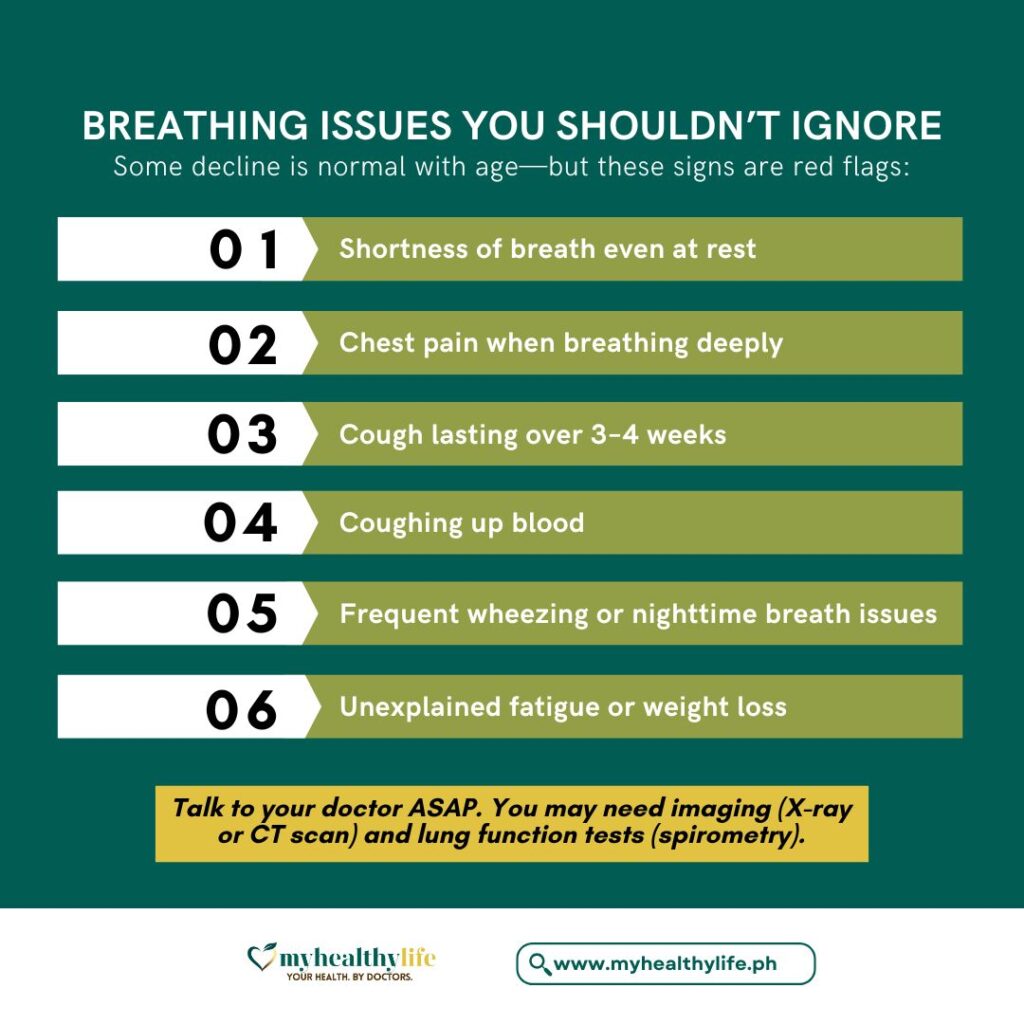
While some decline in breathing ability is normal, certain symptoms should never be ignored:
- Persistent shortness of breath at rest or during minimal exertion.
- Chest pain or discomfort when breathing deeply.
- A chronic cough lasting more than 3–4 weeks.
- Coughing up blood (even small amounts).
- Recurrent wheezing or nighttime breathing disturbances.
- Unexplained fatigue or weight loss with breathing issues.
If you have these symptoms, schedule a medical evaluation immediately. Your doctor may recommend imaging tests like a chest X-ray or CT scan, as well as a full spirometry panel.
Protecting Your Lungs Through the Decades
Regardless of your age, there’s plenty you can do to slow lung function decline and reduce your risk of respiratory diseases.
- Quit smoking—completely.
Even light or occasional smoking causes measurable lung damage over time. The earlier you quit, the more lung capacity you preserve. - Stay physically active.
Regular cardio exercise helps maintain lung elasticity and strengthens respiratory muscles. - Practice good air hygiene.
Limit exposure to pollutants, use air purifiers at home, and wear masks in high-smog or dusty environments. - Keep vaccinations up to date.
Flu shots, pneumonia vaccines, and COVID-19 boosters help prevent respiratory infections that can cause long-term lung damage. - 5. Get regular check-ups.
Spirometry tests and lung screenings (especially if you have COPD risk factors) can catch issues early.
Your Decade-by-Decade Breathing Self-Check
Age Range | What’s Normal | Watch Out For | Recommended Screening |
30s | Slight breathlessness only during intense workouts | Chronic cough, early shortness of breath | Baseline spirometry if risk factors present |
40s | Mild drop in stamina, slower recovery from illness | Wheezing, frequent chest infections | Pulmonary function test every few years |
50 | More noticeable shortness of breath with moderate activity | Chest pain, low oxygen readings, chronic bronchitis | Annual lung health check & imaging if needed |
A Breath of Reflection
Your lungs don’t just keep you alive—they keep you living. Every decade offers an opportunity to protect them, strengthen them, and catch any trouble early. Think of lung health as an investment: the effort you put in today pays off in every effortless breath you take tomorrow.
If you’ve noticed any breathing changes that seem unusual for your age, don’t wait until it becomes a crisis. Book that spirometry test, ask the questions, and take charge of your respiratory health—because every deep, easy breath is worth protecting.
https://www.lung.org/lung-health-diseases/how-lungs-work
https://www.mayoclinic.org/healthy-lifestyle/aging/in-depth/lung-function/art-20046820
Share:
Related Posts

Does Stress Affect Men’s Immunity More Than They Think?

One Simple Habit to Keep Urban Lungs Healthy