More Than Just “Feeling Off”
Ever found yourself unusually irritable, drained, or unmotivated—like the smallest things set you off or your energy tank is permanently empty? While it’s easy to chalk these changes up to stress or aging, there may be a deeper reason. Low testosterone, often thought of only in terms of sex drive and physical strength, plays a much bigger role in mental health than most people realize.
In fact, low testosterone can quietly reshape your emotional landscape, influencing how you feel, think, and connect with others. This isn’t just about hormones—it’s about quality of life.
Let’s break down how testosterone and mood are connected, what symptoms to look out for, and how you can take back control.
The Link Between Testosterone and Mood
Testosterone is often labeled the “male hormone,” but both men and women need it for healthy functioning. Beyond regulating muscle mass and libido, testosterone influences brain chemistry. It interacts with neurotransmitters like serotonin and dopamine—the same brain chemicals that affect happiness and motivation.
When testosterone levels drop, these neurotransmitters can become imbalanced. The result? Mood swings, low energy, irritability, and even depression.
Think of testosterone as an invisible stabilizer. Without enough of it, your emotional state can feel unpredictable, like walking on uneven ground.
Common Emotional Signs of Low Testosterone
Not every bad day points to hormone imbalance. But when low testosterone is the culprit, emotional changes often show up consistently, not just occasionally. Here’s what many people experience:
- Irritability: Small frustrations turn into big emotional reactions.
- Low Motivation: Tasks that once felt exciting now feel like burdens.
- Mood Swings: Emotional highs and lows hit harder and more frequently.
- Depressive Symptoms: Persistent sadness, hopelessness, or emptiness.
- Brain Fog: Trouble focusing, remembering details, or making decisions.
These emotional signs often overlap with physical symptoms like fatigue, decreased muscle strength, and low libido—creating a cycle that makes life feel heavier.
Why Testosterone Levels Drop
Understanding the “why” behind low testosterone helps make sense of the bigger picture. Causes include:
- Age: Testosterone naturally declines about 1% per year after age 30.
- Chronic Stress: Elevated cortisol can suppress testosterone production.
- Lifestyle Factors: Poor diet, lack of exercise, and inadequate sleep.
- Medical Conditions: Obesity, diabetes, metabolic syndrome, and certain medications.
- Underlying Illnesses: Testicular issues, pituitary problems, or autoimmune conditions.
It’s rarely just one factor—it’s usually a combination that pushes testosterone below healthy levels.
The Domino Effect: Mood, Relationships, and Daily Life
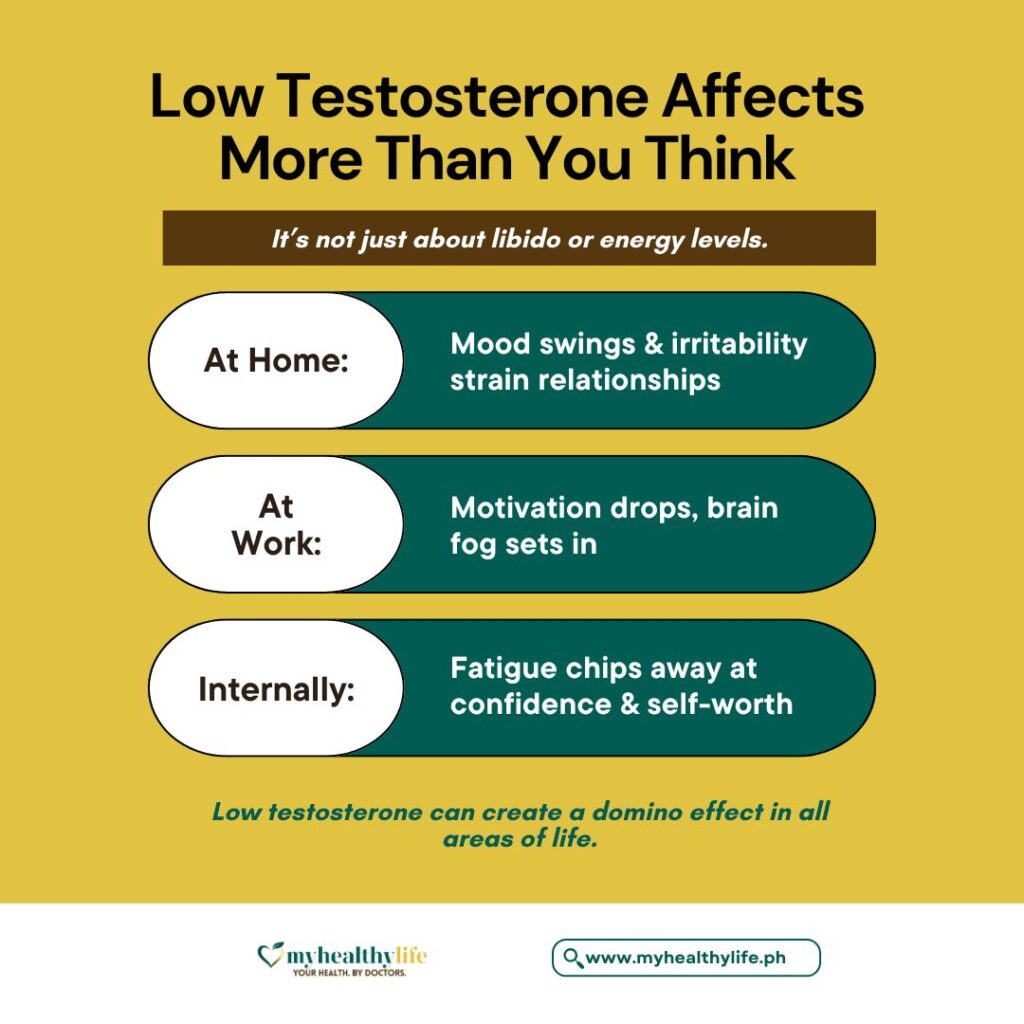
Low testosterone doesn’t stay in one box. Emotional changes can ripple out into relationships, work, and self-esteem.
- At Home: Increased irritability may lead to tension with family or a partner.
- At Work: Decreased motivation and brain fog can make professional performance suffer.
- Within Yourself: Constant fatigue and negative moods erode confidence and self-image.
This domino effect makes low testosterone more than a private issue—it affects every area of daily life.
How to Know if Low Testosterone Is Affecting You
The tricky part? Symptoms can look like stress, depression, or burnout. That’s why testing is essential.
Doctors typically confirm low testosterone with a simple blood test. If levels fall below the healthy range (often considered around 300 ng/dL for men, with some variation), treatment options may be discussed. For women, “low” looks different but can still trigger symptoms.
Treatment Options That Go Beyond Mood
If testing reveals low testosterone, there are multiple ways to restore balance:
- Lifestyle Adjustments
- Regular strength training to boost natural production.
- Balanced nutrition with enough protein, healthy fats, and micronutrients.
- Adequate sleep to regulate hormonal cycles.
- Regular strength training to boost natural production.
- Medical Interventions
- Testosterone Replacement Therapy (TRT): Available as gels, injections, or patches.
- Addressing underlying conditions like obesity or diabetes.
- Reviewing medications that may suppress testosterone.
- Testosterone Replacement Therapy (TRT): Available as gels, injections, or patches.
- Mental Health Support
- Counseling or therapy to manage mood changes.
- Stress-reducing practices like mindfulness or meditation.
- Building a strong support network to counter emotional isolation.
- Counseling or therapy to manage mood changes.
When to See a Doctor
If you’re noticing consistent mood changes paired with fatigue, low libido, or brain fog, don’t just push through it. Talking to a doctor can bring clarity. Early diagnosis not only improves mental health but can also prevent physical consequences like bone loss or cardiovascular strain.
Lifestyle Tips for Boosting Mood Naturally
Even without medical treatment, small changes can help stabilize both testosterone and mood:
- Prioritize weight-bearing exercise.
- Cut down on excess alcohol and processed foods.
- Stay consistent with sleep schedules.
- Manage stress with breathing techniques or yoga.
- Stay socially connected—relationships are natural mood lifters.
These changes won’t replace medical treatment if you have clinically low testosterone, but they can complement it powerfully.
A Self-Check for Your Emotional Health
Here’s a quick self-reflection checklist. If you answer “yes” to several of these, it may be time to discuss testosterone testing with your doctor:
- Do I feel more irritable or moody than usual?
- Am I struggling with motivation or interest in things I used to enjoy?
- Do I feel persistently tired, even with enough rest?
- Have my relationships felt more strained due to my mood changes?
- Am I experiencing brain fog or difficulty concentrating?
Your mood is not “just in your head.” Hormones matter, and getting answers could mean unlocking a healthier, more balanced version of yourself.
https://www.mayoclinic.org/diseases-conditions/fetal-alcohol-syndrome/symptoms-causes/syc-20352901
https://www.health.harvard.edu/mens-health/testosterone-and-mens-health
https://my.clevelandclinic.org/health/diseases/15603-low-testosterone
https://www.endocrine.org/patient-engagement/endocrine-library/testosterone-therapy-in-men
Share:
Related Posts
Can’t Sleep? It Might Be Stress Overload, Not Just Insomnia
Burnout in Men: The Hidden Ways It Shows Up