
Let’s be honest—many men treat pain like a challenge to “man up” and push through. A stiff knee? Just a minor strain. Achy back? Must’ve slept funny. But here’s the reality: ignoring joint pain in men doesn’t make it go away. In fact, it can quietly build into something worse—like chronic arthritis or irreversible joint damage.
If you’ve ever shrugged off that recurring shoulder ache or downplayed knee pain after a game of basketball, this one’s for you.
Why Men Downplay Joint Pain
Whether it’s cultural norms, fear of hearing bad news, or just being too “busy,” studies show that men delay medical care more than women—especially when it comes to pain.
Men are more likely to:
- Wait until the pain becomes unbearable
- Skip preventive checkups
- Self-medicate with painkillers or liniments
- Avoid telling family or partners about it
But while it might feel strong to push through discomfort, there’s strength, too, in knowing when to step back—and step into a clinic.
The Risks of Ignoring Joint Pain in Men
Here’s what untreated joint pain can turn into:
1. Arthritis that Progresses Silently
There are many types of arthritis—osteoarthritis, the wear-and-tear kind, and rheumatoid arthritis, which is autoimmune. The common thread? The earlier you intervene, the better the outcomes.
Left alone, what starts as occasional stiffness can become:
- Cartilage loss
- Bone rubbing on bone
- Permanent joint deformity
- Limited mobility that affects work or play
2. Back Pain That Becomes Chronic
Back pain is one of the most ignored symptoms among men. Many think it’s “just from work,” especially those in labor-intensive or desk-bound jobs.
But repeated strain on the lumbar spine can cause:
- Slipped discs
- Nerve compression
- Sciatica
- Muscle imbalances that worsen over time
3. Knee Pain That Could’ve Been Avoided
Men in their 30s to 50s often deal with knee pain, especially those who play sports or carry extra weight. Brushing it off can lead to:
- Meniscus tears
- Ligament injuries
- The dreaded “bone-on-bone” situation requiring surgery
Many of these could’ve been avoided with physical therapy, injections, or orthotics early on.
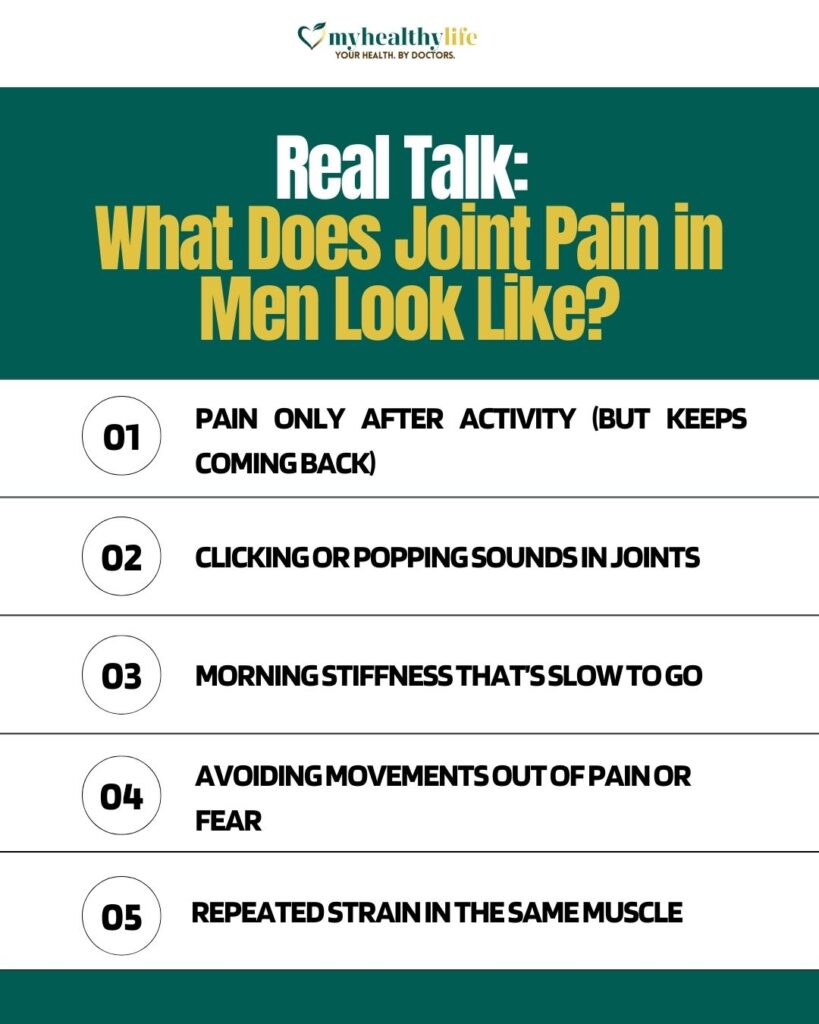
Real Talk: What Does Joint Pain in Men Look Like?
It’s not always dramatic. Watch out for signs like:
- Pain that shows up only after activity (but recurs regularly)
- Clicking or popping in joints
- Morning stiffness that takes a while to shake off
- Muscle strain that keeps coming back in the same spot
- Avoiding certain movements due to fear of pain
These aren’t just “signs of aging.” They’re your body warning you that something needs attention.
What Happens When You Treat It Early?
The upside of early intervention is massive:
- Pain can be managed or reversed with therapy
- You avoid costly procedures down the line
- You maintain mobility for work, family, and fitness
- You prevent long-term complications like joint degeneration or loss of function
A checkup today can mean avoiding surgery in your 50s.
Not sure if it’s time to get checked? Here’s a simple guide:
Symptom | Wait or See a Doctor? |
Pain that goes away after 1–2 days and doesn’t return | ✅ Wait |
Pain that comes back every week or worsens over time | |
Swelling, redness, or warmth in the joint | |
Popping sound followed by pain or instability | |
Pain interfering with sleep, work, or movement |
Quick Wins: How to Support Your Joints Daily
No need to wait for pain. Start building habits that protect your joints now:
💪 Strengthen supporting muscles – especially your core, glutes, and quads
👟 Wear the right shoes – especially if you stand or walk a lot
🧘 Stretch often – target the lower back, hips, and shoulders
🥗 Eat anti-inflammatory foods – think leafy greens, fatty fish, and turmeric
🏃 Move regularly – even walking 30 mins a day supports joint lubrication
⚖️ Maintain a healthy weight – every pound adds pressure on your knees and spine
Man to Man: Are You Ignoring Pain That Needs Attention?
Take a minute to reflect:
🧠 Joint Pain Check-In:
- Do I often say, “It’s nothing” about my pain?
- Have I stopped doing certain activities because of joint discomfort?
- Am I taking pain meds more than once a week just to get by?
- Is there a pain I’ve ignored for over a month?
- Would I tell a friend to get this checked—if it weren’t me?
If you answered “yes” to even one, it’s worth scheduling that checkup. Strong doesn’t mean silent.
You can’t out-tough your joints. But you can outsmart pain with early action.
Joint pain in men doesn’t have to be your future—especially if you listen to your body now. Whether it’s your back, knees, or shoulders acting up, addressing it early could mean years of extra movement, freedom, and strength.
Share:
Related Posts

Why Your Back Pain Keeps Coming Back—Despite Rest

When Your Doctor Orders a Bone Scan: What to Expect