In the Philippines, conversations about birth control are often shrouded in half-truths, myths, or quick pharmacy advice. Many women pick a method based on what a friend swears by or what’s cheapest—without knowing that birth control is more than just a “yes or no” decision about pregnancy.
Your choice can affect your hormones, menstrual cycle, skin, mood, and even cancer screening needs. And in a country where reproductive health conversations are still considered taboo in some circles, it’s easy to miss important facts that could make or break your experience.
1. Not All Birth Control Works the Same Way
There are two main types of birth control:
Hormonal methods (affect your hormones to prevent ovulation):
- Pills – Taken daily; combination pills have estrogen + progestin, while mini-pills have only progestin.
- Injectables – Given every 1–3 months; convenient but may delay fertility return after stopping.
- Implants – Inserted under the skin; lasts 3–5 years.
- Hormonal IUDs – Placed in the uterus; prevents pregnancy for 3–7 years depending on type.
Non-hormonal methods (don’t affect your hormones directly):
- Copper IUD – Works by creating an environment toxic to sperm; can last up to 10 years.
- Barrier methods – Condoms, diaphragms; also protect against STIs.
- Fertility awareness – Tracking ovulation and avoiding sex during fertile days; requires discipline.
2. Side Effects Aren’t Always “One Size Fits All”
One of the biggest misconceptions is that all women will react the same way to a certain birth control method. Reality check:
- Pills with higher estrogen may cause breast tenderness, headaches, or increased clot risk.
- Injectables can lead to weight gain and menstrual irregularities.
- Copper IUDs may make periods heavier at first.
- Hormonal IUDs can reduce bleeding over time but may cause spotting initially.
3. Your Pap Smear Still Matters
Many women don’t realize there’s a link between birth control and cervical health checks. While hormonal birth control doesn’t directly cause cervical cancer, long-term use of certain pills (5+ years) may slightly increase risk in women with persistent HPV infection.
That’s why if you’re using hormonal methods, you should:
- Get regular Pap smears (every 3 years, or as advised by your doctor)
- Ask about HPV vaccination if you haven’t had it
- Combine birth control with safe sex practices to reduce STI risk
4. Emergency Contraception Isn’t a “Plan A”
In the Philippines, emergency contraception (EC)—like the morning-after pill—is available in some pharmacies, but it’s not meant for regular use. EC works best within 72 hours after unprotected sex, but it’s less effective than consistent birth control.
Overuse can cause irregular cycles and doesn’t protect against STIs. If you find yourself relying on EC often, it’s a sign you need a more reliable long-term method.
5. Birth Control Can Have Non-Pregnancy Benefits
When used under medical guidance, birth control can help with:
- Regulating menstrual cycles
- Reducing painful cramps
- Managing acne (especially pills with certain progestins)
- Treating symptoms of endometriosis or polycystic ovary syndrome (PCOS)
However, these benefits vary by individual—and must be weighed against potential risks like blood clots or changes in mood.
6. Myths That Refuse to Die
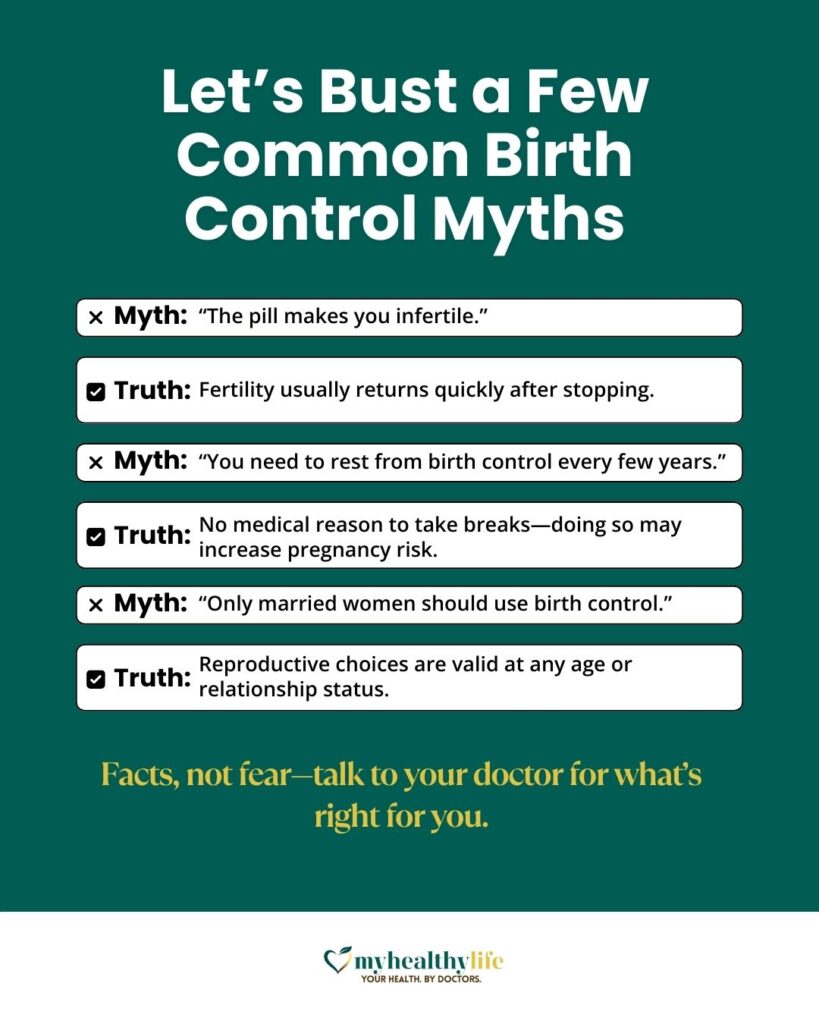
Let’s bust a few common misconceptions:
❌ “The pill makes you infertile.” – Fertility usually returns quickly after stopping pills.
❌ “You need to ‘rest’ from birth control every few years.” – There’s no medical evidence for this; stopping and restarting may increase pregnancy risk.
❌ “Only married women should use birth control.” – Your reproductive choices are valid regardless of marital status.
7. Cost and Access in the Philippines
- Pills – ₱150–₱600/month depending on brand
- Injectables – ₱300–₱1,200 per shot
- Implants – ₱8,000–₱15,000 (lasts up to 5 years)
- IUDs – ₱2,000–₱15,000 depending on type and facility
- Condoms – ₱30–₱100 per piece or box
Government health centers and NGOs like PopCom sometimes offer free or low-cost options. Always confirm supply and availability in your area.
8. Questions to Ask Before Choosing
- How will this affect my cycle and hormones?
- Does it protect against STIs?
- How soon will fertility return if I stop?
- How often will I need check-ups?
- What’s the total cost over time?
MyHealthyLife Takeaway: Your Body, Your Rules
Think of birth control like a tailored outfit—you wouldn’t just wear whatever’s handed to you without checking the fit, the fabric, and how it feels. The best method is the one that works with your lifestyle, health needs, and future plans.
And here’s the empowering part: you’re allowed to change your mind. If something doesn’t feel right—physically, emotionally, or financially—you can switch. Your reproductive health isn’t a one-time decision; it’s an ongoing conversation with yourself and your healthcare provider.
Because at the end of the day, birth control isn’t about limiting you—it’s about giving you freedom.
https://www.cdc.gov/reproductivehealth/contraception/index.htm
Share:
Related Posts

Pelvic Floor 101: The Muscles That Transform Sexual Health

Sex After Kids: Why Desire Dips—and How to Reconnect