

When most people think about sexual health, they imagine hormones, desire, or relationship chemistry. But there’s a lesser-known hero in the story—one you’ve probably ignored for years—the pelvic floor.
These muscles quietly support your bladder, bowel, and reproductive organs. But when they weaken or become tense, they can trigger a surprising list of problems: from erectile dysfunction in men to vaginal pain in women, plus bladder leaks, constipation, and even lower back pain.
The good news? With a little awareness and some daily exercises, you can transform how your body functions—and yes, that includes your sex life.
Pelvic Floor Basics: What and Where It Is
The pelvic floor is a hammock-like group of muscles and connective tissues at the base of your pelvis.
- In men: These muscles support the bladder, bowel, and prostate, helping control urination and ejaculation.
- In women: They support the bladder, bowel, and uterus, playing a major role in childbirth and sexual sensation.
A healthy pelvic floor can contract (to prevent leaks) and relax (to allow comfortable urination, bowel movements, and intercourse). Problems occur when these muscles become too weak or too tight.
Pelvic Pain Causes: Why Things Go Wrong
Pelvic pain can happen for multiple reasons, and understanding the cause is the first step toward fixing it.
1. Weak Muscles
Pregnancy, aging, and lack of exercise can stretch or weaken pelvic floor muscles. This can cause:
- Urinary leakage when you cough or laugh
- Reduced sexual sensation
- Difficulty maintaining erections
2. Overactive Muscles
Sometimes the problem isn’t weakness—it’s tension. Constantly tight pelvic floor muscles can lead to:
- Vaginal pain or discomfort during sex
- Constipation or difficulty passing urine
- Persistent pelvic ache
3. Underlying Health Issues
- Prostate problems in men can irritate pelvic nerves
- Childbirth injuries can damage muscles and connective tissues
- Chronic coughing, obesity, or heavy lifting can strain the pelvic floor
- Nerve damage from diabetes or surgery can weaken control
How Pelvic Floor Health Affects Sexual Function
For Men:
- Weak pelvic floor muscles can limit blood flow to the penis, leading to erectile dysfunction
- Poor control of ejaculation can cause premature climax or difficulty finishing
- Strengthening these muscles improves rigidity and stamina
For Women:
- Weakness can cause reduced friction during sex, lowering pleasure
- Tension can lead to pain, dryness, or inability to relax during intimacy
- A strong, flexible pelvic floor improves orgasm quality and bladder control
The Surprising Benefits of Pelvic Floor Exercises
Whether you’re dealing with pain, leaks, or low bedroom confidence, pelvic floor training offers benefits beyond sexual health:
- Better bladder control
- Less risk of pelvic organ prolapse (especially after childbirth)
- Reduced pelvic and lower back pain
- Improved bowel function
- Increased sexual satisfaction and arousal
Beginner’s Guide to Kegel Exercises (for Men and Women)
Kegels are the most famous pelvic floor exercise—and for good reason. But many people do them wrong.
Step 1: Find the Right Muscles
- For men: Try stopping your urine mid-flow—those are your pelvic floor muscles.
- For women: Imagine holding in gas or stopping urine—same muscles.
Important: Don’t make a habit of stopping urine midstream; it’s just for identification.
Step 2: Practice Contracting
- Sit or lie down comfortably
- Tighten pelvic floor muscles for 3–5 seconds
- Relax for 3–5 seconds
- Repeat 10 times, 3 times a day
Step 3: Avoid These Mistakes
- Don’t squeeze your abs, thighs, or buttocks—focus only on the pelvic floor
- Don’t hold your breath—breathe normally
- Don’t overtrain; muscles need rest, too
Beyond Kegels: Other Pelvic Floor Boosters
- Squats – Strengthen glutes and core, supporting pelvic health
- Bridge Pose – Activates pelvic muscles while improving core stability
- Deep Breathing – Relaxes overactive pelvic muscles
- Yoga for Pelvic Health – Poses like Child’s Pose or Happy Baby can help release tension
When to See a Specialist
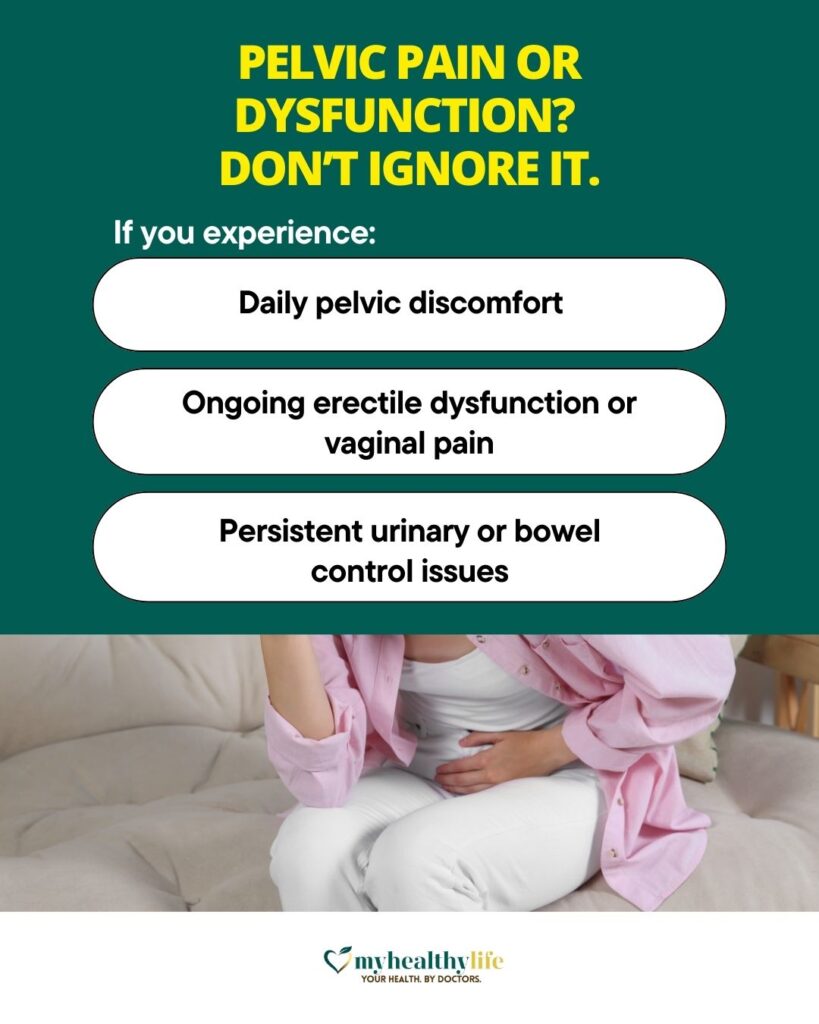
If pelvic pain causes daily discomfort, if you experience ongoing erectile dysfunction or vaginal pain, or if you have persistent urinary or bowel control issues, it’s time to get checked.
- Urologists specialize in male reproductive health
- Gynecologists handle female reproductive and pelvic concerns
- Pelvic floor physical therapists offer targeted training and manual therapy
MyHealthyLife Tip: Don’t Wait for Symptoms to Get Worse
Think of your pelvic floor like any other muscle group—you wouldn’t wait until you couldn’t walk to start strengthening your legs. Building pelvic floor awareness now can save you from discomfort later.
The MyHealthyLife Takeaway
Your pelvic floor may be “out of sight, out of mind,” but it’s quietly shaping your comfort, confidence, and connection in everyday life—and in the bedroom.
So here’s your MyHealthyLife Challenge:
- Week 1–2: Find and activate your pelvic floor muscles daily
- Week 3–4: Add Kegels + squats for stronger support
- Week 5 onward: Notice the difference in control, posture, and pleasure
It’s not just about avoiding leaks or pain—it’s about moving, living, and loving without limits. Start now, because a strong pelvic floor is the kind of silent superpower everyone deserves.
https://www.niddk.nih.gov/health-information/urologic-diseases/pelvic-floor-muscles
https://www.health.harvard.edu/staying-healthy/the-pelvic-floor-the-hidden-muscle
https://www.nafc.org/pelvic-floor-muscle-exercises
https://www.auanet.org/guidelines-and-quality/guidelines/erectile-dysfunction-(ed)-guideline
https://www.acog.org/womens-health/faqs/pelvic-support-problems
Share:
Related Posts

Sex After Kids: Why Desire Dips—and How to Reconnect

Libido and Testosterone: When Should You Check Your Levels?