

We all know sex drive isn’t the same for everyone. For some, it’s steady over the years; for others, it dips unexpectedly. But when your libido suddenly takes a nosedive—especially if it’s paired with low energy or other body changes—it’s worth asking: could testosterone be the culprit?
In men, testosterone is the key hormone that fuels libido, supports erections, builds muscle, and maintains bone density. In women, it also plays a role—though in much smaller amounts—in boosting sex drive and overall energy. But low testosterone (or “low T”) doesn’t mean an automatic loss of sexual desire, and not every case of low libido is due to hormones.
So when should you actually get your testosterone levels checked? Let’s break it down.
What is Libido?
Libido—often simply called sex drive—is your body’s natural desire for sexual activity. It’s influenced by:
- Hormones (testosterone, estrogen, progesterone)
- Brain chemistry (dopamine, serotonin)
- Physical health (circulation, fitness, chronic illness)
- Mental state (stress, anxiety, depression)
- Lifestyle factors (sleep, diet, alcohol, smoking)
Low libido can be temporary (stress, lack of sleep) or persistent (hormonal imbalance, chronic illness). That’s why identifying the cause matters before jumping into treatment.
Testosterone’s Role in Libido and Sexual Function
For men, testosterone helps maintain:
- Sexual interest and arousal
- Erectile function (through supporting nitric oxide production in blood vessels)
- Sperm production
- Energy and mood stability
For women, testosterone supports:
- Desire for intimacy
- Sexual satisfaction and sensitivity
- General sense of well-being
When testosterone levels drop below normal ranges, you may notice not just sexual changes, but also physical and emotional symptoms.
Signs It’s Time to Get Your Testosterone Checked
1. Persistent Low Libido
If you’ve noticed a significant and lasting drop in sexual desire—especially over several months—it’s worth investigating.
2. Erectile Dysfunction (ED)
While ED has many causes, low testosterone can contribute by reducing sex drive and affecting erectile quality.
3. Unexplained Fatigue
Constant tiredness even after adequate rest can be a hormonal red flag.
4. Muscle Loss and Increased Body Fat
Low T can make it harder to build or maintain muscle while making fat gain—especially around the abdomen—more likely.
5. Mood Changes
Irritability, low motivation, or even mild depression may be linked to hormonal shifts.
6. Decreased Bone Density
Long-term testosterone deficiency can lead to osteoporosis in both men and women.
When Low Libido is NOT About Testosterone
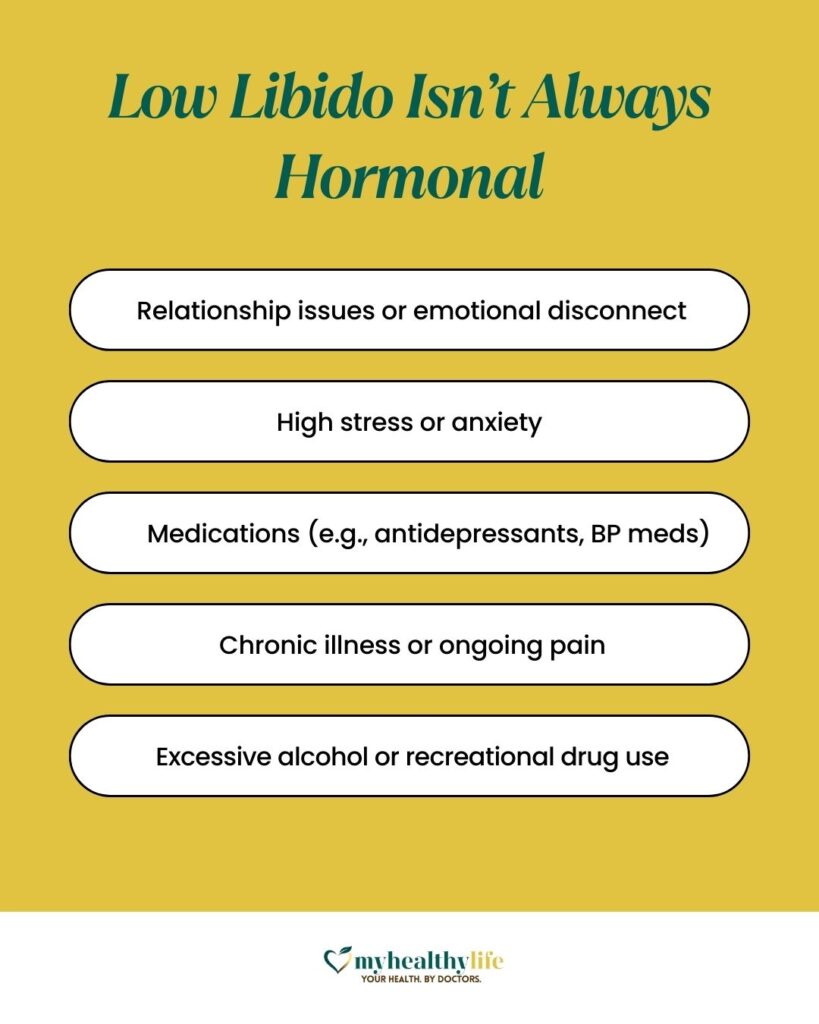
Low libido isn’t always hormonal. Common non-hormonal causes include:
- Relationship conflicts or emotional disconnection
- High stress or anxiety
- Side effects of certain medications (antidepressants, blood pressure meds)
- Chronic illness or pain
- Excessive alcohol use or recreational drugs
A doctor’s evaluation will help determine whether testing is necessary—or if lifestyle and psychological factors are the main drivers.
How Testosterone Testing Works
1. Blood Test
A total testosterone test measures the amount of testosterone in your blood. It’s best done in the morning when levels are highest.
2. Free Testosterone
This measures testosterone not bound to proteins, giving a more accurate picture of what’s active in your body.
3. Related Hormones
Doctors may also check:
- LH (luteinizing hormone) – signals the testes or ovaries to produce testosterone.
- Prolactin – high levels can suppress testosterone.
- Estradiol – can affect sexual function when out of balance.
Lifestyle Factors That Affect Testosterone
You may not always need medication—sometimes improving your daily habits is enough to restore healthy levels:
- Regular exercise (especially resistance training)
- Balanced diet with enough protein and healthy fats
- Adequate sleep (7–9 hours)
- Stress management (meditation, hobbies, social connection)
- Limiting alcohol and quitting smoking
Treatment Options If Levels Are Low
1. Testosterone Replacement Therapy (TRT)
Available as gels, injections, or patches, TRT can restore levels—but must be monitored by a doctor for side effects.
2. Addressing Underlying Health Issues
Treating diabetes, obesity, or thyroid problems often improves testosterone naturally.
3. Counseling and Sex Therapy
If emotional or psychological issues are part of the picture, therapy can complement medical treatment.
When to See a Doctor Right Away
- Sudden loss of sexual desire without clear cause
- ED paired with fatigue and mood changes
- Noticeable muscle loss despite exercise
- Signs of depression or mental health decline
The MyHealthyLife Touch: Listen to What Your Body’s Telling You
Your body has a way of dropping hints when something’s off—low libido is one of them. Whether it’s testosterone, stress, or lifestyle catching up to you, the most important step is not to ignore it.
Think of testosterone testing not as a “last resort,” but as part of a proactive approach to your health—just like getting your blood pressure or cholesterol checked. The goal isn’t just a number on a lab report—it’s feeling energized, confident, and connected again.
Your MyHealthyLife challenge: If you’ve been noticing changes in desire, mood, or energy for more than three months, book a consult this week. Your future self will thank you for catching it early.
https://www.mayoclinic.org/healthy-lifestyle/consumer-health/in-depth/organ-donation/art-20047529
https://my.clevelandclinic.org/health/diseases/15603-low-testosterone-hypogonadism
https://www.endocrine.org/clinical-practice-guidelines/testosterone-therapy
Share:
Related Posts

Pelvic Floor 101: The Muscles That Transform Sexual Health

Sex After Kids: Why Desire Dips—and How to Reconnect