For many women, the 40s are a juggling act—career, family, personal goals—and then, out of nowhere, perimenopause starts quietly making changes in the background. One of the most common (and least talked about) changes? A dip in sex drive.
If your libido isn’t what it used to be, you’re not imagining it—and you’re definitely not alone. The good news? There are ways to work with your body instead of feeling like you’ve lost a part of yourself.
1. First, What Is Perimenopause?
Perimenopause is the transition phase leading up to menopause, when your ovaries gradually start producing less estrogen and progesterone.
- When it starts: Usually mid-to-late 40s, but can happen earlier.
- How long it lasts: Anywhere from a few years to a decade before your final period.
Key symptoms: Irregular cycles, hot flashes, mood swings, vaginal dryness—and yes, changes in libido.
2. Why Libido Changes During Perimenopause
Hormone Fluctuations
Estrogen plays a big role in sexual health by keeping vaginal tissue elastic and promoting natural lubrication. Drops in estrogen can cause vaginal dryness and discomfort, making intimacy less appealing.
Progesterone also shifts, impacting mood, sleep, and overall sexual desire.
Testosterone’s Role
Though often labeled as a “male hormone,” women produce testosterone too—and it’s linked to sexual desire. Perimenopause often comes with a slow decline in testosterone, which can mean less frequent sexual thoughts or cravings.
Other Contributing Factors
- Stress & fatigue from balancing multiple responsibilities
- Body image changes due to weight fluctuations
- Sleep disturbances from night sweats or anxiety
- Medical conditions like thyroid disorders or depression
3. What Actually Helps Boost Libido in Perimenopause
a. Exercise (Especially Strength Training & Cardio)
- Improves blood flow (including to pelvic organs)
- Boosts mood via endorphins
- Supports hormone balance
Tip: Even 20–30 minutes a day can make a difference.
b. Sleep
Lack of rest disrupts hormone regulation, increases stress hormones, and lowers sexual interest.
- Aim for 7–9 hours of consistent, quality sleep.
- Create a cooler, darker sleep environment to counter hot flashes.
c. Vaginal Moisturizers & Lubricants
If dryness is part of the issue, using lubricants can make intimacy more comfortable—reducing the avoidance cycle.
d. Mind-Body Practices
- Yoga, meditation, and mindfulness can reduce anxiety and improve body awareness.
- Sensate focus exercises (non-sexual touch to rebuild connection) can reawaken desire without pressure.
e. Hormone Therapy (HRT)
Low-dose estrogen therapy (sometimes combined with progesterone) can relieve dryness and improve overall sexual comfort.
- Always discuss risks and benefits with your doctor.
f. Testosterone Therapy
In select cases, low-dose testosterone supplementation can help—but it’s not for everyone, and it should be closely monitored.
g. Aphrodisiac Foods
While chocolate, oysters, and spicy foods get plenty of hype, their effects are more about mood and sensuality than actual hormonal shifts. Still, if they make you feel good and confident, enjoy them guilt-free.
4. What Usually Doesn’t Work
Over-the-Counter “Female Libido” Supplements
Many contain herbs like ginseng, maca, or horny goat weed—but scientific evidence is limited. Some women feel benefits, but results vary, and safety can be an issue if you’re on other medications.
Forcing It Without Addressing the Cause
If the root issue is hormonal, psychological, or physical discomfort, pushing through without addressing it can lead to frustration and further avoidance.
Ignoring Your Partner’s Role
Sexual desire isn’t just biology—it’s also about connection. Communication about changes, preferences, and comfort can make a huge difference.
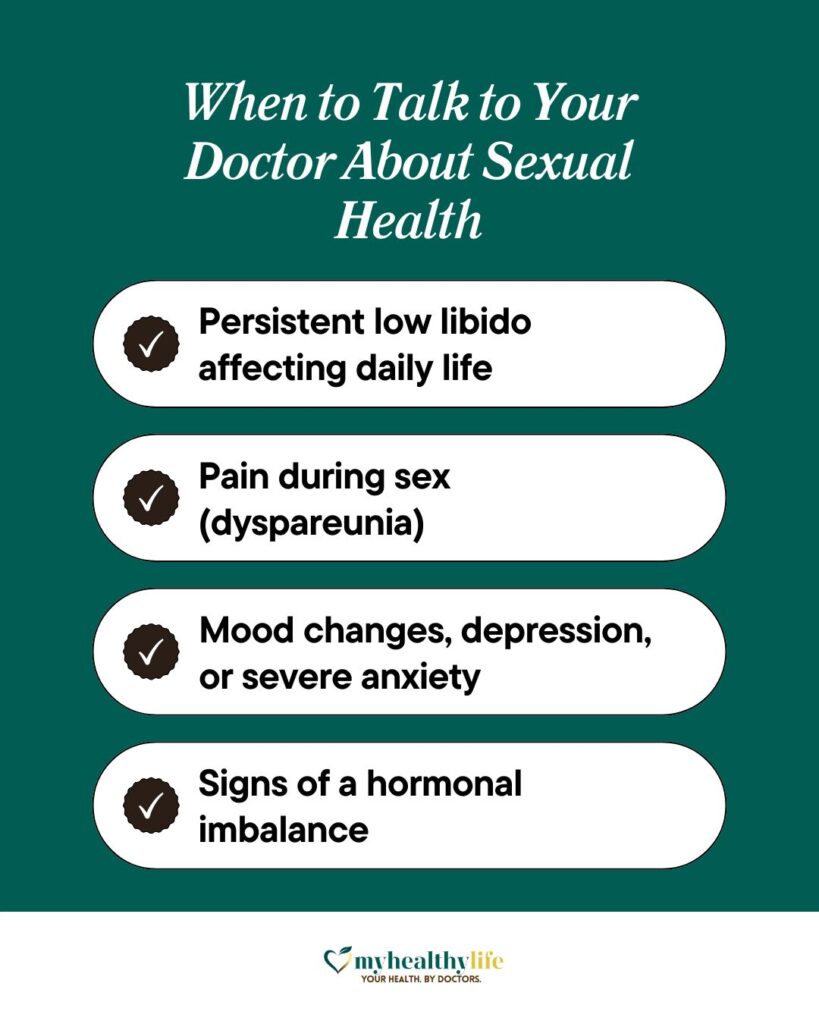
5. When to See a Specialist
Consult your doctor if you notice:
- Persistent low libido that affects your quality of life
- Pain during sex (dyspareunia)
- Mood changes, depression, or severe anxiety
- Suspected hormonal imbalance
MyHealthyLife Perspective: Desire Is More Than Hormones
Perimenopause may change your body’s chemistry, but it doesn’t mean your sex life is over—it just needs a new chapter. Sometimes, it’s about finding fresh ways to connect with your body and your partner, redefining intimacy, and leaning into what feels good now instead of what worked 20 years ago.
The takeaway? Your desire isn’t gone—it’s evolving. Give it attention, curiosity, and care, and it can surprise you in the best ways.
Share:
Related Posts
Pelvic Floor 101: The Muscles That Transform Sexual Health

Sex After Kids: Why Desire Dips—and How to Reconnect