Maria always assumed her sniffles every spring were just allergies. She would take an antihistamine, keep tissues close, and wait for the pollen count to drop. Over time, though, her sneezing was joined by a lingering cough and an uncomfortable tightness in her chest, especially at night.
It wasn’t until her doctor ran lung function tests that she learned she had bronchial asthma.
This is a common story. Many adults overlook the early signs of asthma, mistaking them for seasonal allergies. While the two conditions share some triggers, they affect different parts of the respiratory system and require different treatments. Recognizing the difference early is the key to preventing complications.
1. Where the Problem Starts
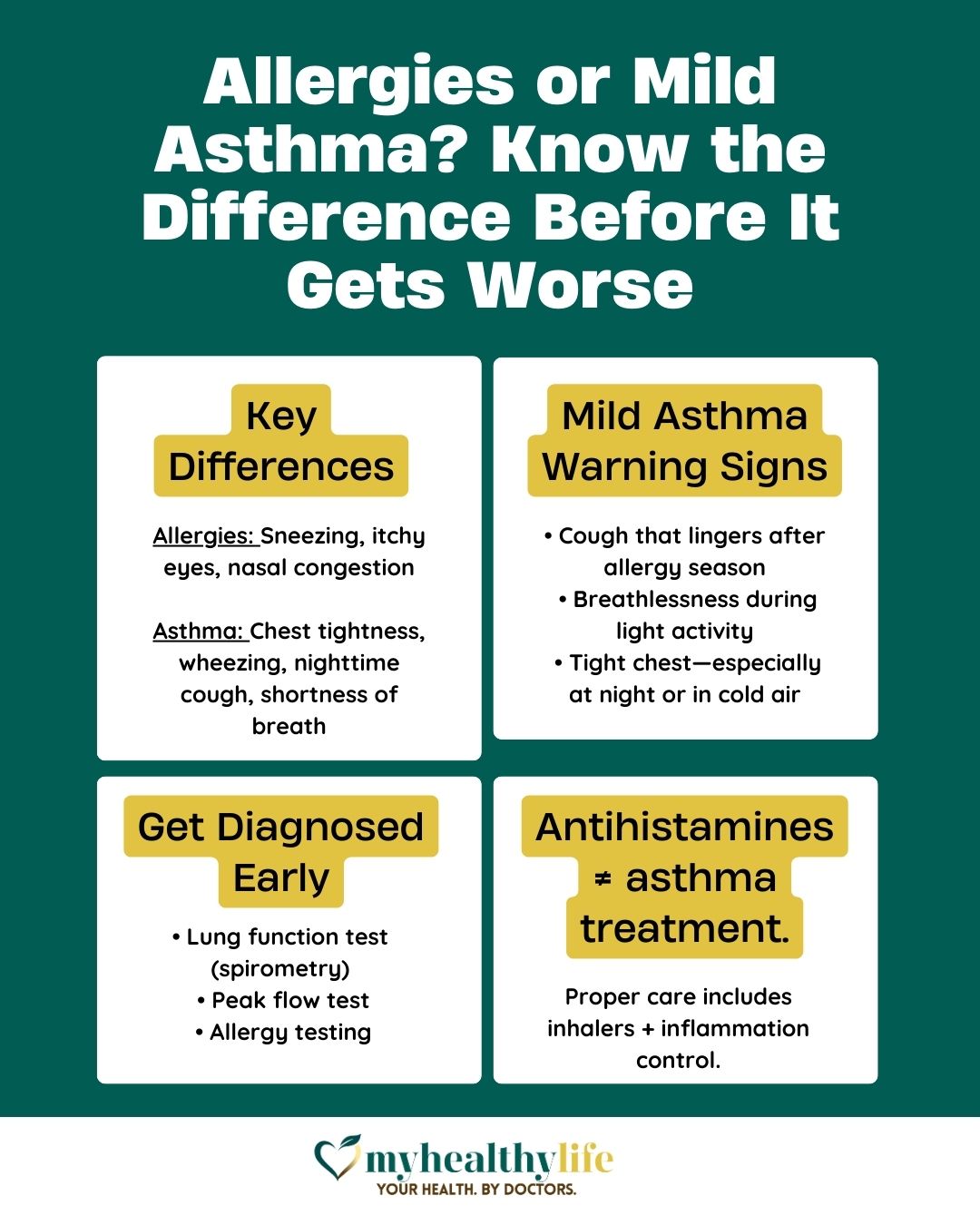
Allergic rhinitis affects the upper airway, including the nose, sinuses, and throat. It causes sneezing, congestion, itchy eyes, and postnasal drip. Asthma affects the lower airway — the lungs and bronchial tubes. This inflammation narrows the airways and makes breathing more difficult.
Some people experience both, a condition known as allergic asthma. But if your symptoms include wheezing, frequent coughing fits, or shortness of breath, there’s a higher chance you’re dealing with more than just nasal irritation.
2. Shared and Distinct Symptoms
Symptom | Allergies | Asthma |
Sneezing | Common | Rare |
Itchy, watery eyes | Common | Rare |
Wheezing | Rare | Common |
Chest tightness | Rare | Common |
Nighttime cough | Sometimes | Often |
Shortness of breath | Rare | Common |
The signs of asthma often appear subtly at first. If you have a cough that lingers beyond the allergy season or experience difficulty breathing during light activity, it could be a warning.
3. Why Mild Asthma Often Goes Unnoticed
People often picture asthma as sudden, severe attacks, but mild asthma can develop slowly over years. Symptoms may include a dry cough after exercise, breathlessness in cold weather, or slight chest discomfort that fades on its own.
Without treatment, the inflammation in your airways can worsen and increase your risk of serious respiratory diseases.
4. Similar Triggers, Different Reactions
Allergies and asthma share triggers such as pollen, dust mites, mold, and pet dander. The difference is in the body’s reaction. In asthma, these triggers cause the muscles around your airways to tighten and the bronchial tubes to swell, making each breath feel restricted.
5. How Doctors Confirm a Diagnosis
If your symptoms suggest asthma, your doctor may recommend spirometry to measure lung function, a peak flow test to check how well your lungs push out air, and allergy testing to pinpoint specific triggers.
A correct diagnosis ensures you get the right treatment. Allergy medication alone won’t control airway inflammation linked to asthma.
6. Treatment Options
Allergies are often treated with antihistamines, nasal sprays, and avoiding triggers. Asthma typically requires inhalers to open the airways and reduce inflammation, along with other possible medications.
Treating asthma with only allergy remedies is ineffective and can allow the condition to worsen over time.
7. When to Seek Urgent Care
Get medical attention right away if you have rapid breathing, worsening wheezing, trouble speaking full sentences, or chest pain while breathing or coughing. These may be signs of a severe asthma attack or another serious respiratory condition.
8. Living Well with the Right Plan
A personalized asthma management plan can help keep symptoms under control. This may include using prescribed inhalers regularly, avoiding known triggers, tracking symptoms, and having routine lung check-ups. The goal is not only to prevent attacks but also to protect long-term lung health.
Takeaway
If your allergies come with coughing, wheezing, or difficulty breathing, don’t assume it’s seasonal. The earlier signs of asthma are identified, the easier they are to manage.
Quick Self-Check
- Do you cough at night or early in the morning?
- Do your symptoms worsen with cold air, exercise, or strong smells?
- Do you ever feel chest tightness without a cold or flu?
If you answered yes to two or more, talk to your doctor about testing for asthma.
References:
Share:
Related Posts

Does Stress Affect Men’s Immunity More Than They Think?

One Simple Habit to Keep Urban Lungs Healthy