Most people think of air pollution as a lung problem. But your skin—the body’s largest organ—is also breathing in its own way, constantly exposed to whatever floats in the air. For women, especially those prone to allergies or asthma, poor air quality isn’t just an occasional inconvenience—it can cause double trouble. From triggering wheezing to fueling acne flare-ups, dirty air impacts your respiratory system and your skin barrier through shared inflammation pathways.
This article breaks down how air quality links to both lung health and skin health, the science behind it, and the practical steps you can take to protect yourself every day.
Air Quality 101: What’s Really in the Air You Breathe (and Wear)
When we talk about “air quality,” we’re referring to the concentration of pollutants in the atmosphere. The main culprits include:
- Particulate Matter (PM2.5 and PM10): Tiny particles from vehicle exhaust, industrial smoke, and even cooking fumes.
- Ground-Level Ozone (O₃): Not the protective ozone in the upper atmosphere, but a reactive gas formed when sunlight interacts with pollutants.
- Nitrogen Dioxide (NO₂) and Sulfur Dioxide (SO₂): Byproducts of burning fuel—common near heavy traffic areas.
- Allergens: Pollen, mold spores, and pet dander often mix with pollution, making them even more irritating.
While your respiratory system is the first to react to airborne threats, your skin—being directly exposed—also absorbs these pollutants. Both organs have one thing in common: they rely on a delicate barrier to keep harmful substances out.
The Shared Pathway: How Pollution Affects Skin and Lungs Together
Both the lungs and skin act as barriers. The respiratory tract uses mucus and tiny hair-like cilia to trap harmful particles, while the skin has a lipid-rich outer layer to block invaders. When pollution breaks through these defenses, two things happen:
- Inflammation kicks in. Pollutants trigger your immune system, causing swelling and redness in the airways (asthma triggers) and in skin tissue (eczema, acne).
- Oxidative stress builds up. Harmful free radicals damage cells in both the skin and lungs, accelerating aging in skin and weakening lung tissue.
The result? Shortness of breath one day, stubborn skin breakouts the next—often from the same environmental exposure.
How Air Quality Becomes an Asthma Trigger
For people with asthma triggers like dust, pollen, or smoke, poor air quality means more frequent flare-ups. Here’s why:
- Particulate matter penetrates deep into the bronchial tubes, irritating the lining.
- Ozone inflames the airways, making it harder to breathe.
- Allergen-pollutant mix intensifies immune reactions, so pollen season feels twice as bad.
Even women without diagnosed asthma can experience respiratory system irritation—manifesting as coughing, wheezing, or feeling winded after mild activity.
How Air Quality Damages Your Skin
Just like the lungs, the skin reacts strongly to pollutants:
- Acne & Breakouts: Dirt and PM2.5 particles clog pores and trap sebum.
- Dryness & Sensitivity: Pollutants strip the skin’s natural oils, leading to itching and redness.
- Premature Aging: Ozone and UV exposure speed up collagen breakdown, causing fine lines earlier.
- Eczema Flare-ups: People with pre-existing skin conditions see worsened inflammation in polluted environments.
When skin’s natural barrier is compromised, allergens and bacteria can get in more easily—mirroring the way irritated lungs allow infections to settle in.
Why Women May Be More Affected
Research suggests women may be more sensitive to pollution-related asthma triggers and skin issues due to:
- Hormonal fluctuations: Changes in estrogen and progesterone can influence airway inflammation and skin sensitivity.
- Higher exposure to indoor pollutants: Cooking fumes, scented candles, and cleaning products add to daily air pollution exposure.
- Beauty products as a factor: Certain cosmetics can trap pollutants against the skin, increasing irritation.
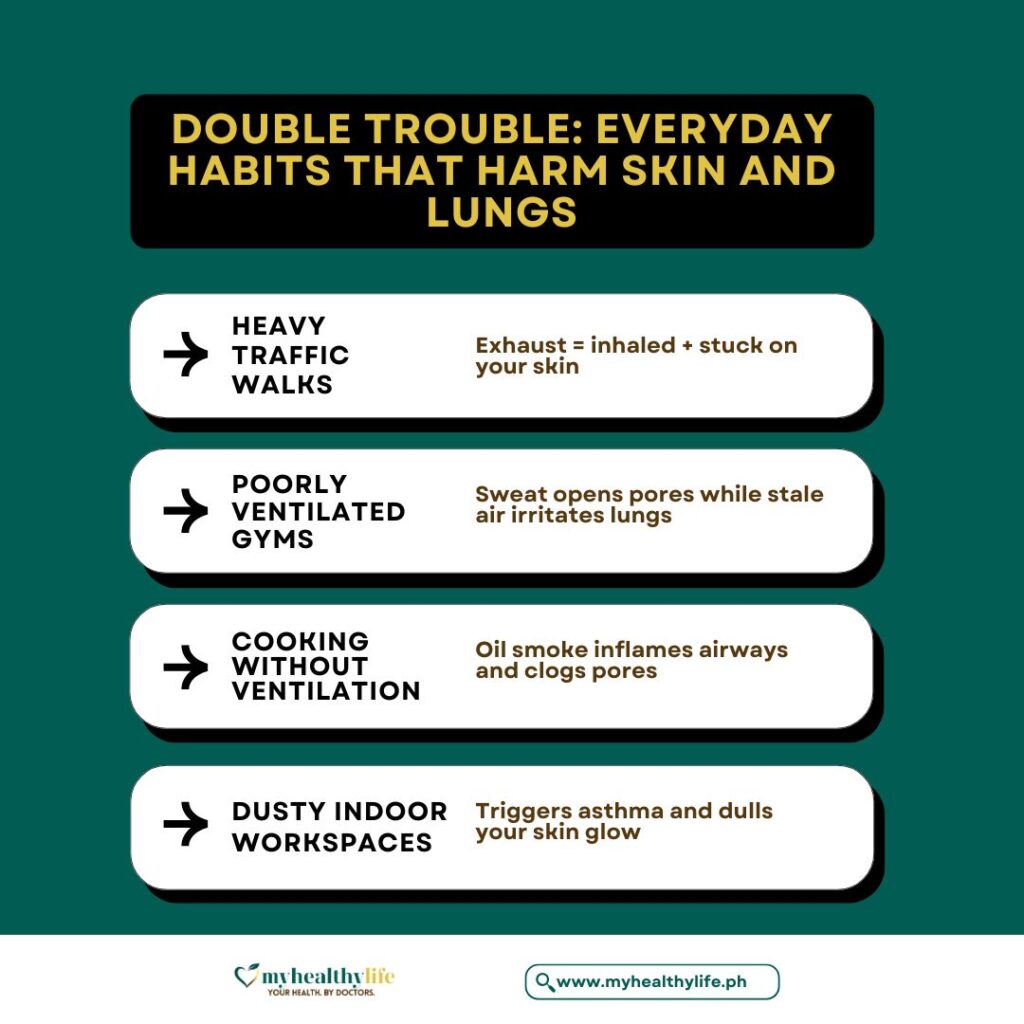
Everyday Situations Where Skin and Lungs Suffer Together
You might not notice it at first, but some daily habits and environments are “double triggers” for skin and lung irritation:
- Heavy traffic walks: You inhale exhaust fumes while particles settle on your face.
- Poorly ventilated gyms: Sweat opens pores, making skin more vulnerable while you breathe in stale air.
- Cooking without ventilation: Oil smoke can clog pores and inflame airways.
- Dusty indoor workspaces: Triggers asthma symptoms and leaves skin dull.
How to Protect Your Skin and Lungs from Poor Air Quality
- Monitor the Air Quality Index (AQI)
Check your local AQI daily—apps like AirVisual or government sites give real-time data. Limit outdoor activity when AQI is above 100. - Upgrade Your Indoor Air
Invest in air purifiers with HEPA filters to trap pollutants. For asthma triggers, choose one with activated carbon to remove odors and gases. - Practice Smart Skincare
- Double cleanse at night to remove pollutants and sunscreen.
- Use antioxidants like vitamin C to fight free radicals.
- Apply a barrier cream before going outdoors in high pollution.
- Wear a Mask in High-Risk Areas
For those with respiratory system sensitivity, a well-fitted N95 mask can reduce both lung and skin exposure. - Strengthen Your Defenses
- Eat antioxidant-rich foods (berries, leafy greens, nuts).
- Stay hydrated to support skin elasticity and mucus membrane health.
- Exercise indoors on high-pollution days to keep healthy lungs strong without overexposing yourself.
When to See a Doctor
Seek medical help if you notice:
- Persistent shortness of breath or wheezing.
- Chronic cough that lasts more than 8 weeks.
- New or worsening asthma triggers.
- Skin rashes or breakouts that don’t improve after basic care.
Your doctor may recommend lung tests like spirometry or allergy testing, along with dermatology consultation to address skin barrier recovery.
Bringing It All Together: Skin & Lung Health Are Connected
Air quality doesn’t just affect how well you breathe—it impacts how you look and feel every day. By understanding the shared pathways of damage, you can take practical steps to protect both your respiratory system and your healthy lungs.
The lungs and skin may seem like separate worlds, but they share the same frontline battle against environmental irritants. Every choice you make—whether it’s checking the AQI, cleansing your skin, or running an air purifier—gives both organs a better shot at staying healthy.
Your Personal Air Health Checklist
Here’s a quick daily reminder to keep your lungs and skin protected:
✅ Check the AQI before outdoor plans.
✅ Cleanse your skin thoroughly after exposure.
✅ Hydrate well throughout the day.
✅ Use air purifiers at home.
✅ Limit high-exposure activities on poor air quality days.
Protecting yourself from pollution is not about living in a bubble—it’s about making smart, consistent choices that keep you looking and breathing your best for years to come.
Share:
Related Posts

Does Stress Affect Men’s Immunity More Than They Think?
One Simple Habit to Keep Urban Lungs Healthy