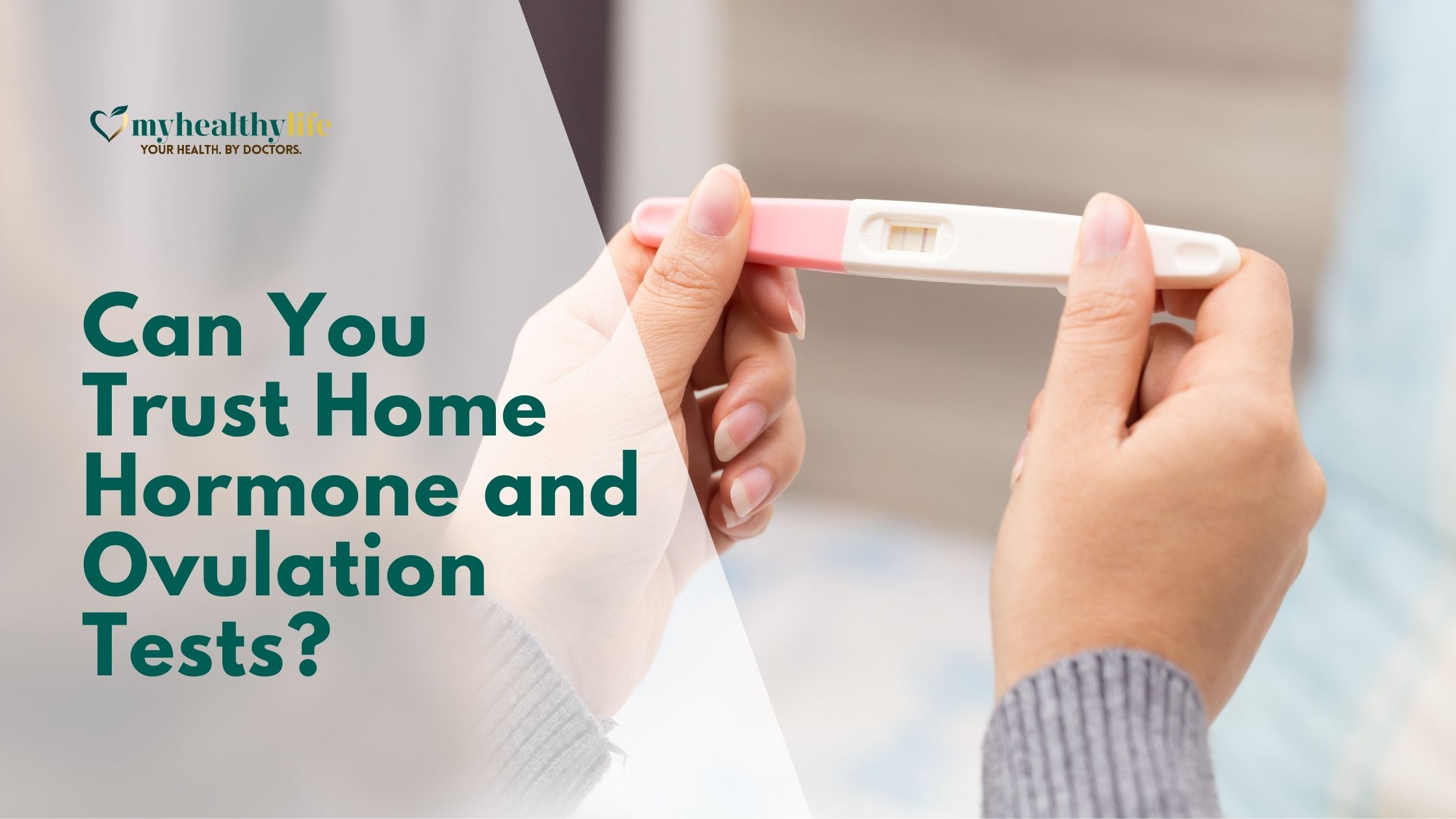
Trying to understand your hormones without visiting a clinic? You’re not alone. With ovulation kits and home hormone tests now sold everywhere—from drugstores to TikTok shops—tracking your cycle feels easier than ever. But here’s the big question:
Can you actually trust the results?
Or are these tests just giving you partial answers that might be leading you the wrong way?
Let’s unpack what these home tests check, how they work, their limits, and when it’s time to step into a doctor’s office instead. 🧪💡
What Are Home Hormone and Ovulation Tests?
These are simple test kits that let you measure key reproductive hormones through urine, saliva, or (in some newer versions) blood pricks.
Some popular options:
- Ovulation predictor kits (OPKs): Detect luteinizing hormone (LH) surges before ovulation.
- Estrogen or progesterone tests: Available in select kits, often saliva-based.
- FSH test strips: Measure follicle-stimulating hormone to estimate ovarian reserve.
- At-home hormone blood tests: Offered by modern telehealth brands (you send a finger-prick sample to a lab).
These tools promise insight into fertility windows, cycle health, and even early menopause. Sounds powerful, right?
But like all shortcuts—there are caveats.
How Ovulation Tests Work (and When They Might Mislead You)
Most OPKs check for LH, the hormone that spikes 24–36 hours before your ovary releases an egg.
✅ When it works:
- You’ll see a clear “positive” right before ovulation.
- Great for timing intercourse or knowing your most fertile days.
⚠️ But here’s where it gets tricky:
- PCOS or hormone imbalance? You might get false positives due to chronically elevated LH.
- Short LH surges? You might miss them completely if you’re not testing at the right time.
- No surge at all? Doesn’t always mean you didn’t ovulate—some women have surges that don’t register well on urine tests.
Bottom line:
LH kits are helpful, but not foolproof. They’re best used alongside cycle tracking apps or basal body temperature (BBT) methods for more accuracy.
Are At-Home Hormone Tests Accurate?
Blood-based kits that test FSH, estradiol, LH, progesterone, AMH, or testosterone are growing in popularity. Some are FDA-approved, while others partner with accredited labs.
✅ Pros:
- Convenient and private
- Can give helpful baseline info
- Useful for early fertility planning or health checks
⚠️ Cons:
- Timing matters: Hormone levels fluctuate throughout your cycle
- Single tests = incomplete picture
- May not detect deeper issues like pituitary dysfunction or thyroid disorders
- Can lead to overinterpretation without clinical context
Doctor’s take?
Use these tests for guidance, not diagnosis. Always bring your results to a healthcare provider who can evaluate the full picture.
What Hormones Are Worth Testing?
If you’re doing home kits, here’s what the most common ones measure—and what they can tell you:
Hormone | What it tells you | Notes |
LH | Imminent ovulation | Use mid-cycle (days 10–16) |
FSH | Ovarian reserve | Best done on Day 3 of your period |
Estrogen (E2) | Fertility, ovulation timing | Levels vary widely; tough to track with just one test |
Progesterone | Confirms ovulation occurred | Best done 7 days after ovulation (Day 21-ish) |
AM | Egg reserve (reliable at any cycle point) | Only available via blood test |
When You Should Still See a Doctor
Home tests offer convenience—but they can’t replace a full hormonal workup or ultrasound.
Here’s when to call your OB-GYN or endocrinologist:
- You’ve been trying to conceive for 6–12 months with no luck
- Your periods are irregular or absent
- You suspect PCOS, thyroid issues, or early menopause
- You’re over 35 and want to assess fertility before TTC
- You’re getting confusing or conflicting results from home kits
A doctor may order lab-based cycle-day testing, ultrasounds, or advanced blood panels that home kits just can’t match.
Can You Use These Tests for Birth Control?
A few apps and kits claim they can help you avoid pregnancy by predicting ovulation. ⚠️
This is risky if you’re not ready for a baby.
Why?
- Ovulation doesn’t always follow the calendar
- Stress, illness, and travel can delay ovulation
- LH tests only give a short window and don’t confirm if ovulation actually happened
If you want hormone-free birth control, talk to your OB about cycle tracking with guidance or non-hormonal options like copper IUDs.
Are Hormone Tracking Apps Worth It?
Many apps like Natural Cycles or Clue now sync with your hormone or ovulation tests. These can be helpful—but again, they rely on accurate inputs and assumptions about your cycle.
Think of them as support tools, not guarantees.
Real Talk: These Tests Don’t Answer Everything
At-home hormone tests can be empowering—giving you insight into your body you never had before.
But they also come with risks: over-reliance, misreading signals, or false confidence.
To truly understand your fertility, hormones, or menstrual health, you need context. That means talking to a provider, considering medical history, and looking at symptoms holistically.
Let’s Test Your Hormone IQ
Which of the following is true about hormone tests?
- LH tests confirm ovulation
B. AMH levels stay stable throughout your cycle
C. Irregular periods can affect home test reliability
D. All of the above
Answer: ✅ D. All of the above!
You deserve more than “maybe” answers.
At MyHealthyLife, we believe women deserve smart, science-backed guidance—no confusion, no shame, no guesswork.
Whatever stage you’re in—planning, tracking, or just curious—your hormones have a story to tell. Let’s help you understand it, one test (and truth) at a time.
Share:
Related Posts

Pelvic Floor 101: The Muscles That Transform Sexual Health

Sex After Kids: Why Desire Dips—and How to Reconnect