

Inhalers are among the most important tools in respiratory care—small, portable, and capable of delivering fast relief or long-term control. But while they seem simple, they’re often misunderstood. Some people think inhalers are only for severe asthma attacks, others believe they can be used freely without guidance. In reality, proper inhaler use can mean the difference between stable breathing and repeated hospital visits.
This guide breaks down who actually needs inhalers, the differences between maintenance and rescue types, and the correct way to use them for maximum benefit.
Understanding Asthma Inhalers and Their Role
Asthma inhalers are devices designed to deliver medication directly into the lungs. By bypassing the digestive system, they work faster and often with fewer side effects than oral medications. They’re commonly prescribed for conditions like:
- Bronchial asthma
- Chronic obstructive pulmonary disease (COPD)
- Certain allergic reactions that affect the airways
Not all inhalers are the same, and not everyone with a cough or shortness of breath will benefit from them. That’s why understanding your diagnosis is the first step.
The Two Main Types: Maintenance vs Rescue
1. Maintenance Inhalers (Controllers)
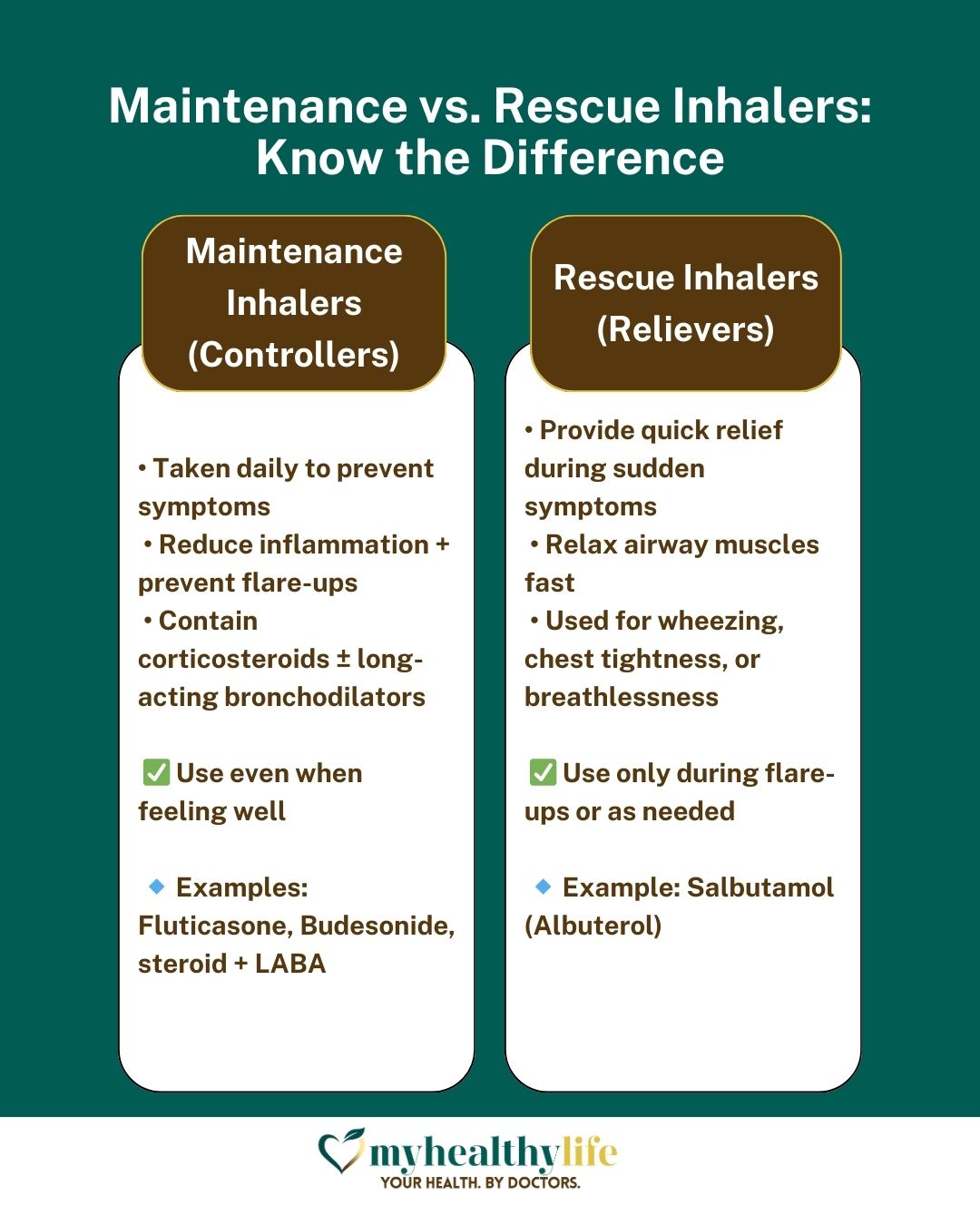
These are designed for daily, long-term use to keep symptoms under control. They contain anti-inflammatory medications (often corticosteroids) and sometimes long-acting bronchodilators. The goal is to reduce airway inflammation, prevent flare-ups, and improve breathing over time.
- Examples: Inhalers with fluticasone, budesonide, or a steroid + long-acting bronchodilator combination.
- Who needs them: People with persistent asthma, frequent symptoms, or COPD patients with ongoing airway inflammation.
- When to use: Every day, even when feeling well. Skipping doses can cause symptoms to return.
2. Rescue Inhalers (Relievers)
These provide quick relief during sudden symptoms like wheezing, chest tightness, or shortness of breath. They work by relaxing airway muscles almost immediately.
- Common medication: Salbutamol (also known as albuterol).
- Who needs them: Anyone with asthma or COPD who may experience sudden breathing difficulty.
- When to use: Only during acute episodes, before exercise (if prescribed), or as directed by a doctor.
Why Correct Technique Matters
Even the right medication won’t work if it doesn’t reach the lungs effectively. Studies show many patients use their inhalers incorrectly, which can reduce medication delivery and lead to uncontrolled symptoms.
Common Mistakes:
- Not shaking the inhaler before use (for metered dose inhalers)
- Inhaling too quickly or too shallowly
- Forgetting to hold breath after inhalation
- Using without a spacer when one is recommended
Step-by-Step: How to Use a Metered Dose Inhaler
- Shake the inhaler well before use.
- Remove the cap and check for dust or debris.
- Exhale fully to empty your lungs.
- Place the mouthpiece between your lips, sealing tightly.
- Press down on the inhaler to release medication as you start to breathe in slowly.
- Inhale deeply until your lungs are full.
- Hold your breath for 10 seconds (or as long as comfortable).
- Exhale slowly.
- Rinse your mouth if using a steroid inhaler to prevent irritation or infection.
Tip: Using a spacer can make it easier to coordinate pressing and inhaling, especially for children or older adults.
Metered Dose vs Dry Powder Inhalers
- Metered Dose Inhalers (MDIs): Require coordination of pressing and inhaling. Often used with spacers.
- Dry Powder Inhalers (DPIs): Activated by the force of your breath—no need to press down. Good for those with difficulty timing their inhalation.
Your doctor will recommend the type that best suits your lung condition, dexterity, and inhalation strength.
When You Might Need an Inhaler Adjustment
If you find yourself using a rescue inhaler more than twice a week (outside of exercise), it may mean your asthma or COPD isn’t well-controlled. This is a signal to consult your doctor about adjusting your maintenance medication.
Other reasons to review your inhaler plan:
- Increased nighttime symptoms
- New or worsening chest pain when breathing
- Drop in peak flow meter readings
- Side effects from current inhaler medication
Safety and Side Effects
While generally safe, inhalers can cause side effects if overused or used incorrectly. Common issues include:
- Mild tremors or rapid heartbeat (from bronchodilators)
- Oral thrush (from inhaled corticosteroids—preventable by rinsing the mouth)
- Hoarseness or throat irritation
Always follow the prescribed dose. Using more than recommended can cause complications, especially for heart health.
Living Well with an Inhaler
Having an inhaler isn’t a sign of weakness—it’s a sign you’re actively managing your health. Whether you use it daily or only in emergencies, keeping it accessible and knowing how to use it properly can make a life-changing difference.
Make a habit of:
- Tracking symptoms in a diary or app
- Bringing your inhaler to every appointment for a technique check
- Replacing inhalers before they expire or run out
- Learning your personal triggers (e.g., dust, cold air, exercise) and planning ahead
A Breath Ahead
Breathing should feel natural and effortless—not something you struggle for. Inhalers, when prescribed and used correctly, can help you get there. If you’re unsure whether you need one, or if your current plan is working, talk to your doctor. The right inhaler and the right technique could be your fastest path back to comfortable, confident breathing.
Share:
Related Posts

Does Stress Affect Men’s Immunity More Than They Think?

One Simple Habit to Keep Urban Lungs Healthy