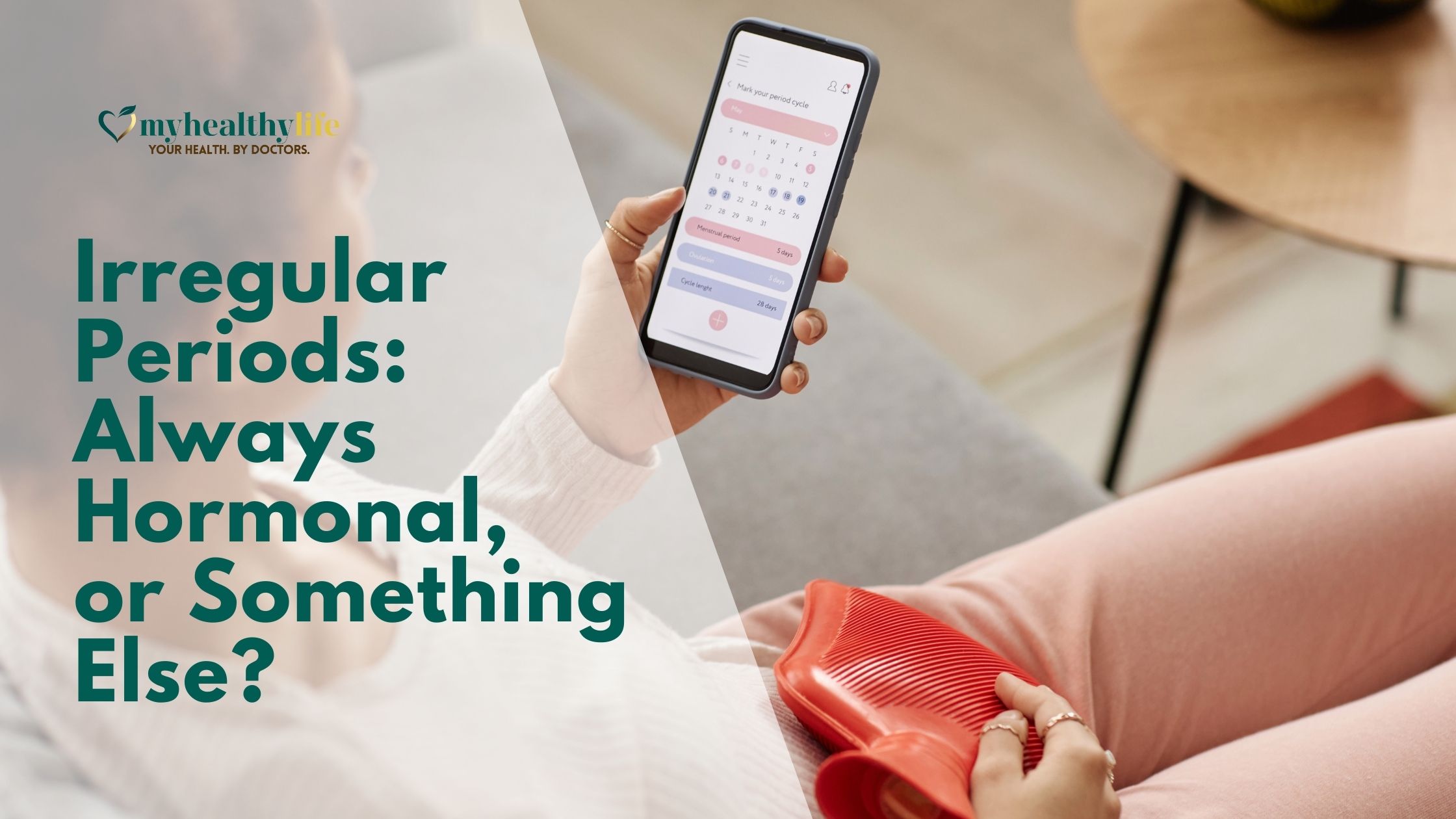
Your period’s late—again. Or maybe it came early. Or arrived with random spotting that caught you completely off guard. Sound familiar?
Irregular periods are one of the most common concerns among women in their 20s, 30s, and even 40s. And while hormonal imbalance is often the first thing we blame (hello, PCOS and estrogen swings!), it’s not always the full story.
Let’s break down what’s normal, what’s not, and when it’s time to dig deeper into your cycle.
First: What is an Irregular Period?
A “regular” menstrual cycle is typically 21–35 days long and follows a relatively consistent pattern month to month. But if:
- Your cycle length varies drastically (e.g., 25 days one month, 40 the next)
- You’re skipping periods altogether
- You’re spotting after your period or in between cycles
- Your flow is extremely light or heavy
…that’s considered irregular.
And yes, occasional changes can be normal—especially with life shifts like travel, stress, or new medications. But frequent irregularity could be your body waving a red flag 🚩.
Hormones: The Most Common Culprit
Let’s get this out of the way—hormones do play a starring role. When your estrogen, progesterone, or even testosterone levels shift out of sync, your cycle can get knocked off course.
1. PCOS (Polycystic Ovary Syndrome)
This is one of the most well-known hormonal causes of irregular periods. PCOS messes with ovulation, meaning your egg might not be released each cycle—causing missed periods or super long gaps between them.
Clues to watch for:
- Irregular or missed periods
- Acne or excess facial hair
- Weight gain or insulin resistance
- Ovarian cysts (visible on ultrasound)
2. Thyroid Imbalances
Your thyroid helps regulate metabolism and hormones. An underactive thyroid (hypothyroidism) can lead to heavier, irregular periods, while an overactive one (hyperthyroidism) might cause lighter or absent periods.
If you’re always cold, gaining weight, or unusually fatigued—get your thyroid checked.
3. Perimenopause
Even in your late 30s or early 40s, perimenopause might be knocking. Estrogen starts to fluctuate, and periods can become shorter, longer, heavier, or completely unpredictable.
But Wait—It’s Not Always Hormonal
Here’s where it gets interesting. Irregular periods can also happen due to factors that mimic hormone issues—but aren’t rooted in your endocrine system at all.
1. High Stress (Yes, Mental Load Counts!)
When you’re dealing with chronic stress—work pressure, family responsibilities, or emotional upheaval—your brain tells your body it’s “not a good time” to reproduce. This impacts your hypothalamus (the period’s command center) and may delay ovulation.
✨ Tip: If your cycle always shifts during busy or emotional months, stress could be your trigger.
2. Sudden Weight Loss or Gain
Drastic changes in weight affect fat-stored hormones like estrogen. Losing too much too quickly? Your body may shut down ovulation. Gaining weight rapidly, especially from poor metabolic health, may trigger cycle disruptions too.
3. Over-Exercising
Yes, even something “healthy” like exercise can backfire. Athletes or those with very intense fitness routines sometimes experience amenorrhea (no periods) due to low body fat and physical stress.
When to Talk to Your Doctor
It’s time to consult a doctor or OB-GYN if:
- Your cycle is consistently outside 21–35 days
- You go 3+ months without a period (not pregnant)
- You’re experiencing heavy bleeding or spotting frequently
- You have symptoms like facial hair growth, sudden acne, or weight shifts
- You’re trying to conceive but aren’t ovulating regularly
A blood test for hormone levels, a pelvic ultrasound, or a thyroid panel can help rule out major causes. Sometimes a simple birth control adjustment or lifestyle tweak is all you need. Other times, treatment for PCOS or thyroid disease may be required.
How to Naturally Support a More Regular Cycle
💧 Hydrate well.
🥦 Eat balanced meals with protein, fiber, and healthy fats.
🛏️ Sleep at least 7–8 hours nightly.
🧘 Manage stress through meditation, walking, journaling, or therapy.
🏋️♀️ Exercise regularly—but don’t overdo it.
Supplements like magnesium, B-vitamins, or chasteberry (Vitex) have also been linked to cycle support—but always ask your doctor before trying them.
Let’s Make Period Talk Normal Again
Irregular periods don’t always mean something’s seriously wrong—but they do deserve attention. Your cycle is a direct window into your health, and when it’s off, your body is trying to tell you something.
Don’t ignore the signs. Get curious. Get checked. And remember—you’re not alone.
Your Cycle, Your Clues
Your period isn’t just a monthly inconvenience—it’s a message. By learning how to listen to it, you’re learning how to take charge of your overall health.
Want more real-talk guidance about your health—from hormones to heart care and beyond?
Stick with us at MyHealthyLife, where we decode medical speak, drop the myths, and put your wellness first—one article at a time 💡
Share:
Related Posts

Pelvic Floor 101: The Muscles That Transform Sexual Health

Sex After Kids: Why Desire Dips—and How to Reconnect