

Waking up with a cough can be frustrating—especially when it happens almost every morning. If you’re blaming your bedroom air conditioning, you might be partly right. But while dry, cool air can irritate your throat, a persistent morning cough can also be an early sign of a deeper health problem. Knowing the difference could save you from ignoring an issue that needs medical attention.
In this guide, we’ll break down dry cough symptoms, possible dry cough reasons, and when it might point to something more serious—like bronchitis symptoms, asthma cough, or even lung disease.
Why Aircon Can Make You Cough in the Morning
Sleeping in an air-conditioned room can cause your throat to feel dry and itchy. Here’s why:
- Dry air: Air conditioners lower humidity, which can dry out your nasal passages and throat, triggering a tickle cough.
- Dust and allergens: If your AC filters aren’t cleaned regularly, dust mites and allergens can circulate in your bedroom air.
- Temperature shock: Going from a cool room to warmer morning air can trigger mild airway irritation.
If your cough disappears within an hour of waking and doesn’t come back during the day, your AC setup could be the culprit. Try adjusting the temperature, cleaning filters, or using a humidifier.
When Morning Cough Is a Warning Sign
If your cough lingers, worsens, or comes with other symptoms, it may be more than just dry air. Here are conditions to watch for:
1. Asthma Cough
Asthma isn’t just about wheezing—it can also cause a persistent morning cough. This happens when airways are extra sensitive at night or after long periods of rest.
Other signs:
- Tightness in the chest
- Shortness of breath
- Wheezing sounds when breathing
If your cough is worse in the morning and triggered by exercise, dust, or cold air, see a doctor for lung function tests.
2. Bronchitis Symptoms
Morning cough with mucus could indicate bronchitis—an inflammation of the bronchial tubes. Chronic bronchitis, often linked to smoking, causes a productive cough lasting at least three months a year for two years in a row.
Other signs:
- Thick, yellow or green mucus
- Fatigue
- Mild fever
- Chest discomfort
If you notice your cough producing mucus regularly, especially if you smoke, get checked for chronic obstructive pulmonary disease (COPD).
3. Early COPD
Chronic Obstructive Pulmonary Disease often starts subtly, with a morning cough being one of the first symptoms. This is because mucus builds up in the lungs overnight, making mornings the hardest time to breathe.
Other signs:
- Shortness of breath, especially with light activity
- Wheezing
- Frequent respiratory infections
COPD is progressive, meaning it worsens over time—early diagnosis and treatment are key.
4. Postnasal Drip
If you have allergies or sinus problems, mucus can drip down the back of your throat while you sleep, causing you to cough when you wake up.
Other signs:
- Sore throat in the morning
- Need to clear your throat frequently
- Bad breath
Treating the underlying allergy or sinus condition can reduce the cough.
5. Acid Reflux (GERD)
Stomach acid can travel up into the esophagus during sleep, irritating the throat and airways. This silent reflux can cause a morning cough without the typical heartburn symptoms.
Other signs:
- Hoarseness in the morning
- Bitter taste in mouth
- Sore throat without a cold
Lifestyle changes—like avoiding late-night meals—can help, but chronic cases may require medication.
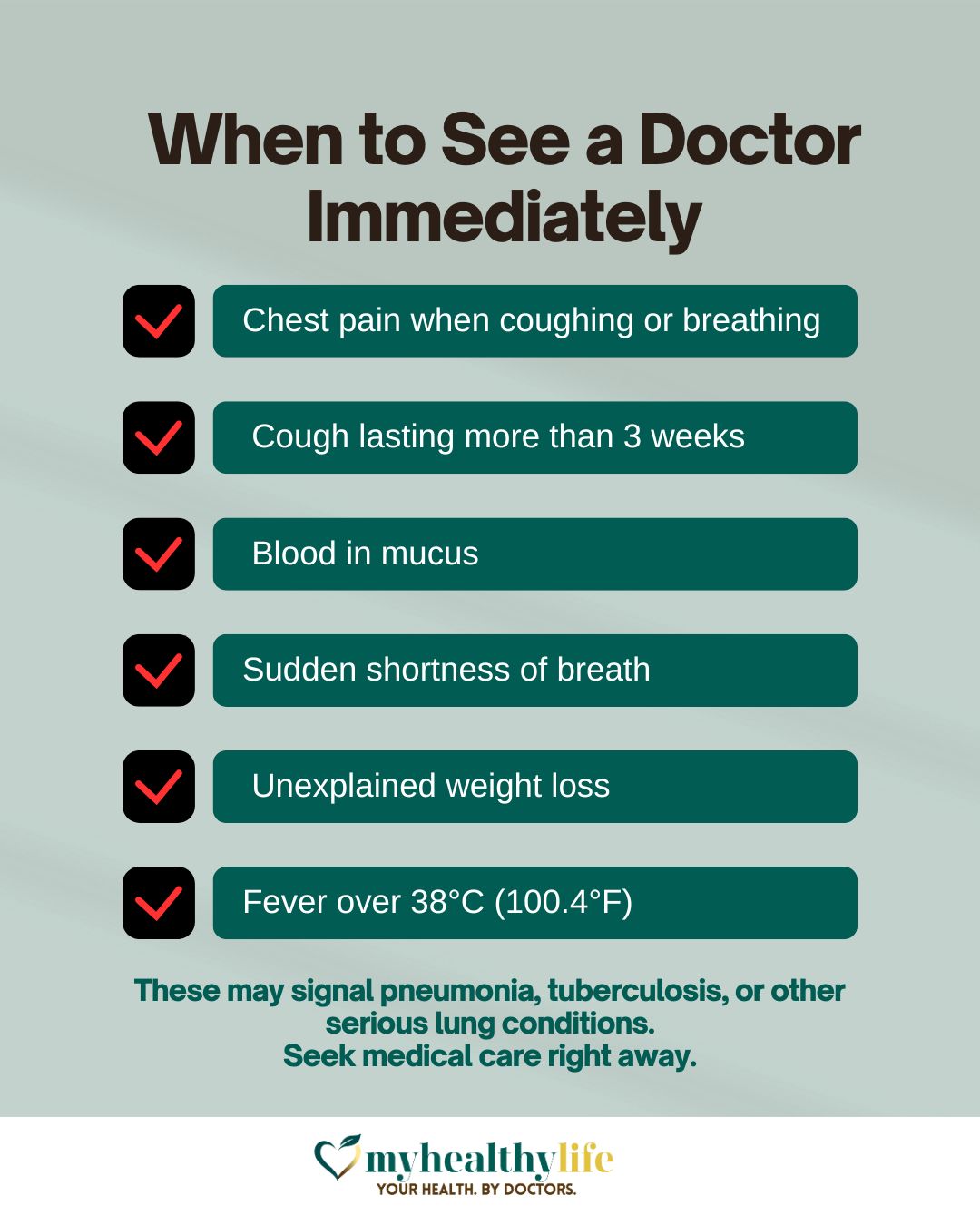
When to See a Doctor Immediately
While occasional morning cough isn’t usually alarming, certain symptoms mean you should seek medical attention promptly:
- Chest pain when coughing or breathing
- Cough lasting more than three weeks
- Blood in mucus
- Sudden shortness of breath
- Unexplained weight loss
- Fever over 38°C (100.4°F)
These could point to infections like pneumonia or tuberculosis, or more serious lung conditions.
How to Manage a Morning Cough
If your cough is mild and linked to environmental factors like aircon, small changes can make a big difference:
- Clean your AC filters every month to reduce dust and allergens.
- Use a humidifier to add moisture to your bedroom air.
- Stay hydrated throughout the day to keep your throat moist.
- Avoid smoking—even occasional exposure can irritate the lungs.
- Elevate your head while sleeping if acid reflux is suspected.
The Bottom Line
A morning cough can be harmless—just a side effect of dry, cool bedroom air. But it can also be your body’s first warning of asthma, bronchitis, COPD, allergies, or reflux. The key is noticing patterns: if your cough persists, changes, or comes with other symptoms, it’s worth talking to your doctor. Early detection of lung or airway issues can make treatment more effective and prevent long-term damage.
References:
https://www.mayoclinic.org/diseases-conditions/bronchitis/symptoms-causes/syc-20355566
https://my.clevelandclinic.org/health/diseases/24099-morning-cough
Share:
Related Posts

Does Stress Affect Men’s Immunity More Than They Think?

One Simple Habit to Keep Urban Lungs Healthy